



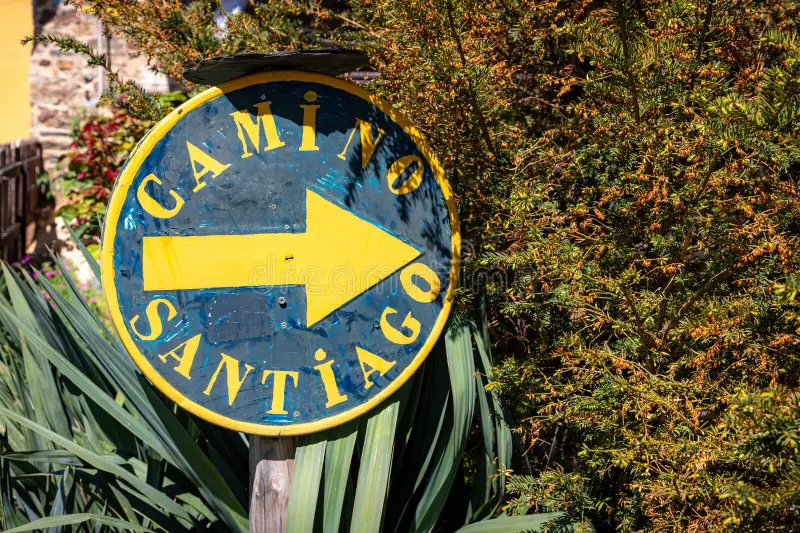
The Camino de Santiago is experiencing one of the most important moments in its entire modern history. Never before have so many international pilgrims arrived in Galicia Looking for more than just a vacation. Today the Camino represents for many people an experience of disconnection, nature, adventure, spirituality and personal change. Precisely for this reason, the Xunta de Galicia has decided to reinforce one of the aspects that most concerns those who travel the Jacobean routes: safety.
The Galician Government has just presented the new campaign “Safety marks the Camino”, an initiative that aims to improve the information and protection of thousands of pilgrims who cross Galicia every year walking towards Santiago de Compostela. The presentation took place in Lugo, one of the great gates of the Camino Primitivo, and is part of the entire preparation strategy for the future Xacobeo 2027, an event for which a massive arrival of international visitors is expected.
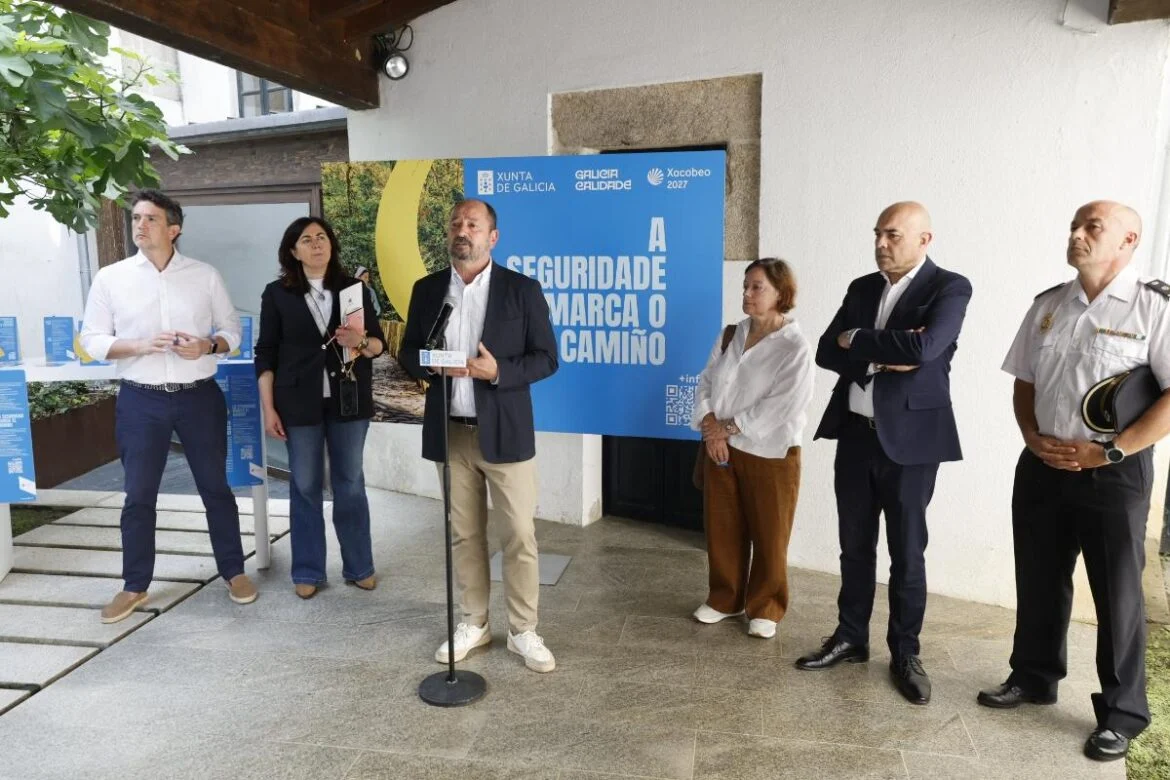
The campaign is not limited to just putting up posters or handing out leaflets. The idea is much more ambitious. The Xunta wants any pilgrim to have quick and easy access to useful information related to emergencies, health care, security forces or specialized help simply by using their mobile phone. To this end, thousands of information materials will be distributed in hostels, reception points and entrances to Galicia on the different Jacobean routes.
One of the most important elements will be the use of QR codes that will allow quick access to emergency telephone numbers and help services. In this way, any walker will be able to consult information related to the Civil Guard, Police, health emergencies or specific attention for female pilgrims from their mobile phone.
The reality is that the profile of the pilgrim has changed a lot in recent years. Today people arrive from the United States, South Korea, Germany, Italy, Brazil or Australia, attracted by TikTok, Instagram and YouTube videos where the Camino appears as an emotional and almost transformative experience. Many travel alone, others take a long-distance route for the first time and thousands set foot in Galicia without really knowing the rural environment or the characteristics of the Camino.
For this reason, the Xunta considers that security can no longer be a secondary aspect. The current Camino moves millions of people and has become one of the most important tourist phenomena in Europe related to hiking, cultural tourism and wellness travel.
The data perfectly reflects this growth. In the first months of 2026 alone, more than 134,000 Compostelas have already been delivered and approximately seven out of every ten pilgrims come from abroad. The Camino has become completely internationalized and Galicia knows that offering a safe and modern experience will be essential to maintain that growth.
In addition to this new information campaign, the Galician Government is also working on important infrastructure improvements. One of the main objectives is to reduce as much as possible the sections where pilgrims still have to share the road with vehicles. To this end, it is planned to act on some 150 kilometers of Jacobean routes before Xacobeo 2027.
Many veteran pilgrims have been pointing out for years that some of these sections generate insecurity, especially for bicigrinos, foreign walkers or people who carry out long stages during the early hours of the morning or at dusk. With these improvements, Galicia seeks to offer a much more comfortable and safe experience.
But behind this campaign there is also another important message. Galicia wants to position itself as a safe, humane tourism destination prepared for the enormous international growth that the Camino de Santiago is experiencing.
Because the Camino is no longer just a religious pilgrimage.
Today it is also rural tourism, adventure, hiking, personal growth, mental health and digital disconnection. Many people come looking for peace, silence or simply to escape for a few days from daily stress and hyperconnected life.
And precisely for this reason, feeling protected and accompanied during the trip has become essential.
The Xunta insists that security does not only mean avoiding incidents. It also means improving reception, providing clear information and ensuring that any pilgrim can receive help quickly if a problem arises.
On a Camino where thousands of people walk alone for weeks, that feeling of support can make a huge difference.
The ultimate goal is pretty clear:
that Galicia continues to be one of the great international destinations for pilgrimage and active tourism in the world.
And seeing the spectacular growth that the Camino de Santiago is currently experiencing, everything indicates that this transformation is already underway.

















