



Lugo and Cantabria Strengthen their Jacobean Bond
LUGO, Spain – The city of Lugo today became the scene of an emotional act of twinning between two communities of pilgrims, thus strengthening ties and commitment to the Via Künig. The mayor of Lugo, Miguel Fernandez, received 35 members of the association at City Hall Pilgrims through Cantabria, a group with more than 300 members, who were visiting the city as part of their second day of meeting with the Vía Künig Association of Lugo.
The event, which was also attended by the board of directors of the Lugo association, including its president Javier Gomez, culminated in the signing of a joint agreement between both groups and the Lugo City Council. This document seals the commitment of all parties to promote the recovery, dissemination and collaboration in favor of this Jacobean journey.
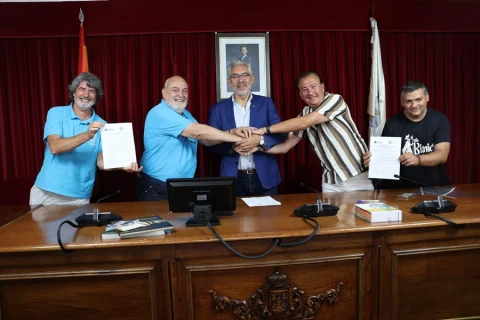
A Path to Passion and Union
During the reception, the Lugo councilor, Miguel Fernández, expressed his satisfaction with this meeting: "It is a pleasure to receive you and celebrate this act of twinning, which symbolizes the union and passion for the Camino de Santiago." The mayor highlighted the beauty of the Vía Künig itinerary and thanked the members of the associations for their work, predicting that this route "will continue to gain followers" thanks to their commitment.
The mayor took advantage of the visit to recommend the main enclaves of the city to the Cantabrian pilgrims, especially the Cathedral, the iconic Roman Wall and the meeting point of the three World Heritage Sites that Lugo treasures.
The Künig Way: An Axis of Meeting between Territories
This day in Lugo is the second part of a twinning that began on July 5, when the Lugo delegation was received in Castro Urdiales, Cantabria. The visit of the Cantabrians to Lugo followed the itinerary of Herman Kunig, the German monk who described this route in the 15th century. The pilgrims entered the province of Lugo following the Camino through As Nogais, Becerreá, Baralla and O Corgo.

The Vía Künig enters Galicia through Pedrafita do Cebreiro, converging with the French Way and then following the route of the Primitive Way until Lugo. The route of the Cantabrian pilgrims is a variant of the Northern Way, which starts from Irún in the direction of Compostela, thus demonstrating how the different Jacobean itineraries intertwine to unite communities and walkers from all over the world.

















