



One of the most spectacular routes of the Camino de Santiago continues to be largely unknown to thousands of pilgrims
When talking about the Camino de Santiago, the focus usually goes to the French Camino, the Portuguese Camino or the Northern Camino. They are the great Jacobean routes that each year attract hundreds of thousands of pilgrims from all over the world.
However, there is a historical itinerary that for many experts brings together some of the most impressive landscapes of the entire Jacobean network and that, despite this, continues to occupy a secondary role in institutional and tourist promotion. It is about the Vadinian Route, a path full of history, spirituality, heritage and nature that crosses some of the most spectacular territories in northern Spain.
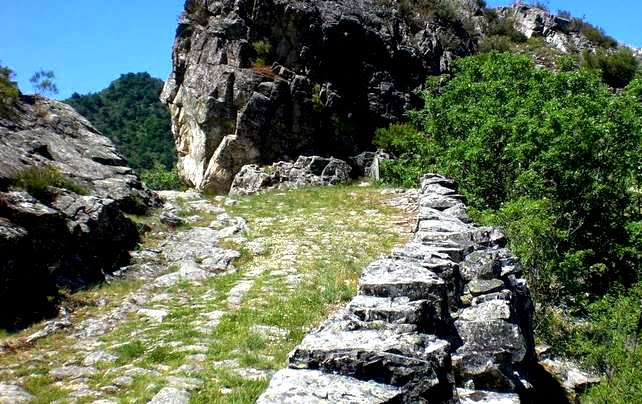
A Path between two great pilgrimage centers
The Vadinian Route has a characteristic that makes it unique within the Jacobean universe.
It does not connect only with Santiago de Compostela. It also links two of the great historical pilgrimage centers of Spain: the Monastery of Santo Toribio de Liébana, in Cantabria, and the French Way in the Leonese town of Mansilla de las Mulas.
For centuries, numerous pilgrims arriving from Europe along the Cantabrian coast detoured to Liébana to venerate the Lignum Crucis, considered the largest preserved fragment of the Cross of Christ. After visiting Santo Toribio, they continued their journey towards Santiago using this historical route that crossed the ancient territories of the Vadinienses, a Cantabrian people who gave their name to the itinerary.
The Vadinian Route was not a minor variant. It was part of a network of roads used for centuries by merchants, travelers, religious people and pilgrims who sought to unite two of the main spiritual centers of the Iberian Peninsula.
Picos de Europa: a permanent spectacle
One of the great attractions of the Vadinian Route is its extraordinary landscape value.
Few Jacobean routes allow you to walk among settings as impressive as those offered by this itinerary.
The route crosses the heart of the Peaks of Europe, passes through emblematic places such as Fuente Dé, runs through mountain valleys, crosses historic ports and offers panoramic views that many pilgrims consider unbeatable.
Big cities and long straight lines between grain fields do not predominate here.
The mountains rule here.
The landscape changes constantly and offers an experience much closer to high mountain hiking than to the traditional pilgrimage that many associate with the French Way.
Precisely that hardness is also one of its greatest attractions for those looking for a more intense and authentic experience.
A journey through the history of Cantabria and León
The Vadinian Route not only stands out for its nature.
Throughout its stages there appear Romanesque churches, monasteries, hermitages, medieval bridges, old cattle roads and towns that have preserved a good part of their traditional identity.
The tour allows you to discover places little known by mass tourism, where a very close relationship is still maintained between the local population and pilgrims.
Many walkers highlight precisely this close hospitality as one of the great riches of this route.
While other Caminos receive thousands of people a day at certain times of the year, the Vadinian Route continues to offer the possibility of walking for hours without meeting another pilgrim.
The great forgotten of the administrations
Despite all its attractions, there are many voices that denounce that the Vadinian Route does not receive the attention it deserves.
Jacobean associations, heritage experts and defenders of the Camino consider that there is a clear imbalance between the promotion of great routes and the low visibility of historical itineraries like this one.
The lack of signage in some sections, the limited international promotion and the absence of specific investments are some of the problems pointed out by those who have been working for years to recover and enhance this route.
Many consider that the Vadinian Route could become one of the great European references for cultural and spiritual hiking if it had an appropriate promotion strategy.
An opportunity for the Camino Lebaniego
The growth of interest in Lebaniego Road and through the Monastery of Santo Toribio de Liébana opens a historic opportunity for this route.
More and more pilgrims discover the attraction of combining the pilgrimage to Santo Toribio with the continuation of the trip to Santiago de Compostela.
The Vadinian Route thus becomes an authentic bridge between two ancient pilgrim traditions.
Furthermore, the next Lebaniego Jubilee Year and the growing interest in alternative routes could favor its consolidation as one of the great Jacobean itineraries of the future.
A Path for those seeking authenticity
At a time when the word "massification" frequently appears in debates about the Camino de Santiago, the Vadinian Route offers something increasingly valued: tranquility.
Here it is still possible to find silence.
It is still possible to walk accompanied only by the sound of the wind, the rivers and the bells of small mountain towns.
It is still possible to feel that one is discovering a Path that preserves much of its original essence.
For this reason, many veteran pilgrims consider it one of the great hidden gems of the Jacobean world.
The challenge of the coming years
With the Xacobeo 2027 on the horizon, the Vadinian Route finds itself facing a historic opportunity.
If the administrations, associations and entities linked to the Camino are able to promote its promotion and conservation, it could become one of the great protagonists of the Jacobean future.
Because not all the treasures of the Camino are on the most traveled routes.
Some are still waiting to be discovered.
And the Vadinian Route is, without a doubt, one of them.

















