



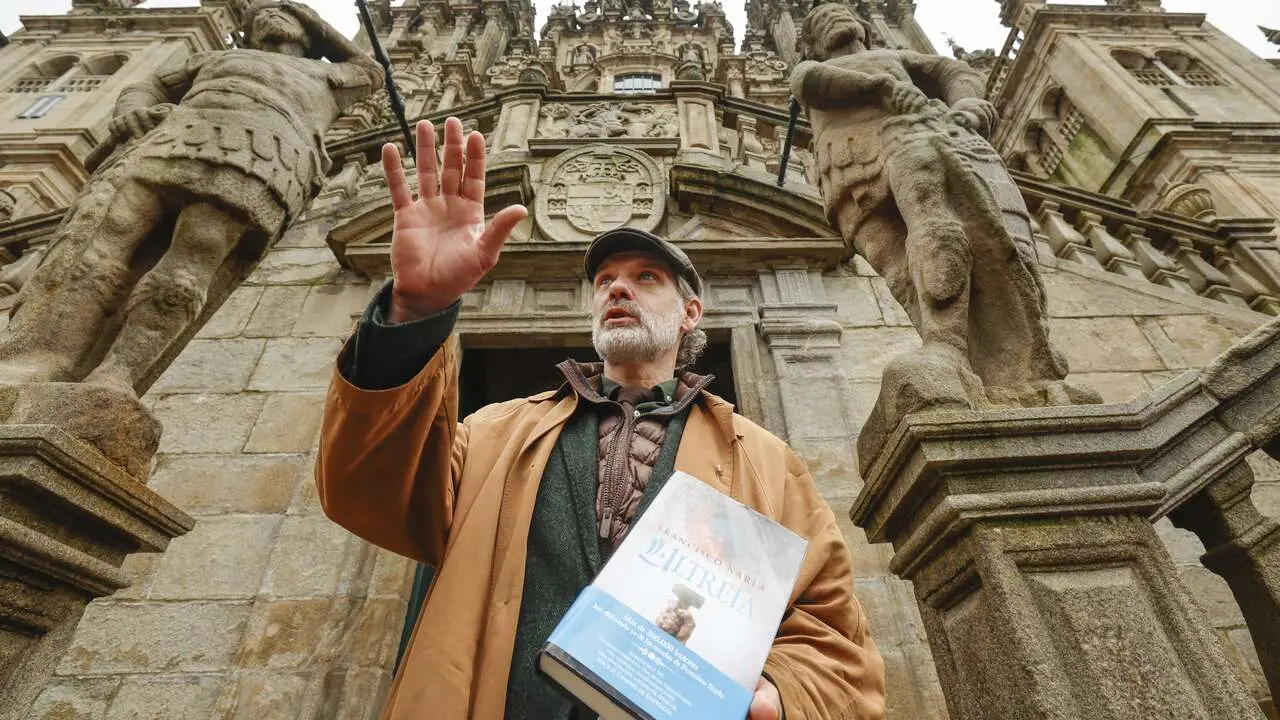
The Galician writer turns the Camino de Santiago into a historical trilogy
The Camino de Santiago continues to inspire stories, but few as ambitious as that of the Galician writer Francisco Narla. The author has announced a literary project in which he will narrate thousand years of history of the Camino through three novels, a trilogy that is already arousing great interest among readers and pilgrims.
The work will start with Ultreia, which will be followed Suseia y Santiago, three books that will cover different stages of the Camino from its medieval origins to its evolution as a global phenomenon.
History, pilgrims and the essence of the Camino
The first novel places the reader in the 12th century, during the construction of the Cathedral of Santiago, a key moment in the consolidation of the Camino as a pilgrimage route in Europe.
In this context, relevant historical figures appear, but also anonymous characters who represent the real life of the Camino: pilgrims, merchants and inhabitants who lived along the route.
This approach connects with the current interest in cultural tourism, medieval history and experiences linked to the Camino de Santiago.
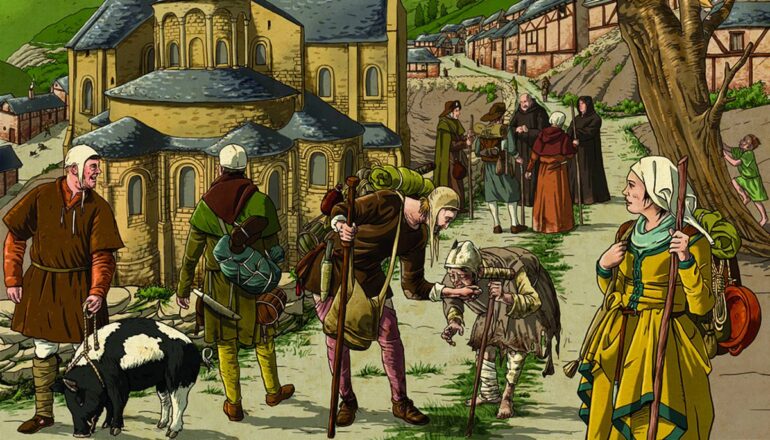
A trilogy to understand the Camino
The project is divided into three parts to better cover the evolution of the Camino over the centuries:
- Ultreia: the birth of the Camino and its medieval development
- Suseia: cultural and artistic growth
- Santiago: the spiritual dimension and its expansion
The objective is to show how the Camino has gone from being a tough and dangerous route to becoming one of the most important tourism destinations in Europe.
The Camino, more alive than ever
This trilogy arrives at a key moment. The Camino de Santiago is experiencing a historic boom, with a constant increase in pilgrims and a greater international presence.
Interest in hiking, rural tourism and meaningful travel is driving its growth, making it much more than a route: a complete experience.
Literature to understand the present
With this work, Francisco Narla seeks not only to tell a story, but to explain why the Camino is still relevant after a thousand years.
Because the Camino de Santiago is not just a journey…
It is a story that never stops moving forward.

















