




A documentary questions the contradictions of the Camino de Santiago in the era of tourism and mascotism
A new documentary focuses on the tensions between traditional values of the Camino de Santiago —solidarity, respect and spirituality— and the contemporary reality marked by tourism, commercialization and unequal treatment of non-human animals.
The film follows two groups of pilgrims throughout the French Way, one of the most traveled itineraries, to offer a critical and reflective look at how the ideals that have historically defined this ancient route are lived today. Through interviews, fictional scenes and a deep social analysis, the documentary invites the viewer to question whether these values apply coherently to all the beings that are part of the Camino.
A first part focused on “dog friendly” and the Camino with dog
This first part of the documentary specifically delves into the dog friendly movement, the rise of mascotism as a social trend and the experience - not exempt from conflicts - of doing the Camino de Santiago with dog. The story addresses both the opportunities and contradictions of a fashion that, under the label of “animal friendly,” sometimes hides practices that are not very respectful or lack ethical reflection.
The film raises uncomfortable questions: are the needs of animals really respected? Is there coherence between the discourse of love and care and daily practice on the Camino? To what extent has commercialization emptied the values they claim to defend of their content?
Diverse voices for a necessary debate
The documentary features the participation of pilgrims, activists and professionals who provide complementary and, sometimes, contrasting perspectives. Among the people involved are Francismo Miramontes (Fray Paco), Sara Escudero, Saul Ortega —accompanied by Zuri and Otto—, as well as Tenisha Weitzmann, Sasha Decker y Ayleen Lessoing, along with Mer, Prince and Toby.
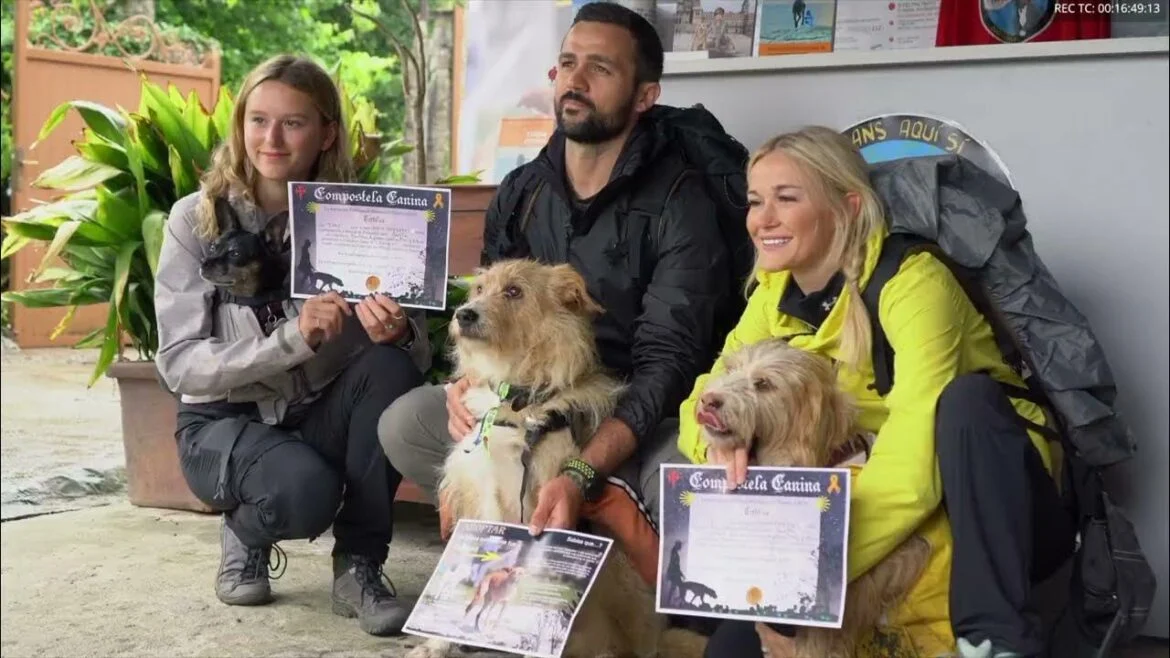
They also participate Alba Pereira Búa, Estefania Pose Pardo y Andrea Alvarez, accompanied by Neka, in addition to Olga Otero, completing a mosaic of experiences that enrich the debate.
A call to conscience
Beyond the complaint, the documentary is presented as a call to collective conscience. Its objective is to raise awareness among the public about the need to live the Camino—and daily life—in an authentic, coherent and respectful way. all the forms of life. In a context where the Camino de Santiago has become a global product, the film invites us to recover its ethical and human dimension, remembering that values should not remain only in discourse.

















