Canada Joins the Journey: The First Jacobean Cairn Inaugurated in Ottawa
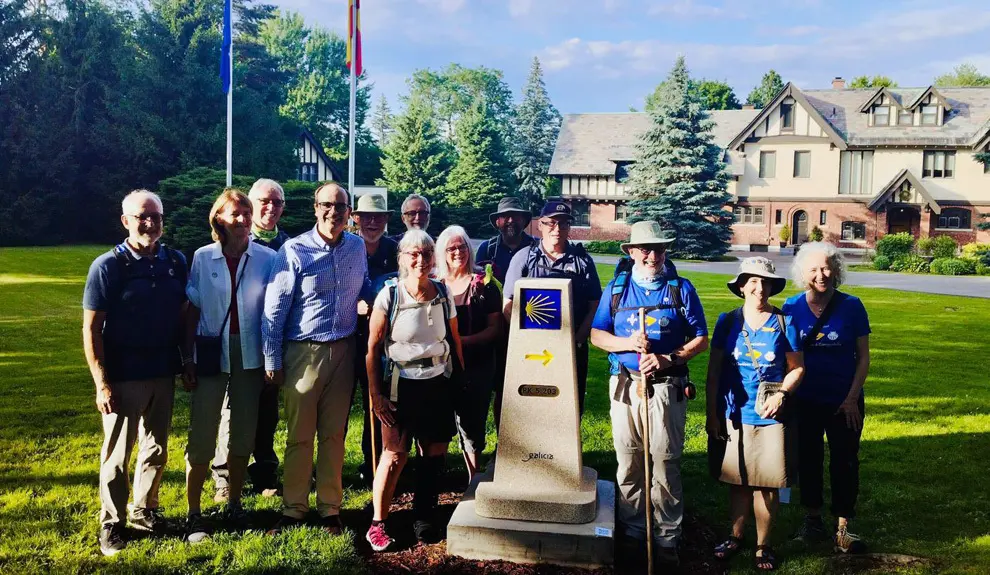
OTTAWA, CANADA – The spirit of Camino de Santiago has crossed the Atlantic and has put down roots on Canadian soil. At the beginning of June, the first official landmark of the Camino in Ottawa, a sign that symbolizes the 5,203 kilometers that separate it from the Cathedral of Santiago de Compostela. The official inauguration, which took place recently, brought together local authorities and prominent Canadian pilgrim associations, marking a milestone for the Jacobean route in America.
A Milestone that Interweaves Cultures and Continents
During the symbolic act, the ambassador of Spain, Alfredo Martínez Serrano, highlighted the deep connection that this landmark represents. "In this symbolic act, history, culture, heritage, spirituality, tourism and pilgrimage are mixed," said the diplomat, highlighting the multidimensional richness of the Camino.
Martínez Serrano expressed his sincere gratitude to the 'Association du Québec à Compostelle' for his involvement. "All the territorial chapters of the 'Association du Québec à Compostelle' have participated with brilliance and commitment in the inauguration of the first milestone of the Camino de Santiago in Canada," he noted, recognizing the collective effort of the Jacobean community of Quebec.
The Canadian Commitment to the Universality of the Trail
The ambassador also had words of recognition for the 'Canadian Company of Pilgrims', another key association in the promotion of Road in Canada. "Your commitment to the values of the Camino de Santiago makes it more universal," declared Martínez Serrano, underlining how the dedication of these organizations contributes to expanding the message of fraternity and encounter that characterizes the pilgrimage.
With the addition of this landmark in Ottawa, Canada joins the growing list of American countries that have official signage for the Camino de Santiago. This milestone joins those already inaugurated in nations such as Brazil, Argentina, Uruguay and Chile, consolidating the global presence of one of the oldest and most significant pilgrimage routes in the world.
This new landmark is not only a geographical landmark, but a beacon for future Canadian pilgrims and a symbol of the universal expansion of the Jacobean spirit. Do you think that these types of initiatives promote the Camino more internationally?