
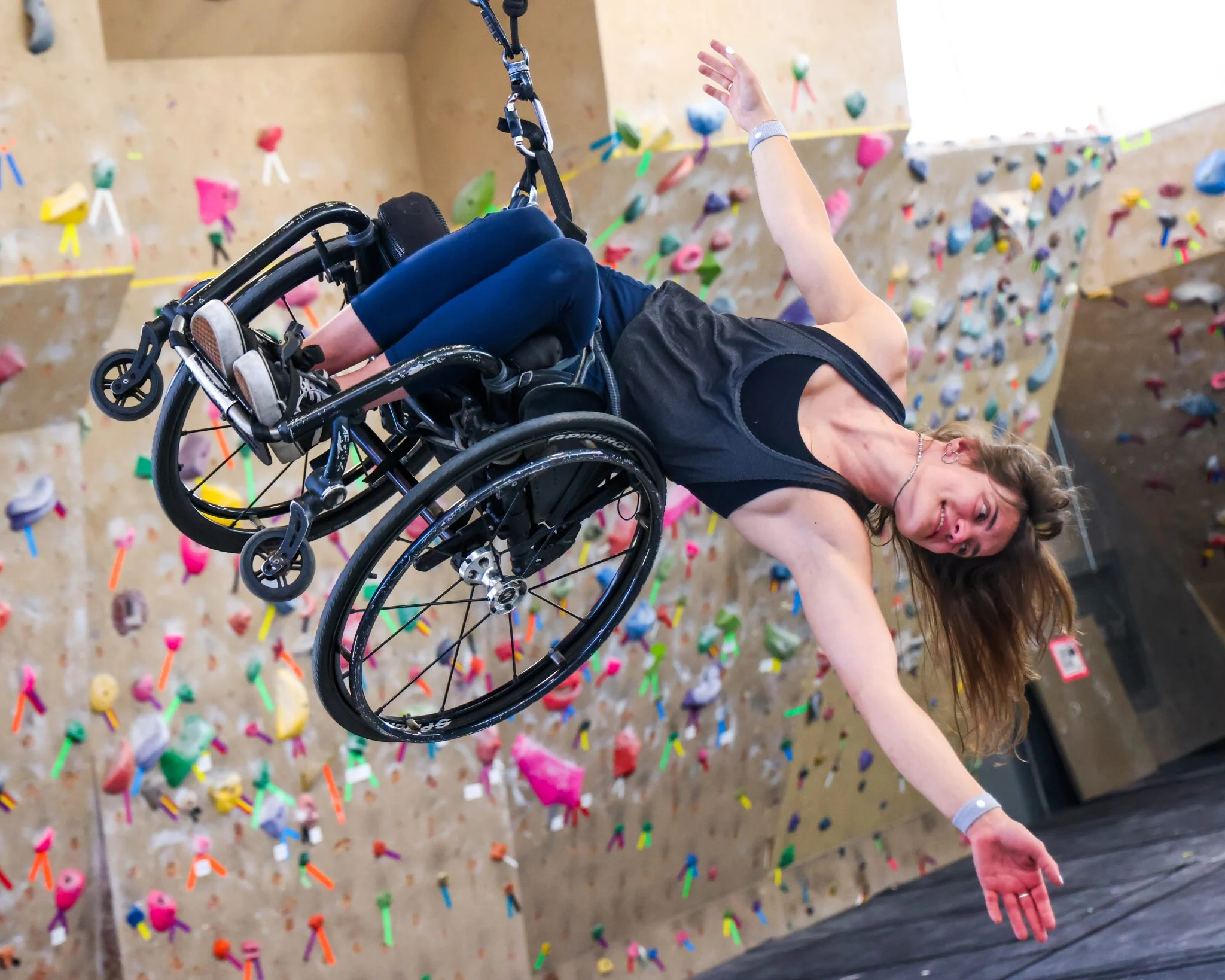
“I like doing things people think are impossible,” says young woman walking to Santiago
The Camino de Santiago continues proving in 2026 that it is much more than a pilgrimage route.
It is also a place where stories of courage, resilience and personal transformation unfold every single day.
One of those stories now comes from Sarria, on the famous Camino Francés, where an American woman with a physical disability has inspired pilgrims from around the world while completing the Camino de Santiago using an adapted handbike.
Her name is Mackenzie Langley, a young woman from Colorado who has been traveling alone across northern Spain after beginning her pilgrimage in Pamplona earlier this month. What makes her journey extraordinary is that she pedals entirely with her hands while transporting her wheelchair alongside her during the route.
“I like doing things other people think are impossible,” she explained during her stop in Sarria.
And that sentence alone has already turned her into one of the most emotional stories currently circulating among Camino pilgrims.
The Camino as a symbol of resilience
Mackenzie has used a wheelchair since 2014 after suffering a traffic accident when she was only sixteen years old. But instead of allowing the disability to stop her, she decided to attempt one of the world’s most famous long-distance pilgrimage routes.
Her dream of walking the Camino began years ago while living in Seville, where she first heard about the pilgrimage experience. Later, after returning to Spain to work as an English teacher, the idea kept growing until she finally decided to make it real.
For this adventure, she even designed her own system to transport her wheelchair attached to the adapted bike because, as she explains, “it is part of me.”
The result is an incredible journey that many pilgrims now describe as one of the most inspiring stories of the Camino this year.
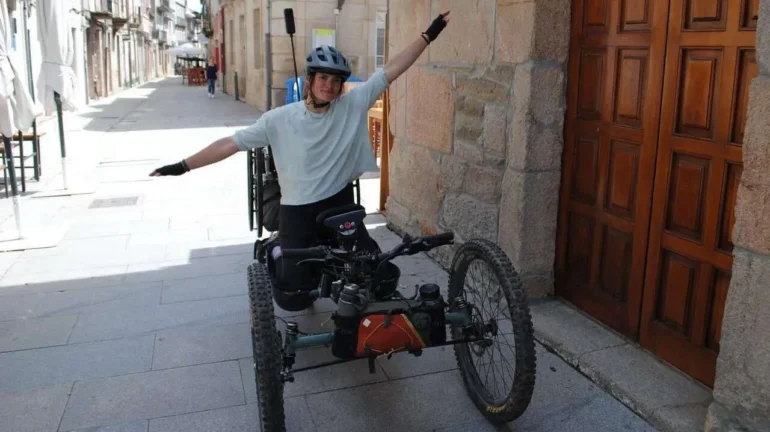
Traveling alone — but never truly alone
Mackenzie began her Camino on May 5 in Pamplona and expects to arrive in Santiago de Compostela after covering hundreds of kilometers through northern Spain. On most days she completes between 40 and 50 kilometers, although sometimes she reduces the distance to recover energy.
What has surprised her most is not the physical challenge.
It is the kindness.
Although she travels alone, she says people constantly help her whenever difficulties appear, especially after falls or complicated stretches of the route.
“The Camino community has very big hearts,” she says emotionally.
During her pilgrimage she has met travelers from:
Spain,
Germany,
Mexico,
Argentina,
Australia,
Colombia
and the United Kingdom.
Some connections became so emotional that she now jokes she has “mothers in every city,” because many people continue messaging her to make sure she is safe and doing well.
The Camino becomes increasingly inclusive
Stories like Mackenzie’s reflect how the Camino de Santiago is becoming increasingly inclusive in 2026.
More organizations, associations and individual pilgrims are working to show that the Camino can also be accessible for people with disabilities or reduced mobility.
Experts in accessible tourism say pilgrimage routes like the Camino offer much more than physical activity.
They also provide:
emotional healing,
human connection,
mental wellness,
nature,
and personal growth.
That is one reason why the Camino continues attracting travelers searching not only for tourism or religion, but for life-changing experiences.
Americans continue discovering the Camino
The story also reflects the growing popularity of the Camino among American travelers.
The United States is currently one of the largest international pilgrim markets on the Camino de Santiago, with thousands of Americans arriving every year seeking:
slow travel,
wellness tourism,
digital detox experiences,
spiritual journeys
and outdoor adventure.
Social media has amplified this trend enormously.
Videos showing pilgrims overcoming physical and emotional challenges regularly go viral on TikTok, Instagram and YouTube.
And stories like Mackenzie’s remind people why the Camino continues inspiring millions around the world.
The Camino teaches a different kind of strength
Many pilgrims walking beside Mackenzie say what impresses them most is not simply the physical challenge.
It is her attitude.
Despite the difficulty, she continues smiling, moving forward and encouraging others along the route.
That spirit perfectly reflects one of the deepest lessons of the Camino:
strength does not always look the way people expect.
Sometimes courage means simply continuing forward one more day.
One more kilometer.
One more stage.
Santiago as a personal victory
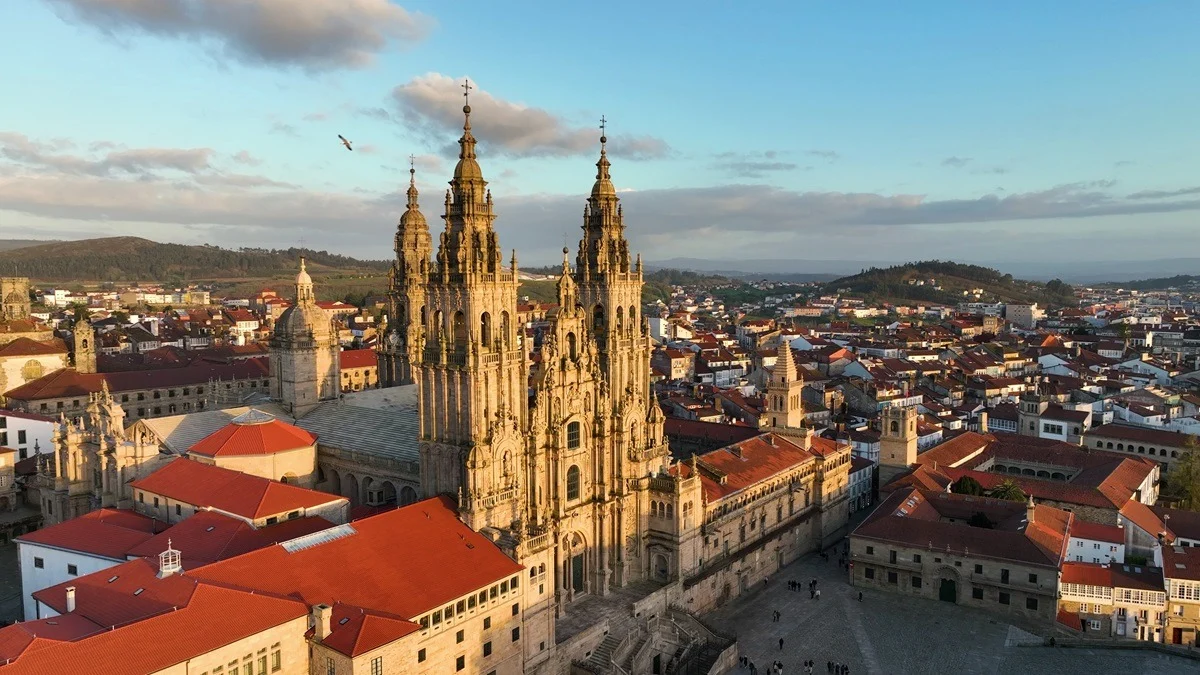
For many pilgrims, arriving in Santiago de Compostela represents much more than reaching a destination.
It symbolizes overcoming fears, limits and personal struggles.
For Mackenzie Langley, this Camino has already become proof that disability does not have to define adventure.
And for many people following her story, it has become a reminder that the Camino de Santiago still changes lives in the most human ways possible.
Because in the end, the Camino is not about walking perfectly.
It is about continuing forward.
Even when others think it cannot be done.