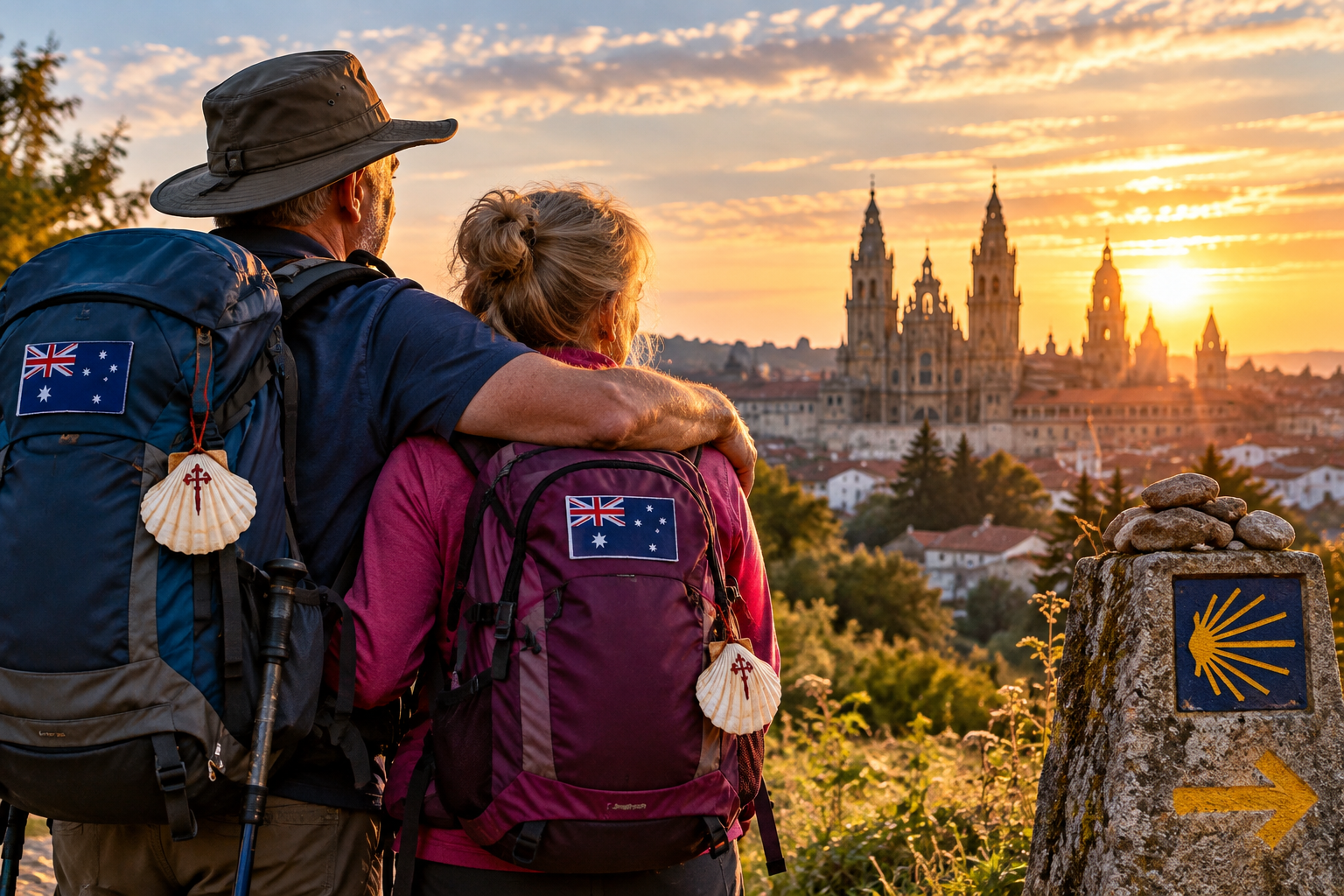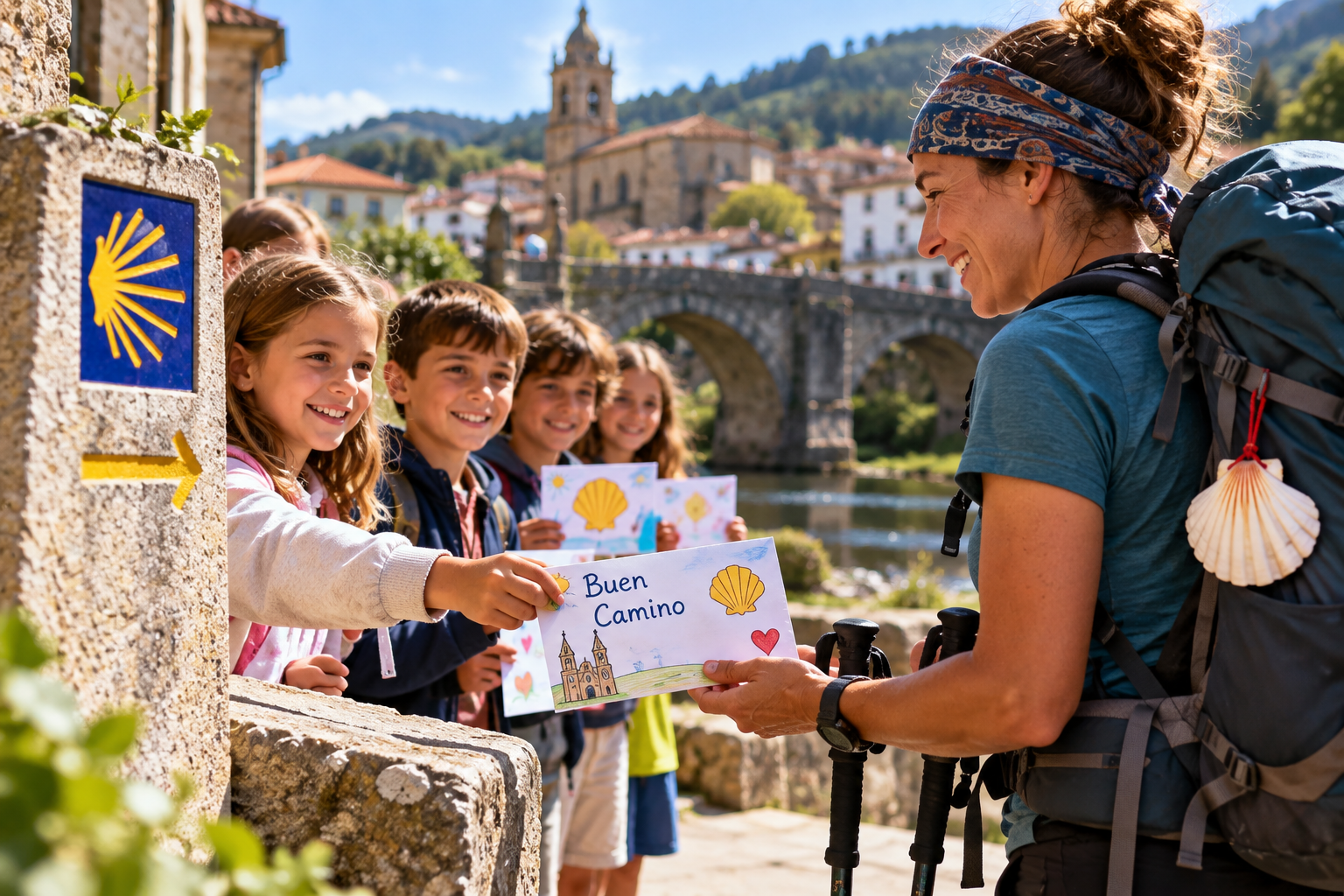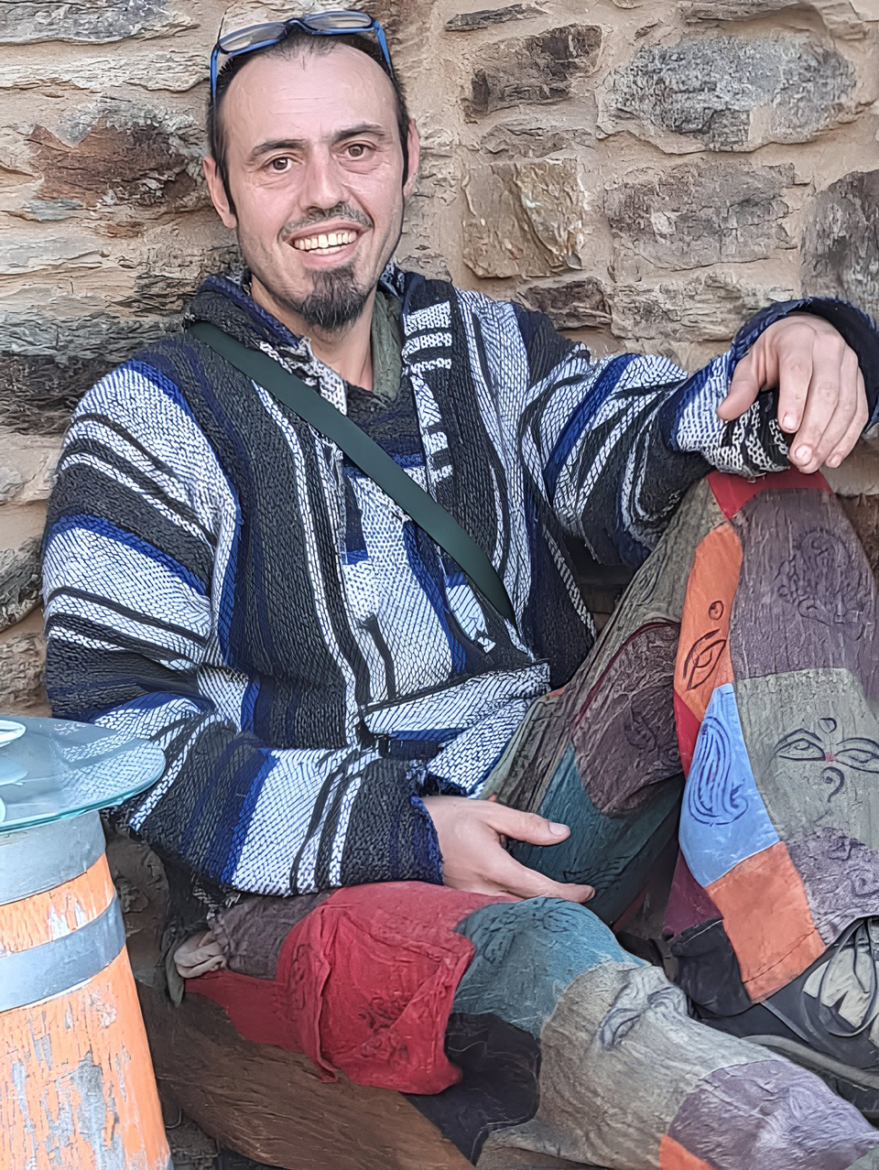










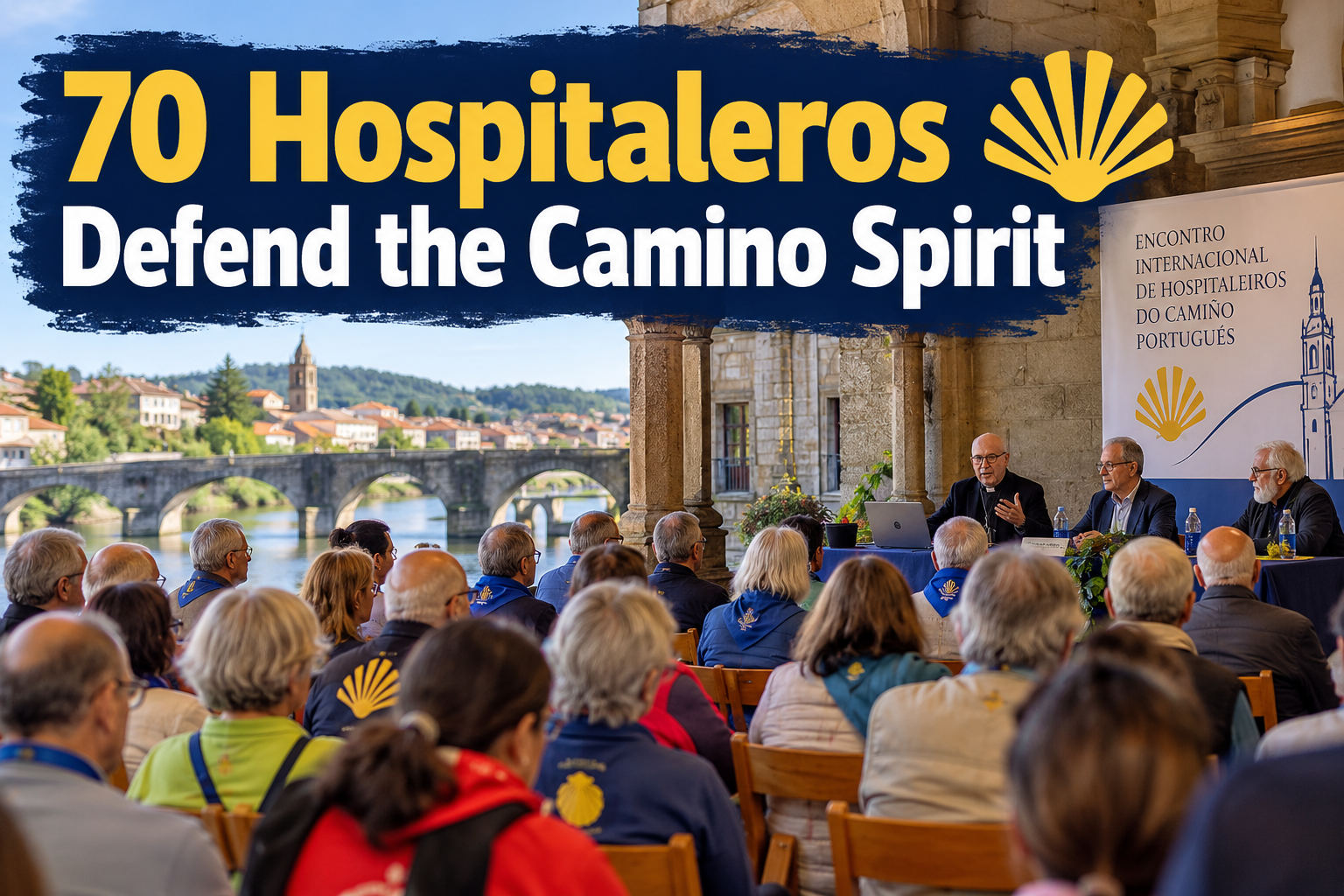
Around 70 hospitaleros from Galicia and Portugal gathered in Pontevedra for the 25th International Meeting of Hospitaleros of the Portuguese Way, a gathering focused on hospitality, the rapid growth of the Camino Portugués and the challenges that lie ahead as Xacobeo 2027 approaches.
The Portuguese Way is enjoying one of its strongest periods of growth, but those who welcome pilgrims every day are asking an important question:
How can the Camino continue to grow without losing what makes it special?
That question was at the heart of the 25th International Meeting of Hospitaleros of the Portuguese Way to Santiago, held at the Pazo de Mugartegui in Pontevedra.
Around 70 hospitaleros from different points along the route between Lisbon and Santiago took part in a day of discussions, shared experiences, humour and reflection on the future of the Camino.
Hospitality at the centre of the debate
The meeting focused on something that cannot be measured only in kilometres or pilgrim numbers.
Hospitality.
For hospitaleros, the Camino begins again every evening when a pilgrim arrives tired, wet, worried or simply in need of conversation.
Opening a door, preparing a bed, sharing dinner or offering a smile can become one of the most memorable parts of a pilgrimage.
That spirit has been at the heart of this annual meeting for 25 years.
The Portuguese Way is booming
The gathering came at a particularly strong moment for the Camino Portugués.
Its popularity has increased sharply in recent years, helped by its accessibility, strong transport connections and the growing number of international pilgrims arriving through Portugal.
The route from Porto has become especially attractive for walkers who want a shorter Camino while still experiencing several days of pilgrimage before reaching Santiago.
But growth also brings pressure.
More pilgrims mean more demand for accommodation, services and infrastructure.
And that is why organisers insisted that growth must be managed carefully.
“Grow without losing the essence”
One of the clearest messages of the meeting was that the Camino should continue to grow, but not at any price.
With Xacobeo 2027 approaching and overall pilgrim numbers again nearing half a million, the concern is increasingly focused on sustainability, authenticity and the quality of the experience.
Hospitaleros were described as one of the key guardians of that spirit.
Many of them volunteer their time without payment and continue a centuries-old tradition of welcoming strangers simply because they are pilgrims.
The famous “pícaros” debate
One of the liveliest moments of the day came during a discussion about people who try to take shortcuts.
The subject was hardly new.
Stories of “pícaros”, or tricksters, already existed on medieval pilgrimage routes.
Today, the issue can take different forms: people travelling parts of the route by bus or car, skipping sections, collecting stamps or reserving pilgrim accommodation while walking as little as possible.
The debate raised an old question in a modern context:
What actually makes someone a pilgrim?
The conclusion from one participant was simple.
People who cheat are not really deceiving the hospitaleros.
They are deceiving themselves.
Hospitality is more than accommodation
Xosé Fernández Lago, canon and former dean of Santiago Cathedral, gave the opening lecture and placed hospitality within a much broader historical perspective.
He recalled how medieval pilgrimage routes developed networks of hospitals and places of refuge for travellers.
Hospitality, he argued, should not be reduced to simply providing a bed.
It is about welcoming someone.
That distinction matters more than ever at a time when the Camino is also becoming a major tourism product.
Protecting the spiritual dimension
The growth of the Camino Portugués has also revived a broader debate about the spiritual identity of pilgrimage.
The Camino can be cultural.
It can be social.
It can be physical.
It can be touristic.
But organisers also stressed that its Christian and spiritual origins should not simply disappear under the weight of tourism.
That tension is likely to become even more visible as Xacobeo 2027 brings another surge in visitors.
Pontevedra and the Portuguese Way
Pontevedra has become one of the key cities on the Camino Portugués.
Its location, historic centre and long association with the route make it a natural meeting point for those working on its future.
The city has also been closely linked for years with the work of Tino Lores, one of the best-known figures connected with the Portuguese Way.
During the meeting, the mayor joked that if Santiago has the Codex Calixtinus, Pontevedra should have a “Códice Celestino”, referring playfully to Lores and his deep knowledge of the route.
That humorous moment reflected the tone of a meeting that was serious in its concerns but far from overly formal.
25 years of shared experience
The event did not stop at speeches.
Hospitaleros from different albergues shared their own experiences, discussed problems and compared how the Camino is changing in different parts of Portugal and Galicia.
The programme also included a boat trip through the Pontevedra estuary and dinner on board, reinforcing the social side of an event built around community.
After 25 years, the meeting has become more than a professional gathering.
It is also a reunion of people who share the same responsibility.
To keep the doors open.
The Camino still begins with a welcome
Pilgrim numbers matter.
Infrastructure matters.
Promotion matters.
But this meeting offered a useful reminder.
For many pilgrims, one of the most important memories of the Camino is not a monument or a statistic.
It is the moment someone welcomes them at the end of a difficult day.
A smile.
A bed.
A shared meal.
A conversation.
That is why, despite the growth of the Portuguese Way and the arrival of another Holy Year, the most important message in Pontevedra was remarkably simple:
the Camino still begins when someone opens a door and says: come in.