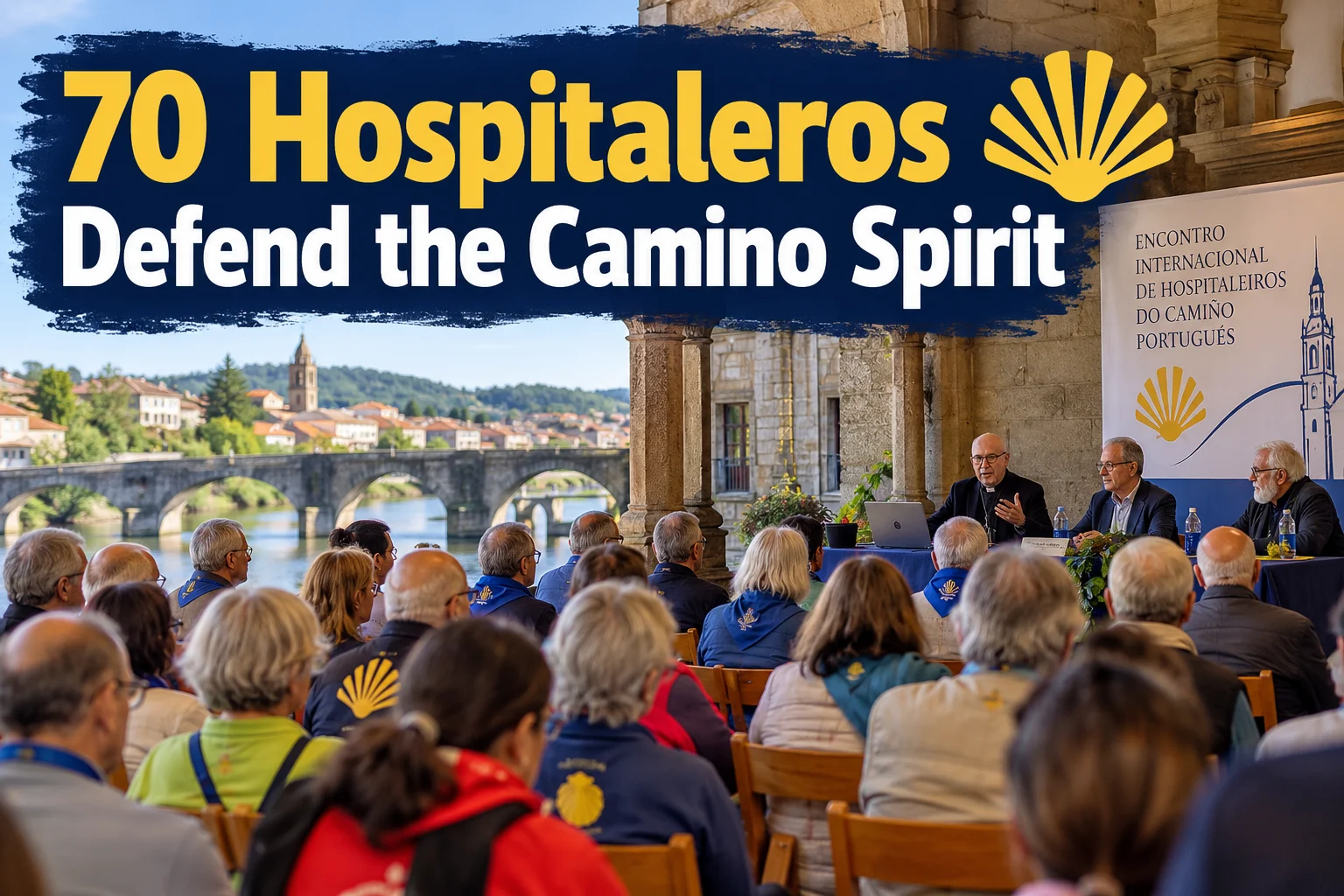
Around 70 hospitalers de Galícia i Portugal gathered a Pontevedra per a 25th International Meeting de Hospitalers de Portuguese Way, gathering focused a l'hospitalitat, ràpid rapid el Camí Portuguès i challenges que li acaben a Xacobeo 2027.
The Portuguese Way és enjoying un dels seus strongest períodes de growth, però que welcome pilgrims every day are asking an important question:
How can the Camino continue to grow without losing what makes it special?
That question was at the heart of the 25th International Meeting of Hospitals de Portuguesos Way to Santiago, held at the Pazo de Mugartegui in Pontevedra.
Around 70 hospitalers de diferents punts al llarg de la carretera des de Lisbon i Santiago toca part al dia de discussions, shared experiències, humour i reflection en el futur del camí.
Hospitality at the centre of the debat
The meeting focusa on something que cannot be measured only in kilometres or pilgrim numbers.
Hospitality.
Per a hospitalers, els camins de viatges agadeixin per eventualment quan a pilgrim arriben amuntegades, fresques, tortes o simplement in need of conversation.
Opening a door, preparing a bed, sharing dinner or offering a smile can become one of the most memorable parts of a pilgrimage.
Aquest spirit ha estat beat a l'heart of aquest annual meeting for 25 years.
The Portuguese Way is booming
El gathering came at a particularment moment per el Camí Portuguès.
La popularitat ha increïble sharply en els darrers anys, utilitzada per la seva accessibility, strong transport connections and rowing number of international pilgrims arriving through Portugal.
El route from Porto has become especialment atractiu per walkers que shorter Camí while still experiencing several days de pilgrimage before reaching Santiago.
But growth also brings pressure.
More pilgrims mean more demand for accommodation, services and infrastructure.
And that is why organisers insisteix that growth must be managed carefully.
“Grow without losing the essence”
One de les clearest messages de la sessió han estat que el camí s'hauria de continuar, però no l'any passat.
With Xacobeo 2027 approaching and overall pilgrim numbers again nearing half a million, the concern és increasingly focused on sustainability, authenticity and quality of the experience.
Hospitalers were descriu as one of the key guardians of that spirit.
Molt de les persones voluntàries en el seu temps sense payment i continuen a centuries-old tradition of welcoming strangers simplement because they are pilgrims.
The famous “pícars” debat
One de l'autèntic moment de l'endemà came durant la discussió per a tothom que va fer shortcuts.
The subject was hardly new.
Stories of “pícars”, or tricksters, already existent on medieval pilgrimage routes.
Tot i això, és possible per a diferents formes: individus travelling parts de la carretera per autobús o cotxe, skipping sections, collecting stamps o reserving pèlgrim accommodation while walking es little as possible.
El debat raised old question in modern context:
What actually makes someone a pilgrim?
The conclusion from one participant was simple.
People que cheat no és realment deceiving the hospitalers.
They are deceiving themselves.
Hospitality is more than accommodation
Xosé Fernández Llac, cànon i formador de Santiago Cathedral, gave l'open lecture and placed hospitality sense molt broader historical perspective.
He recalled how medieval pilgrimage routes developed networks of hospitals i places of refuge for travellers.
Hospitality, he argued, should no s'ha reduït a simply providing a bed.
It is about welcoming someone.
That distinction matters more than ever at a time when the Camino is also becoming a major tourism product.
Protecting the spiritual dimension
The growth of the Camí Portuguès has també revived a broader debat sobre la spiritual identity of pilgrimage.
The Camino can be cultural.
It can be social.
It can be physical.
It can be touristic.
Però els organitzadors també estrènyen que els cristians i espirituals orígens no poden simplement dissappear entre el volum de turisme.
Aquesta tensió és il·licitada per fer-ho més visible a Xacobeo 2027 brings another sorgeix in visitors.
Pontevedra and the Portuguese Way
Pontevedra has become one of the key cities on the Camino Portugués.
It location, històric centre i llarg association s route make it natural lloc de treball per a those working on its future.
Les ciutats també estan tancades per a anys amb la feina de Tino Lores, una de les millors figures connectades amb el portuguès Way.
During the meeting, the major joked that if Santiago has the Codex Calixtinus, Pontevedra should have a “Còdex Celestí”, referring playfully to Lords and his deep knowledge of the route.
Aquest humorous moment reflecteix la tonada de la cintura que és seriós en els seus concerns, però faran de forma formal.
25 years of shared experience
The event did not stop at speeches.
Hospitalers de diferents albergs shared their own experiences, discussen problemes i compareixen how the Camino is changing in different parts of Portugal and Galicia.
El programa també incloïa boat trip mitjançant Pontevedra estuary i dinner on board, reinforcing el social side of event built around community.
After 25 years, the meeting has become more than a professional gathering.
It is also a reunion of people who share the same responsibility.
To keep the doors open.
The Camino still begins with a welcome
Pilgrim numbers matter.
Infrastructure matters.
Promotion matters.
But this meeting offered a useful reminder.
Per a molts pilgrims, una de les mostes importants memòria del camí no és un monument o statistic.
It is the moment someone welcomes them at the end of a difficult day.
A smile.
A bed.
A shared meal.
A conversation.
És a dir, acomiadarà el guany portuguès i arribarà al cap d'aquest any, el most important missatge in Pontevedra era remarcable simple:
the Camino still begins when someone opens a door and says: come in.