










The unique tradition that turns Santiago de Compostela into one of the world’s greatest pilgrimage destinations
For pilgrims planning their journey along the Camino de Santiago, one question comes up time and again: How often is the Holy Year of Santiago celebrated?
Known in Spain as the Año Santo Compostelano or Xacobeo, this special jubilee is one of the most important events in the Christian pilgrimage calendar and attracts hundreds of thousands of visitors to Santiago de Compostela.
What is the Holy Year of Santiago?
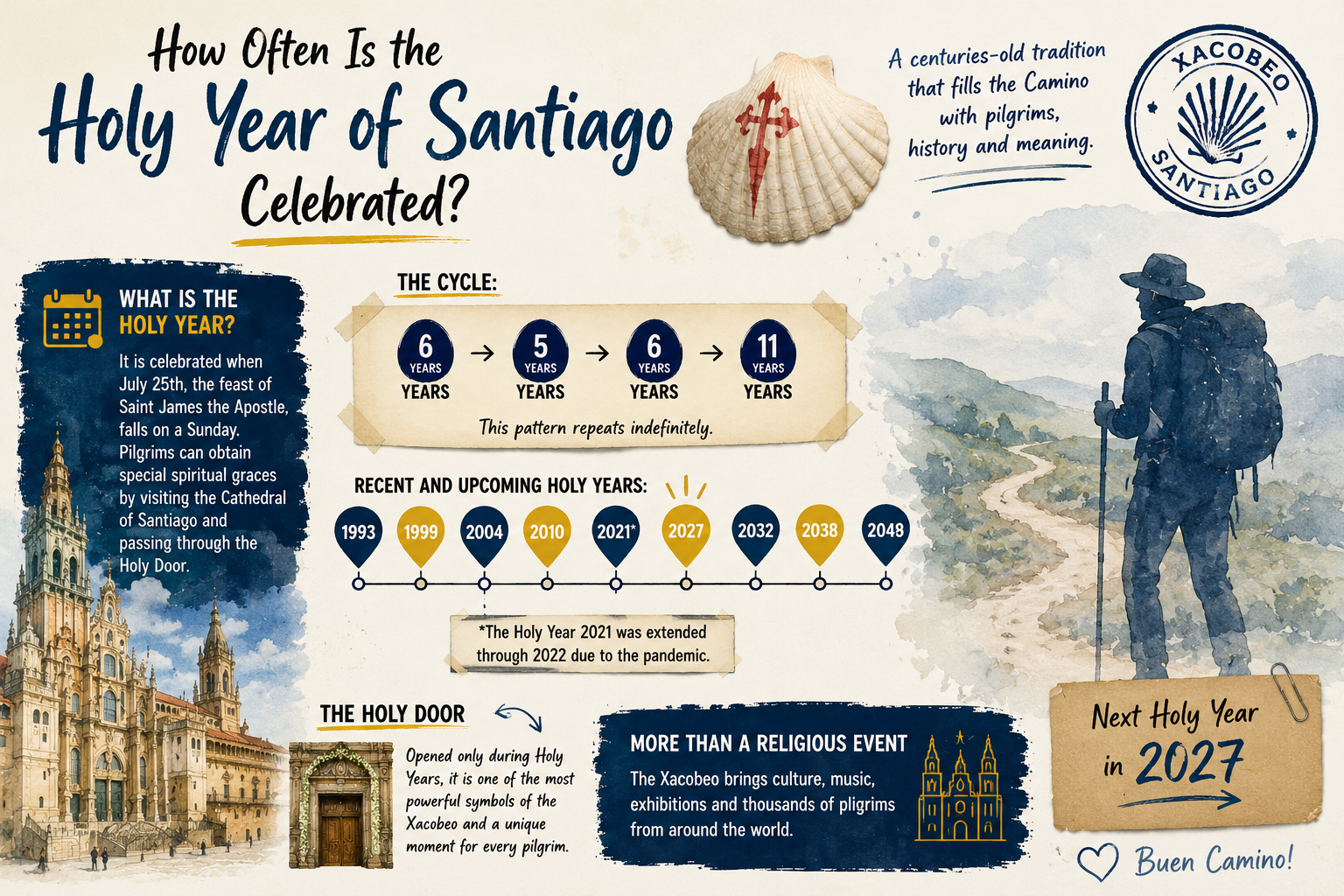
A Holy Year takes place whenever 25 July, the feast day of Saint James the Apostle, falls on a Sunday. During these years, pilgrims who reach Santiago can obtain special spiritual benefits associated with the Jubilee and pass through the famous Holy Door of the Cathedral of Santiago.
The tradition dates back to the Middle Ages and has made Santiago one of Christianity’s most important pilgrimage destinations, alongside Rome and Jerusalem.
Is it celebrated every seven years?
Contrary to popular belief, the Holy Year is not celebrated every seven years.
Because of the way leap years affect the calendar, the Holy Year follows a repeating cycle of:
6 years – 5 years – 6 years – 11 years
This pattern has been repeated for centuries.
Recent and upcoming Holy Years include:
- 1993
- 1999
- 2004
- 2010
- 2021
- 2027
- 2032
- 2038
- 2049
The next Holy Year of Santiago will therefore be celebrated in 2027.
Why was the 2021 Holy Year so special?
The Holy Year that began in 2021 became an extraordinary event in modern Camino history.
Due to the global COVID-19 pandemic and travel restrictions affecting pilgrims from around the world, the Vatican extended the Jubilee throughout 2022, allowing visitors additional time to participate in the celebrations and receive the associated spiritual graces.
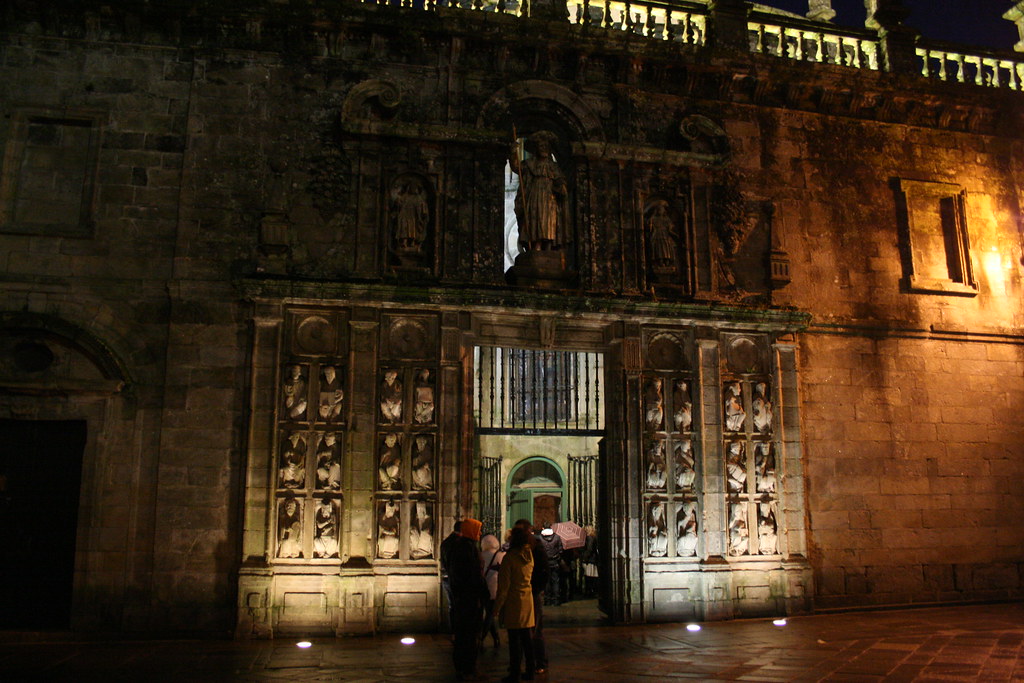
The Holy Door: a symbol of the Xacobeo
One of the most iconic moments of every Holy Year is the opening of the Holy Door at the Cathedral of Santiago.
Normally closed, this historic entrance is opened only during Jubilee years and becomes a powerful symbol of pilgrimage, forgiveness and spiritual renewal. Thousands of pilgrims pass through it as they complete their Camino journey.
More than a religious celebration
Today, the Xacobeo is much more than a religious event. Holy Years bring major cultural festivals, exhibitions, concerts and international gatherings to Galicia, creating a unique atmosphere throughout the region. Pilgrim numbers increase significantly, and the Camino routes become even more vibrant than usual.
For many walkers, completing the Camino during a Holy Year is a once-in-a-lifetime experience. Yet the spirit of the Camino remains alive every year, welcoming pilgrims from every corner of the world to follow the yellow arrows toward Santiago.