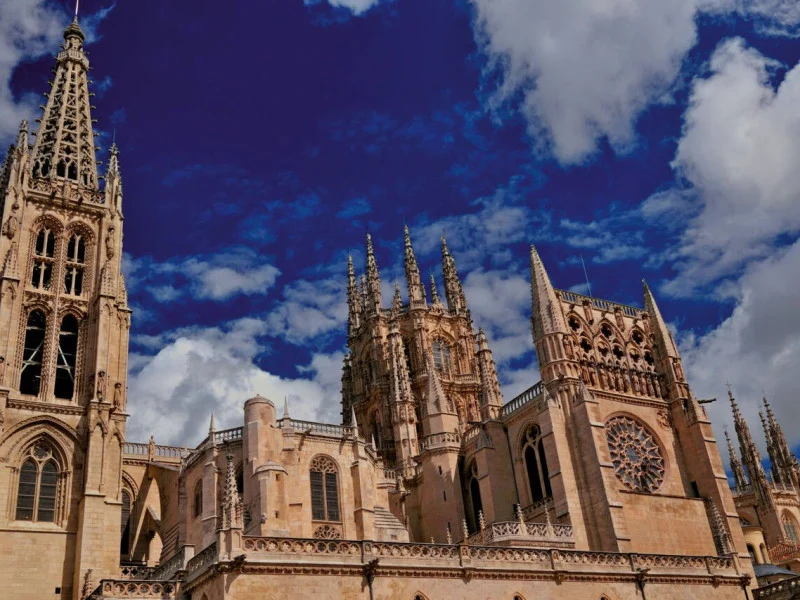
The Cathedral of Burgos, a temple with a screen vocation that fascinates visitors and pilgrims
The Burgos Cathedral, one of the most emblematic temples in Spain, once again captures the attention of visitors, faithful and art lovers with its presence as an authentic “visual protagonist” in the heart of the city. Its impressive Gothic structure and its historical value have made it a place of pilgrimage for those who visit Burgos for tourism, spirituality or, in many cases, as part of the itinerary. Camino de Santiago.
The cathedral, dedicated to the Virgin Mary, stands out for its unmistakable architectural profile, carved with limestone and adorned with details that represent centuries of Christian art history. Its physiognomy, inspired by French Gothic models, and its enigmatic stained glass windows and capitals make every corner inviting to be contemplated and photographed, which has reinforced its reputation as a space with a true “screen vocation.”

Far from being just a monumental church, this cathedral is also a living symbol of the Jacobean route, an almost obligatory stop for many pilgrims who, after leaving stages of the Camino de Santiago behind, arrive in Burgos and find in this temple a reflection of the meaning of the journey: history, faith and encounter. The presence of the building in multiple cultural and artistic exhibitions, as well as its frequent use in events and exhibitions, places it as a point of reference that goes beyond religious sacredness.
In addition to its spiritual value, the Burgos Cathedral has established itself as a tourist and cultural engine for the city and the region. Those who travel for pilgrim or simply cultural reasons have turned the temple into one of the most photographed and shared places on networks and publications, consolidating its figure as an iconic image that represents Spanish Gothic art and historical devotion.

The impressive silhouette of the cathedral, visible from different points in Burgos, continues to attract thousands of people every year, establishing itself as an essential stop for those traveling through the city, the region or even historical routes such as the Camino de Santiago, where religious architecture becomes part of the path and the experience of inner encounter that characterizes many of its walkers.