The Cathedral of Tui on the Portuguese Way: History, symbolism and guide for pilgrims
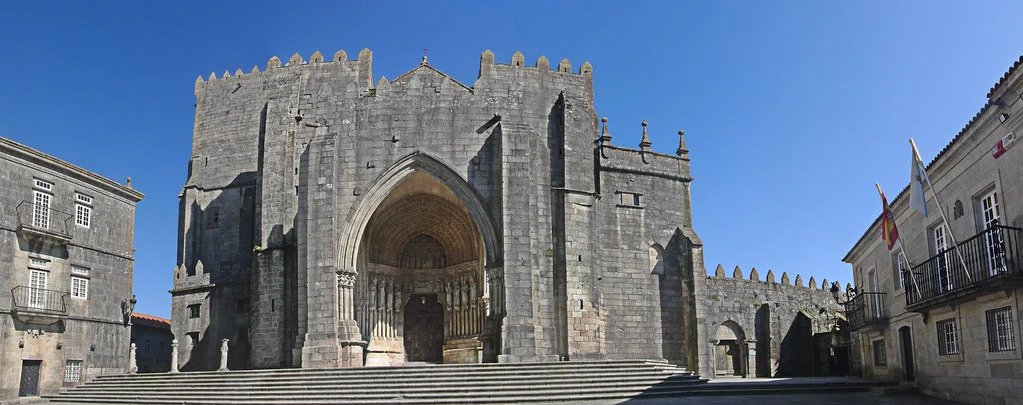
The Cathedral of Santa María de Tui, located on the natural border between Spain and Portugal, is one of the most emblematic monuments of the Portuguese Way. Its history, its unique architecture and its role as a traditional access to Galicia make it an essential point for those who begin their route to Santiago de Compostela.
The symbolic door to Galicia
Tui is, since the Middle Ages, one of the large entrance doors for pilgrims coming from Portugal. When crossing the Miño River or the international bridge, walkers find in the cathedral their first great spiritual and monumental landmark in Galician lands.
Many pilgrims begin the last 115 km of the Camino here, an ideal point to obtain the Compostela. For this reason, the city experiences a constant flow of walkers who turn the cathedral into a place of meeting, reflection and welcome.
History and architecture: where the Romanesque embraces the Gothic
Built between the 12th and 13th centuries, the Tui Cathedral combines:
- Gothic facade, one of the first of the style in the Iberian Peninsula.
- Romanesque interior, sober and monumental.
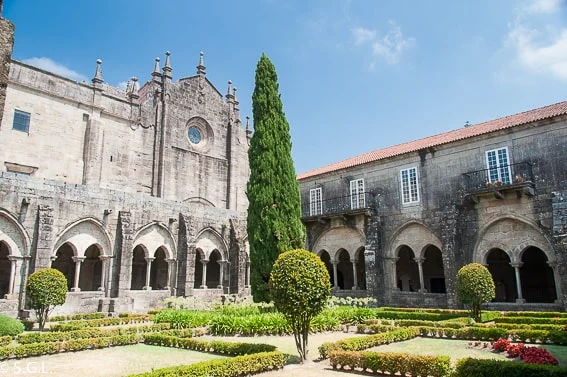
- Gothic cloister, the only one of this style preserved in its entirety in Galicia.
- Renaissance altarpiece, outstanding work of the artist Cornelis from Holland.
The mixture of styles responds to its double function as temple and fortress, a reflection of the border and strategic character of the city in medieval times.
The Cathedral of Tui in the pilgrim experience
For pilgrims on the Portuguese Way, the cathedral represents:
1. Spiritual welcome
Here credentials are stamped, pilgrim masses are celebrated and guidance is offered to those who begin their route to Compostela.
2. A mandatory stop to feel the history
The cloister, its silent naves and the views of the Miño invite you to rest and contemplate.
3. A photographic milestone
Its imposing façade and the historic center of Tui form one of the most photographed settings of the Camino.
What to see around the cathedral
- Medieval historic center of Tui
- Viewpoints over the Miño and Valença do Minho
- Convent of the Poor Clares and artisan sweets
- Medieval walls and layout of the city