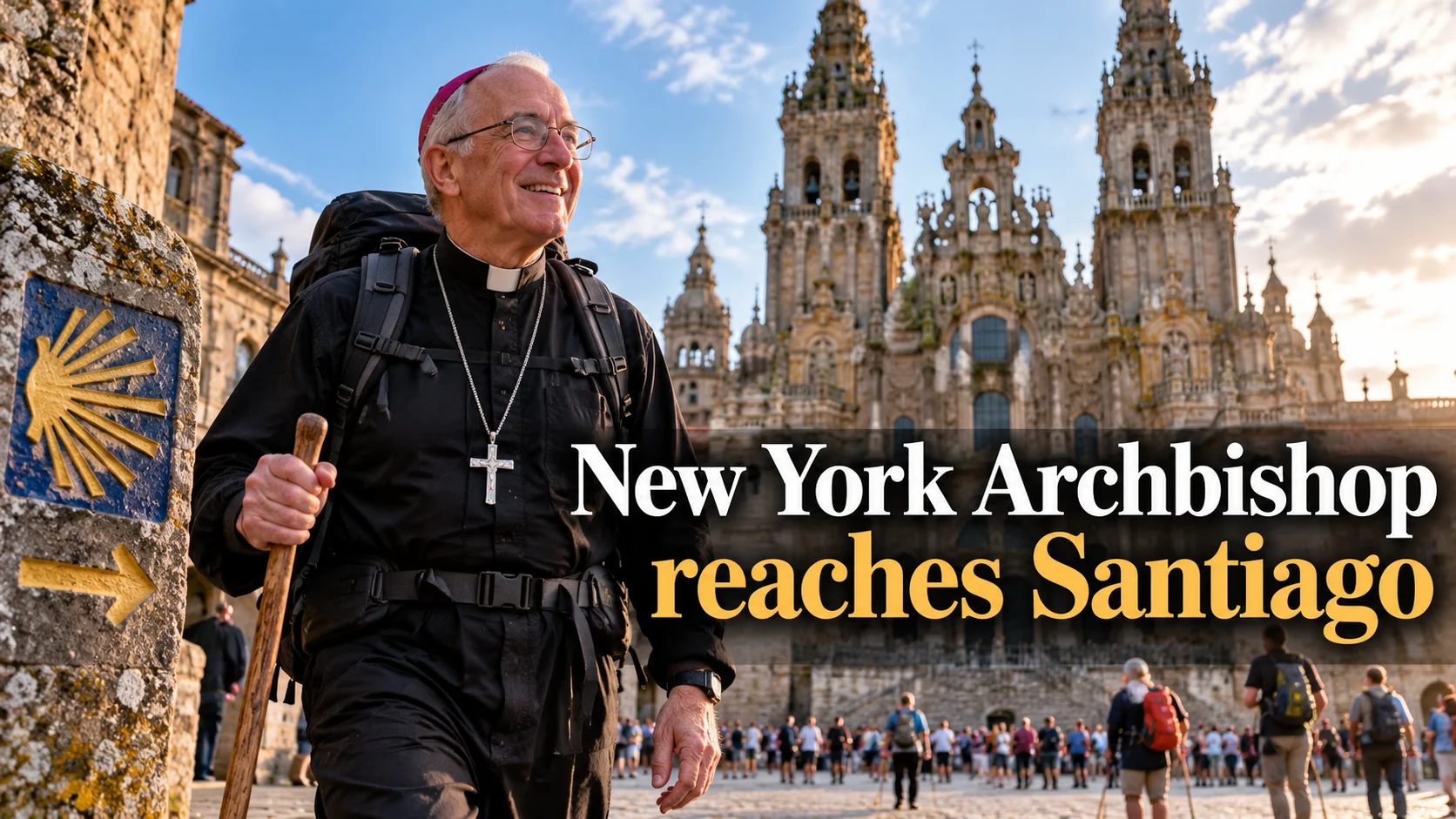
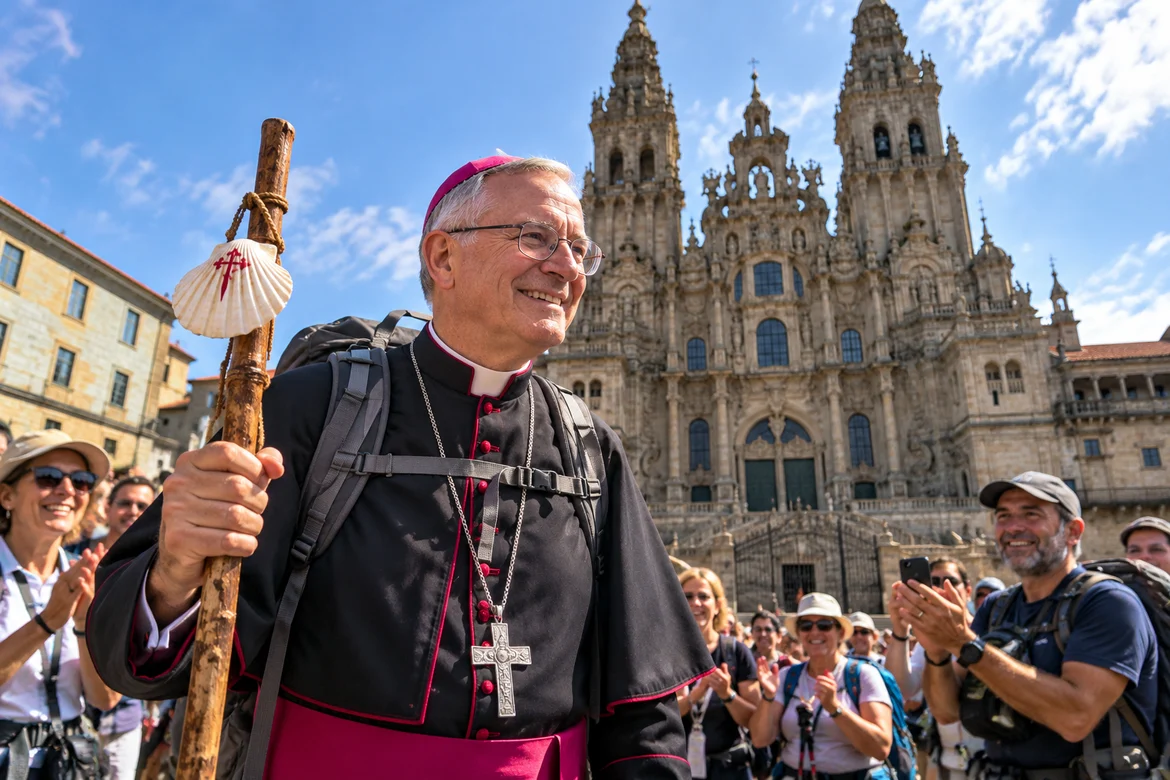
The Camino de Santiago has welcomed an especially high-profile pilgrim this week. Ronald A. Hicks, Archbishop of New York, has reached Santiago de Compostela after completing around 100 kilometers of the Camino and later presided over the Pilgrim Mass in the Cathedral.
His arrival adds an international and spiritual dimension to the flow of thousands of pilgrims who continue to reach Compostela every day from across Europe and the rest of the world.
During his homily, Archbishop Hicks alternated between Spanish and English as he reflected on the experience of walking the Camino and on what each pilgrim carries with them beyond the obvious things in a backpack.
He spoke about walking with companions, meeting other pilgrims and carrying prayers, problems and thoughts along the route. He also described the pilgrimage as a deeply personal spiritual experience in which he felt strongly accompanied by Jesus.
A week on the Camino
The Archdiocese of New York confirmed that Hicks had spent a week walking the Camino de Santiago.
His pilgrimage ended in Santiago, where he presided over the Pilgrim Mass after completing approximately 100 kilometers on foot.
For many pilgrims, the final arrival in the Galician capital is the culmination of days or weeks of walking, but Hicks used the occasion to underline that reaching Santiago should not be understood simply as an ending.
His message to those gathered in the Cathedral focused on the idea that the Camino continues beyond Compostela and becomes part of everyday life once the physical pilgrimage is over.
A meeting in Santiago
After arriving in the city, Ronald A. Hicks was also due to meet Francisco José Prieto, Archbishop of Santiago de Compostela.
Hicks has expressed his desire to return in the future and complete the full Camino de Santiago.
That possibility would turn this first experience into only one chapter of a longer relationship with the Jacobean route.
A Camino with growing international reach
The presence of the Archbishop of New York on the Camino comes at a particularly interesting moment for the Jacobean routes.
International participation continues to grow strongly, and the United States remains one of the countries with a significant presence among foreign pilgrims arriving in Santiago.
The Archbishop's pilgrimage also comes at a time when the Camino and Xacobeo 2027 are receiving renewed international attention.
In that context, the image of one of New York's most prominent Catholic leaders walking the Camino and presiding over the Pilgrim Mass in Santiago has a symbolic value that goes beyond the religious sphere.
It reinforces once again the international character of the Camino de Santiago and the way in which the route continues to attract people from very different countries, professions and backgrounds.
For Archbishop Hicks, the journey ended in Compostela. But the message he shared with pilgrims was clear: the Camino does not necessarily end there.
-

English Way passes 30,000 pilgrims
The English Way has crossed a symbolic barrier before the end of the year. More than 30,000 pilgrims have already completed the Camino Inglés in 2026, allowing the route to surpass the total recorded during the whole of 2025 while there are still more than two months left before the end of the year. The…
-
Luján promotes religious tourism
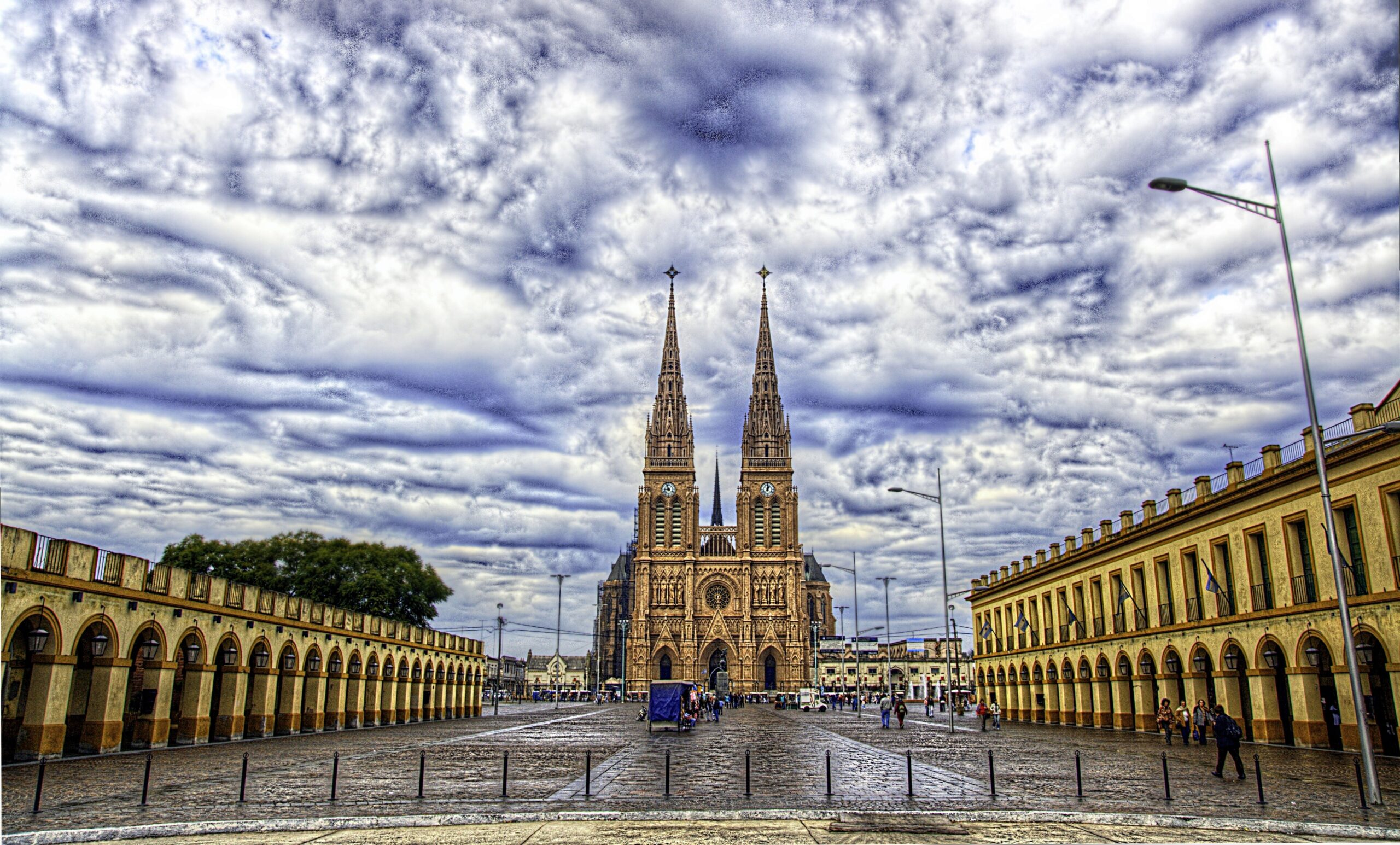
Luján has just taken a step that goes far beyond organizing a massive pilgrimage. The Argentine city wants to convert the experience accumulated over decades receiving millions of faithful into a model of cooperation between some of the great Marian sanctuaries in Latin America. The First Ibero-American Forum of Marian Cities, held on…
-
The sign that baffles pilgrims
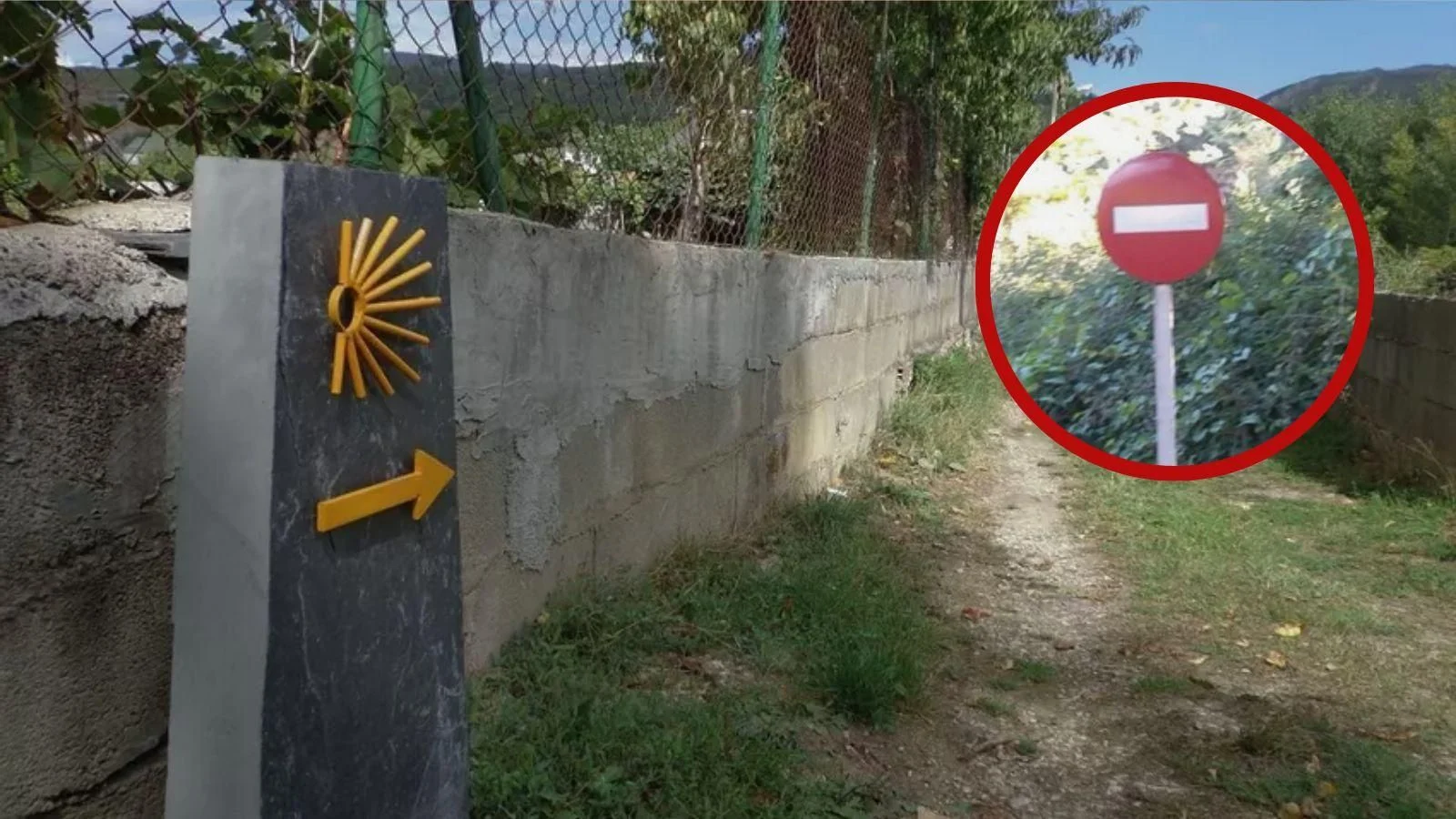
On the Camino de Santiago one soon learns to look at the signs. Yellow arrows, scallops, cairns and small indicators become inseparable companions for hundreds of kilometers. But in Vilamartín de Valdeorras, in the middle of the Camino de Invierno, a traffic sign has achieved precisely the opposite: attracting attention and causing surprise among those...