La Galice has a randonnée itinéraire qui rappelle par certain aspects l'expérience du Camino de Santiago, sans pour autant conduire jusqu'à Compostelle. They are nom est The Monxe Road, a circular park around 140 kilometers across the Ribeira Sacra d'Ourense, divided into seven stages.
The point of departure and arrival is found Castro Caldelas, the most emblematic villages of the region. Entre les deux, le marcheur traverse des forêts, des vignobles en terrasses, des monastères, des rural villages, des belvédères sur le canyon du Sil et quelques-uns des paysages les plus spectaculaires de l'intérieur de la Galice.
The comparison with the Camino de Santiago is inevitable. Le parcours se fait à pied sur plusieurs jours, possède ses propres étapes et propose même une sorte de crédentiale que le marcheur peut faire tamponner au fil de son voyage.
Mais il ne s'agit pas d'un itinéraire jacquaire officiel. The Camiño do Monxe possède sa propre identité and finally bursts at the point of départ.
Sept étapes au cœur de la Ribeira Sacra
The parks begin in Castro Caldelas and descend into the Abeleda Valley. This first stage pass is marked by the ruins of San Paio de Abeleda, the village of Cristosende and the famous passerelles of the Mao River before arriving at the Fábrica da Luz.
The deuxième journée mène jusqu'à Parada de Sil, avec les vignobles et le canyon du Sil comme décor. The marcher peut également discover the monastery of Santa Cristina de Ribas de Sil et plusieurs points de vue spectaculaires sur la vallée.
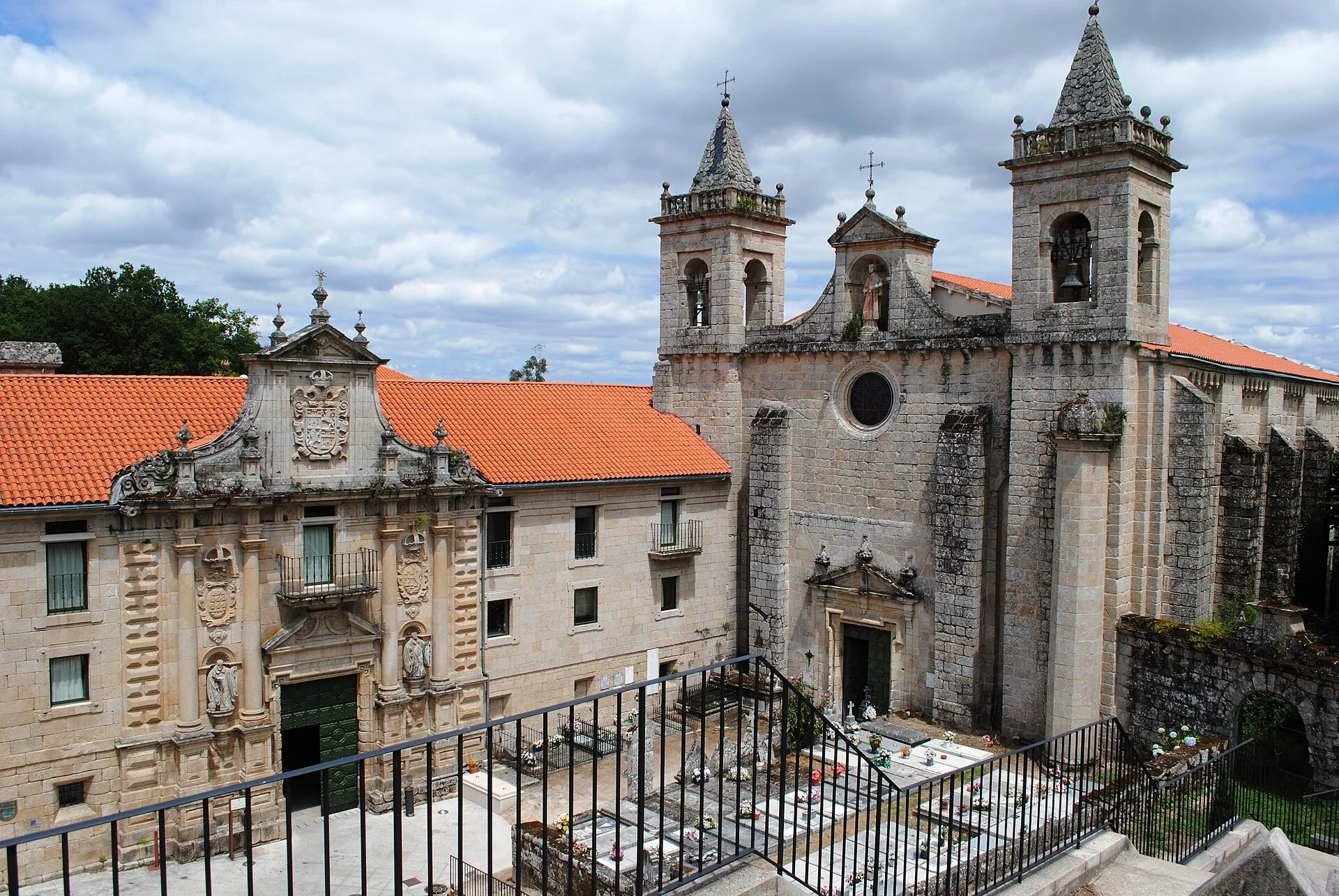
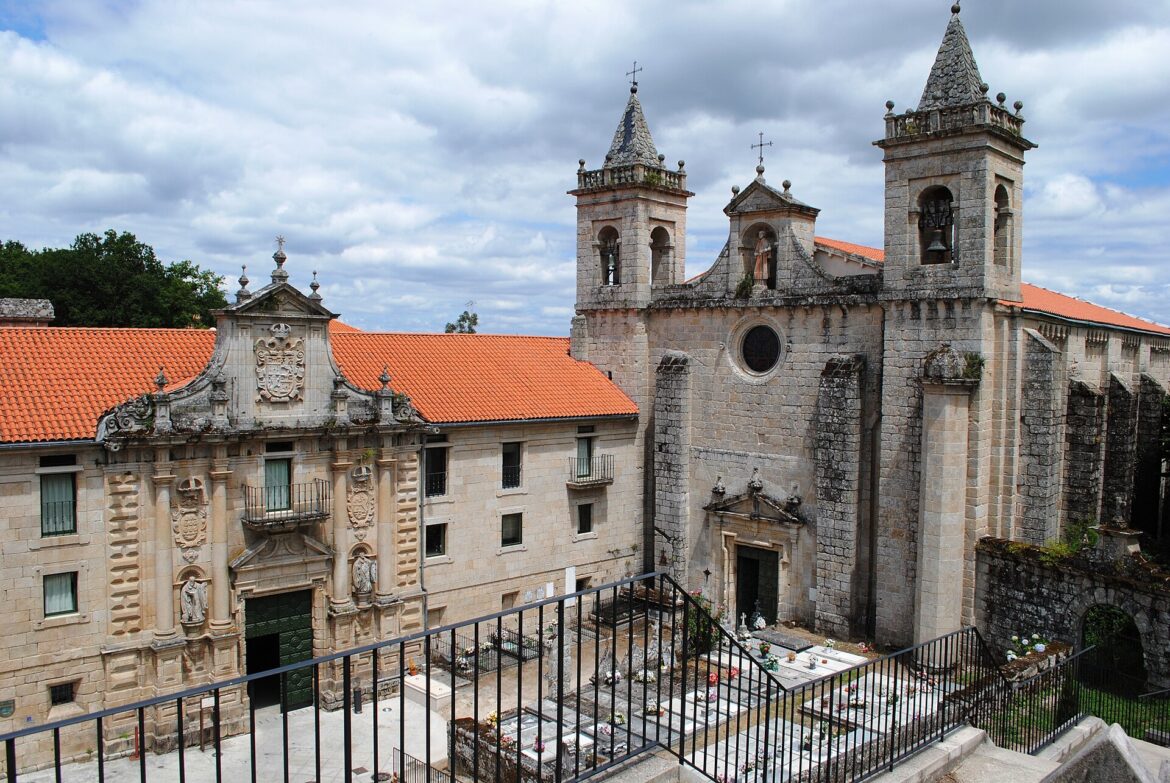
The three stage poursuit the discovery of the canyon between Parada de Sil and Santo Estevo de Ribas de Sil. This is one of the most impressive parties in the parks, with the most belvédères before arriving at the grand monastery of Santo Estevo.
The monasteries creusés in the rocks
The fourth day progressively removes the canyon to rejoin Esgos.
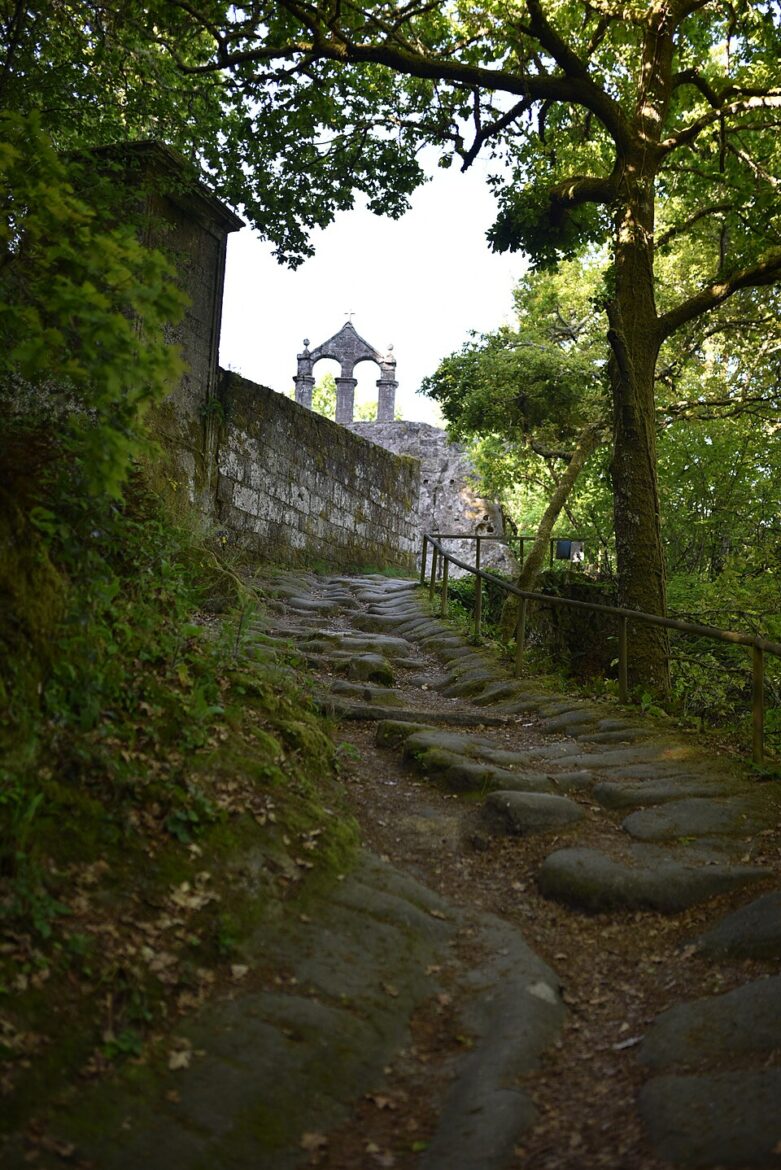
The great treasure of this stage is San Pedro de Rocas, l'un des ensembles monastiques les plus singuliers de Galice. A part of the architecture is directly integrated into the rock and lies in the preservation of the anthropomorphic tombs.
This combination of landscape, religious heritage and marches explain en grande partie l'attrait de l'itinéraire.
The parks are just past the village relay. The construction of an experience authored by the monastic history of the Ribeira Sacra.
From Esgos to Maceda
The fifth stage relie Esgos à Maceda sur un peu plus vingt kilomètres.
The marcheur passed notamment by the monastery of Santa María de Xunqueira de Espadañedo and discovered Niñodaguia, a village with its tradition of poterie.
The day ends in Maceda, dominated by the medieval château.
The sixth stage leaves Maceda in the direction of Montederramo and crosses the landscapes of the Sierra de San Mamede.
A part of the parks coincides with the old Via Nova romaine, rappelant that this region était déjà traversée par d'importants itinéraires il already pres deux mille ans.
Montederramo accueille également l'un des grands religious monuments du voyage: le monastery de Santa María.
Return to Castro Caldelas
La septième et dernière étape ferme la boucle.
After Montederramo, the marcher traverses the mountain landscapes and rural zones ahead of joining San Xoán de Camba to Castro Caldelas.
After 140 kilometres, the voyage has already begun.
Contrairement au Camino de Santiago, the objective is not past the point of a great final destination, but rather to explore a more profound territory.
A credential appelée Carta Sacra
The most curieux elements of O Camiño do Monxe are Holy Letter.
As the pèlerins of the Camino de Santiago with their credentials, the marcheurs can obtain the tampons at the end of the stages.
Monastères, châteaux, églises, mairies et établissements locaux participant à this expérience.
La Carta Sacra devient also the souvenir material of the voyage and reinforce the feeling of progression au fil des kilomètres.
Another way to discover Galice
The popularity of the Camino de Santiago has shown that a voyage à pied can become better than simple randonnée.
The Camiño do Monxe represents part of this philosophie, but in a different territory and with a proper rhythm.
Ici, pas de course vers Compostelle.
The objective is to slowly discover the Ribeira Sacra: its monasteries, its villages, its forests, its vignobles and its canyon du Sil.
For the voyageurs who know the Camino de Santiago or who know an experience of more days in the more frequent itinéraires, this route can become a particularly interesting alternative.
And the rappelle also has a real souvent oubliée: La Galice has quite a few routes that are close to Santiago.
-
English Way passes 30,000 pilgrims
The English Way has crossed a symbolic barrier before the end of the year. More than 30,000 pilgrims have already completed the Camino Inglés in 2026, allowing the route to surpass the total recorded during the whole of 2025 while there are still more than two months left before the end of the year. The…
-
Luján promotes religious tourism
Luján has just taken a step that goes far beyond organizing a massive pilgrimage. The Argentine city wants to convert the experience accumulated over decades receiving millions of faithful into a model of cooperation between some of the great Marian sanctuaries in Latin America. The First Ibero-American Forum of Marian Cities, held on…
-
The sign that baffles pilgrims
On the Camino de Santiago one soon learns to look at the signs. Yellow arrows, scallops, cairns and small indicators become inseparable companions for hundreds of kilometers. But in Vilamartín de Valdeorras, in the middle of the Camino de Invierno, a traffic sign has achieved precisely the opposite: attracting attention and causing surprise among those...