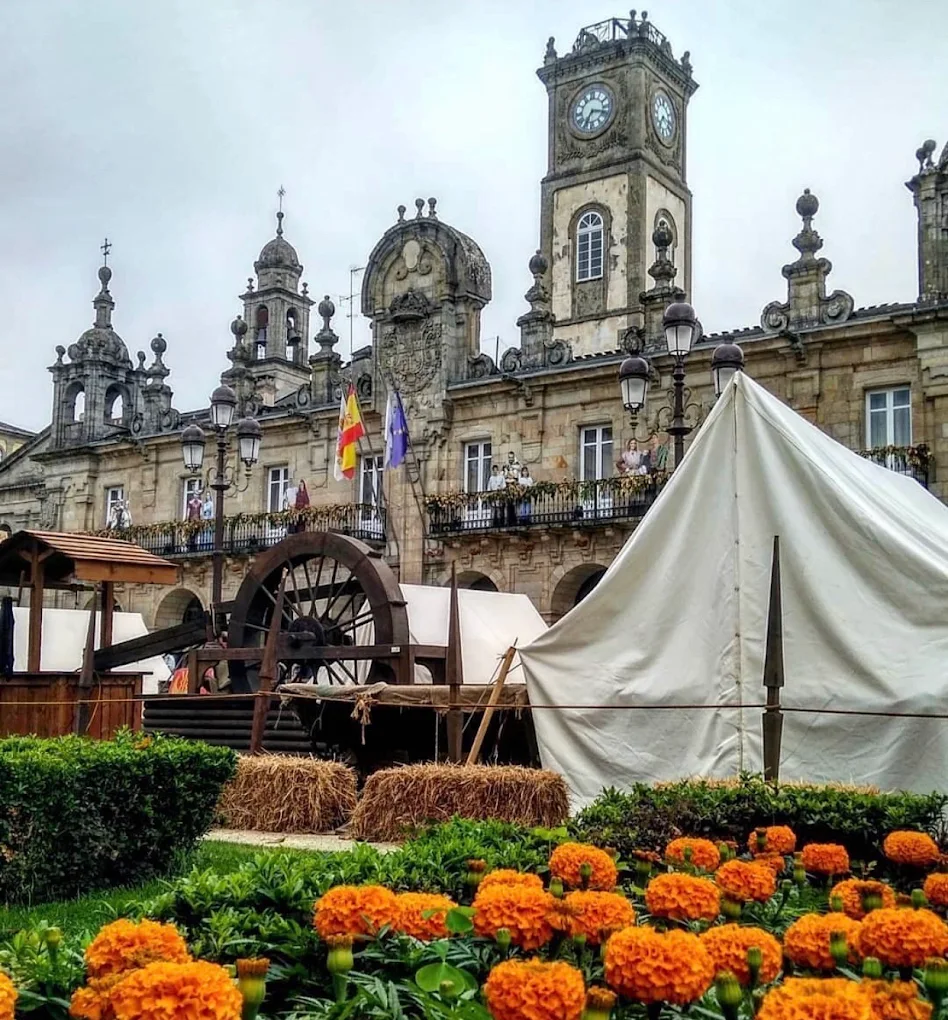
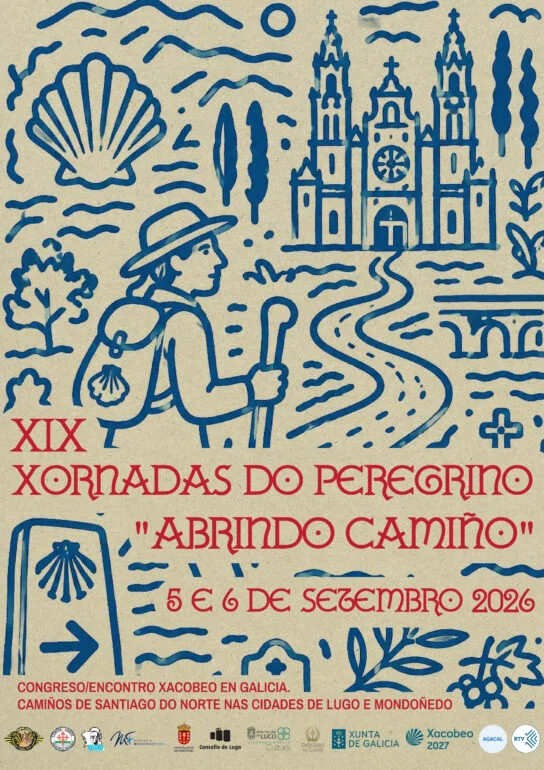
He Hall of the Mayor's Office of Lugo next Wednesday will host the presentation to the media of the XIX Pilgrim's Day “Open Camiño”, the Xacobeo Congress-Meeting that will be held on the days September 5 and 6, 2026 in Lugo and Mondoñedo and which will have as main protagonists the Caminos de Santiago del Norte in Galicia.
The call will serve to officially present a new edition of a meeting that has now been in existence for nineteen years and will once again bring together representatives of Jacobean associations, institutions and entities related to the Camino de Santiago.
This year the sessions will have a special territorial and human dimension. On the one hand, Lugo and Mondoñedo will share the spotlight as two cities deeply linked to the historical pilgrimages to Compostela. On the other hand, the meeting will be related to the tribute to Andrea López Chao, whose culmination will take place later in Santiago de Compostela.
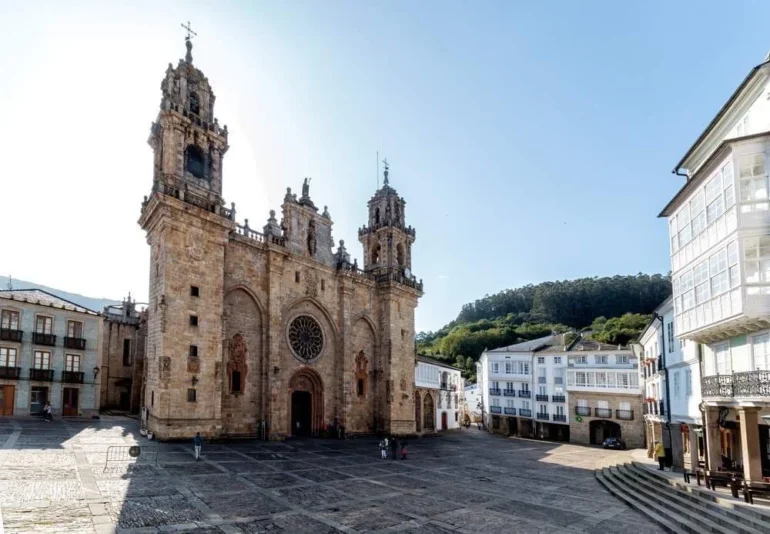
Presentation before the media at the City Council of Lugo
The presentation scheduled for Wednesday will feature, according to the information provided by the organization, representatives of the Abrindo Camino Association, the Group of Associations Camiño de Santiago do Norte, he Municipality of Mondoñedo, the producer Animatium and the SA of Xestión do Plan Xacobeo, as well as representatives of the Lugo City Council itself.
The call will allow the main lines of the XIX Pilgrim Festival to be presented to the media and to once again focus on the work carried out by associations, administrations and collaborators to preserve, disseminate and promote the different historical pilgrimage routes.
The joint presence of representatives from different fields reflects precisely one of the objectives of Opening the Way: create meeting spaces around the Camino in which institutions and associative movements can share experiences and projects.
Lugo and Mondoñedo, two deeply Jacobean cities
The choice of Lugo and Mondoñedo as scenarios of the meeting it is not coincidental. Both cities occupy privileged positions within the historical map of northern pilgrimages to Santiago.
Lugo constitutes one of the great references of the Primitive Path. The walled city receives pilgrims of numerous nationalities every year who travel one of the oldest routes linked to the Jacobean tradition before continuing towards Compostela.
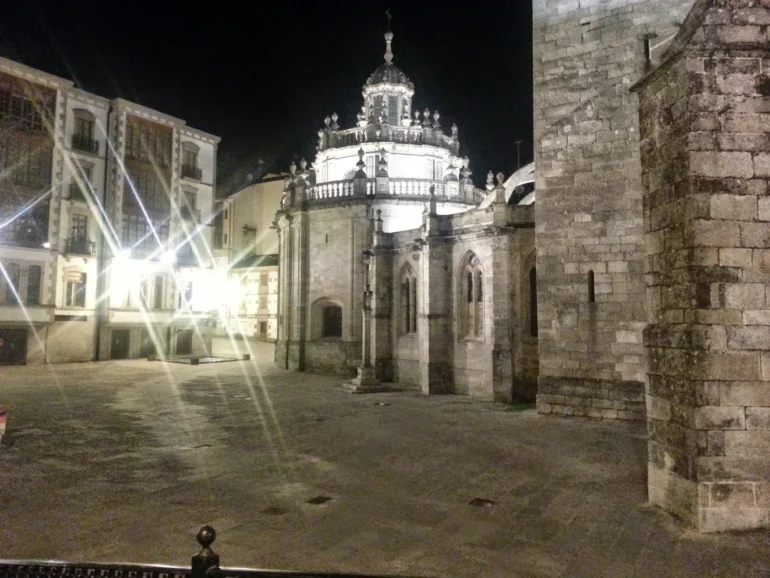
Mondoñedo represents, for its part, one of the most outstanding monumental enclaves in the Northern Way in Galicia. Its cathedral, its historical heritage and its close relationship with the route make the city of Lugo a fundamental stop for those who arrive in Galicia following the Camino from the Cantabrian coast.
The conferences will thus allow two cities and two major itineraries to be connected under the same objective: to vindicate the heritage, history and present of the Caminos del Norte.
Nineteen editions around the pilgrim
The XIX Pilgrim's Day They also arrive at a time of enormous international projection of the Camino de Santiago.
The growth in the number of pilgrims has transformed many localities and has generated new economic and cultural opportunities, but it has also opened debates on issues such as the conservation of historical routes, the protection of heritage, signage, hospitality and the balance between pilgrimage and tourism.
In this scenario, the associative movement continues to play a fundamental role. For decades, associations of friends of the Camino have worked on the ground recovering routes, collaborating on signage, serving pilgrims and spreading Jacobean culture long before the Camino reached its current international dimension.
The September sessions will also be an opportunity to recognize this work and reflect on the challenges that the routes face in the coming years.
The memory of Andrea López Chao
This year's edition will also have an important emotional aspect with the tribute to Andrea López Chao.
The initiative developed around his memory will culminate in the capital of Galicia, incorporating Santiago de Compostela to a meeting that will begin looking towards Lugo, Mondoñedo and the Caminos del Norte.
The tribute will thus provide a particularly human dimension to days that do not want to be limited only to talking about routes, figures or heritage.
The Camino de Santiago has also been built thanks to people who, from different areas and for generations, have dedicated time and effort to keeping the pilgrimage alive. Remembering them is also part of the conservation of Jacobean memory.
The Caminos del Norte meet in September
Next Wednesday's presentation will be the public starting point of a new edition of Opening the Way.
Then the time will come for the days themselves, the days September 5 and 6, when Lugo and Mondoñedo become meeting points for associations, institutions, specialists, collaborators and people linked to the Camino de Santiago.
An event that reaches its nineteenth edition looking to the future of the Jacobean routes, but without forgetting its history or the people who have contributed to keeping them alive.