



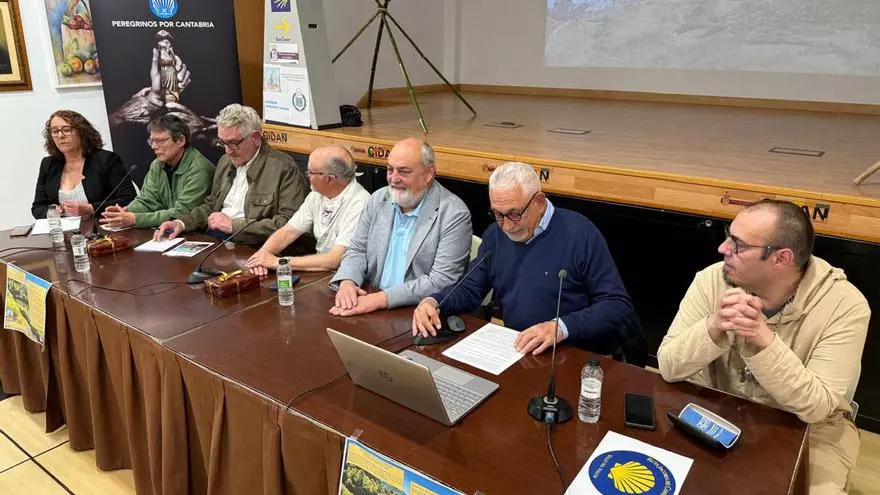
The conferences in Laviana bring together leaders of the Camino to promote the northern routes
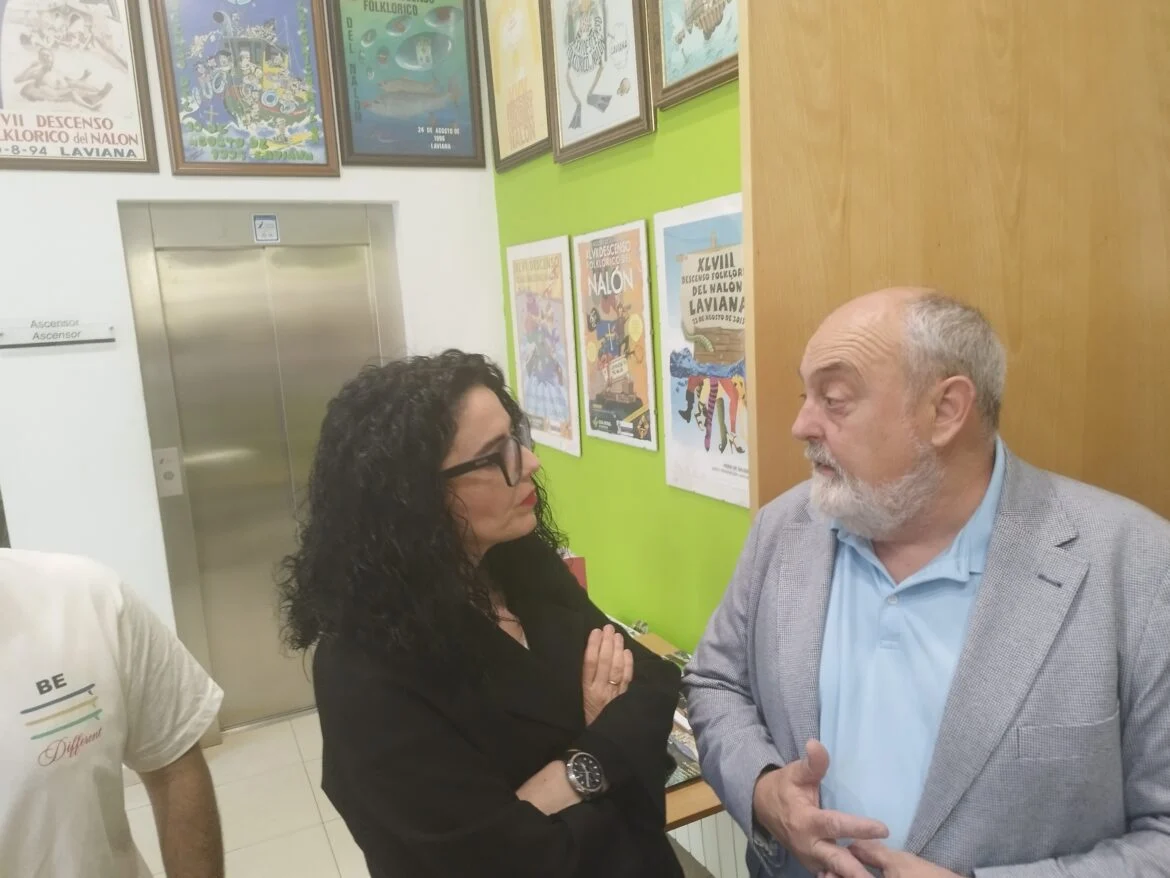
The conference, which seeks to promote a route that for years was falling into oblivion, was inaugurated in the Cidan de Pola de Laviana by Fernando Rodríguez Pandiella, president of the Cultural and Gastronomic Society “La Pegarata”; Julio Garcia, mayor of Laviana; Ana Vanesa Gutiérrez, Minister of Culture; and Rosa del Carmen Álvarez Campal, president of the Association of Friends of the “Camino de las Asturias”.
The event also had a very special cultural component, with the performance of the piper from “La Pegarata”, Pelayo Coalla, who performed such emblematic pieces as The Chalaneru y Asturias, beloved homeland, providing identity and emotion at the start of the day.
Prominent representatives of the Jacobean world also participated during the meeting, such as Emilio Arnés del Pozo, vice president of the Association of Friends of the Camino de Santiago de Álava; Valeriano Teja Oruña, president of the Association of the Northern Ways of Spain (Basque Country, Cantabria, Asturias and Galicia); Laureano Garcia, president of the Federation of Associations of Friends of the Camino de Santiago of the Principality of Asturias, president of the Asturian-Galaica Association of the Interior of Tineo and member of the Spanish Federation for the Northern Paths; and Luis Fernandez Ansedes, president of the “Abriendo Camino” Association of Friends of the Camino de Santiago de Mondoñedo (Lugo) and vice president of the Group of Associations of the Camino de Santiago del Norte.
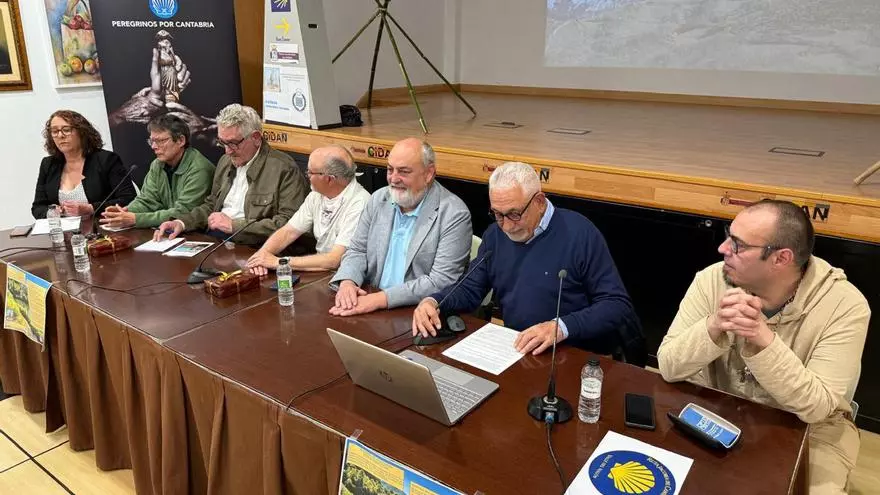
🤝 The union of the north, key to the future of the Camino
After the institutional opening, the meeting served to put a clear idea on the table: the Camino del Norte has enormous potential, but its development requires greater coordination between territories.
In this sense, the intervention of Valeriano Teja Oruña It was one of the highlights. Not only did he present the current situation of the northern routes, but he also knew how to energize the meeting, generating a climate of dialogue and understanding between associations.
Their involvement made it clear that the future of the Camino does not involve working in isolation, but rather building a joint vision between Galicia, Asturias, Cantabria and the Basque Country.
🌍 A growing Path with its own identity
The Camino del Norte has established itself in recent years as an increasingly valued alternative to other more crowded routes.
Its rich landscape, its cultural diversity and its lower saturation make it a very attractive option for pilgrims looking for a more authentic experience.
During the day, the importance of managing this growth with balance was insisted upon, avoiding losing the essence that has made the Camino unique.
🧠 Open debate on the pilgrim experience
Beyond growth, there was also space to reflect on the current model of the Camino.
In this context, more open visions were provided about the pilgrim's experience, focusing on the need to recover a certain authenticity.
Among them, the intervention of Ernesto Diaz, director of RTV Camino de Santiago, who provided a more bohemian and free vision of the Camino, pointing out that if elements such as the requirement to travel the last 100 kilometers to obtain the Compostela or the use of the credential as a central element were eliminated, the quality of the pilgrim's experience could increase.
A reflection that opens debate, but that connects with an increasingly visible trend: many pilgrims seek something more than fulfilling a requirement, prioritizing personal experience.
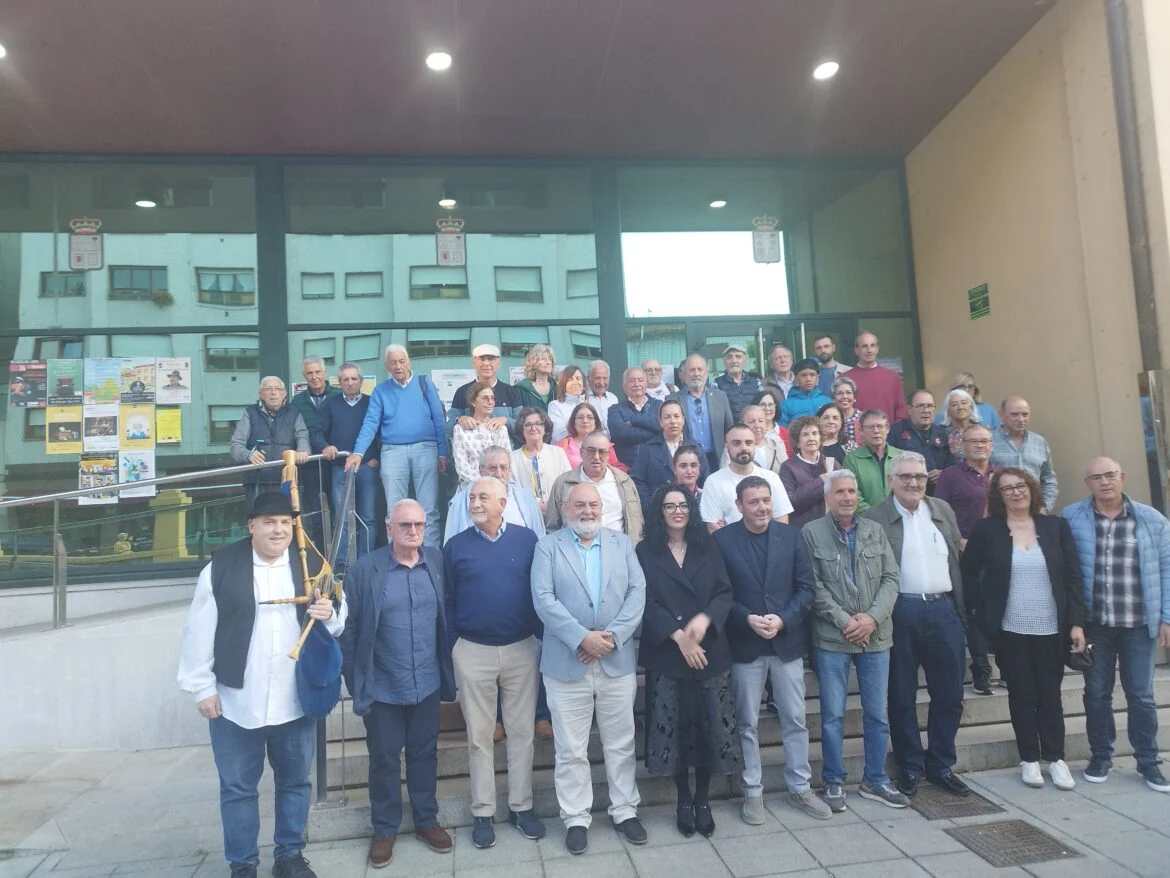
🧭 The challenge: grow without losing the essence
The meeting made it clear that the North Road is at a key moment. Its growth is an opportunity, but also a challenge.
Coordinating efforts, reinforcing common identity and maintaining authenticity will be determining factors for its future.
The Camino continues to evolve, but its essence—the connection between people—remains intact.
🌄 A unique opportunity for the north
Galicia, Asturias, Cantabria and the Basque Country have before them the opportunity to consolidate a joint proposal that reinforces the value of the Camino del Norte within the set of Jacobean routes.
The work of associations, experts and agents involved will be essential to take advantage of this moment and build a solid and attractive model.
Because, as was reflected during the day, the Camino continues to change... but it remains the same in its essentials.

















