



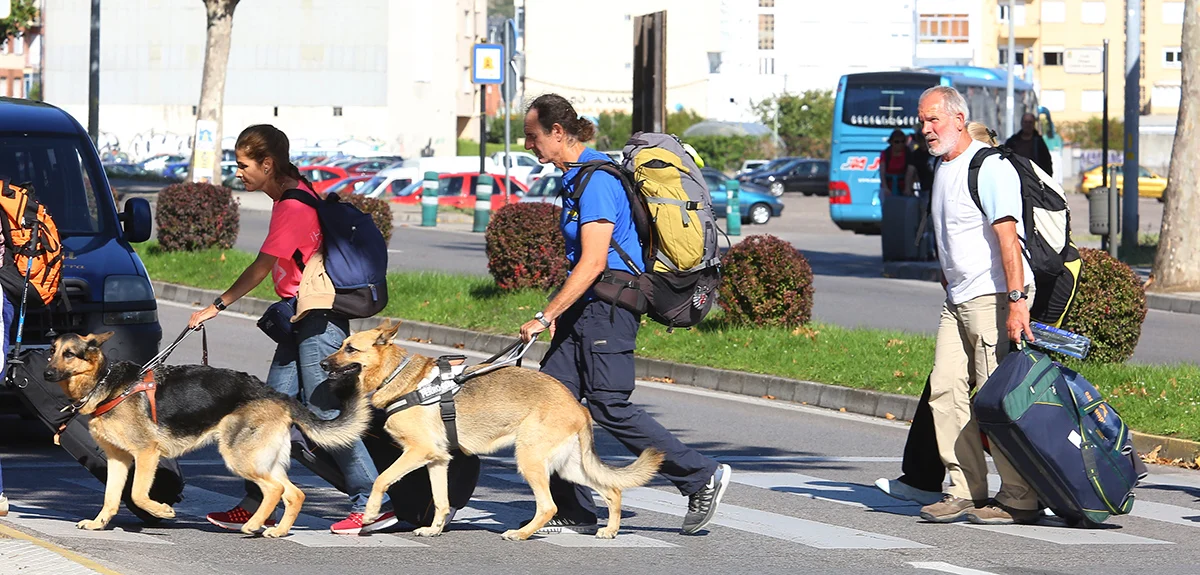
Technology, inclusion and improvement in a unique experience
The Camino de Santiago continues to demonstrate that it is an experience for everyone. More and more people with visual disabilities are embarking on their routes, breaking barriers and demonstrating that pilgrimage does not depend on sight, but on will, preparation and spirit.
Far from being an insurmountable obstacle, blindness does not prevent you from enjoying the Camino. On the contrary, many pilgrims highlight that the experience becomes even more intense, by connecting with the environment through other senses such as hearing, touch or smell.
Thanks to the evolution of accessibility, technology and social support, today the Camino de Santiago is more inclusive than ever.
An adapted experience that is already a reality
Blind people can enjoy a complete experience on the Camino de Santiago thanks to specific adaptations that facilitate each stage and reduce the difficulties of the route.
These adaptations allow the trip to be safe, organized and enriching, making each day a personal achievement.
The growth of inclusive initiatives demonstrates that the Camino is no longer just a historical route, but also a space for integration.
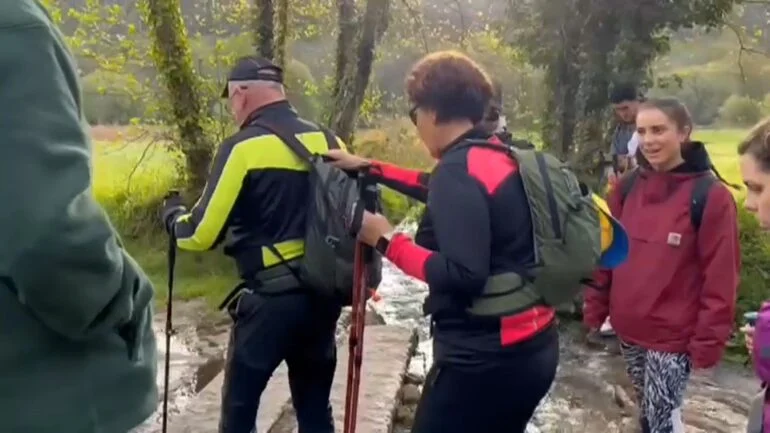
Technology, key to walking autonomously
One of the great advances that has allowed this inclusion is technology. Geolocation tools, accessible mobile applications and voice guidance systems allow visually impaired pilgrims to find their way during the journey.
Thanks to these innovations, they can follow the route of the Camino, know their surroundings and move more safely.
In addition, there are applications designed specifically for people with visual disabilities that offer real-time information about the environment, obstacles or points of interest.
This has meant a radical change in the way of living the Camino.
The fundamental role of accompaniment
Although technology is key, human support remains essential. Many blind people walk the Camino accompanied by guides, volunteers or even other pilgrims.
In some cases, associations organize collective experiences where camaraderie and mutual help are encouraged. These types of initiatives not only facilitate the journey, but also generate very strong emotional bonds.
The Camino de Santiago has always been a meeting place, and in this context, that community spirit makes even more sense.
Feel the Camino in a different way
One of the great peculiarities of this experience is that it is lived differently. Without sight as the main reference, pilgrims develop a deeper connection with the environment.
The sound of the wind, the singing of birds, the murmur of water or even changes in temperature become key elements of the trip
Many pilgrims agree that this way of traveling the Camino allows them to discover details that go unnoticed by others.
It's not just about walking, but about feeling.
Routes and conditions: choosing well is key
Not all routes of the Camino de Santiago are equal in terms of accessibility. Some offer better conditions for people with visual disabilities, such as well-marked paths, fewer obstacles and better infrastructure.
Among the most recommended routes are:
- French Way
- Portuguese Way
- English Way
These options allow for greater security and better organization of the route.
Advance planning is essential to ensure a positive experience.
Personal improvement and emotion at each stage
The Camino de Santiago is, above all, an experience of improvement. For blind people, each stage represents a challenge and a victory.
Physical effort is combined with emotional growth that transforms the perception of the trip. Arriving in Santiago is not only reaching a geographical goal, but also culminating a personal process full of meaning.
Many testimonies agree that the Camino changes the way of seeing life, even without being able to see it.
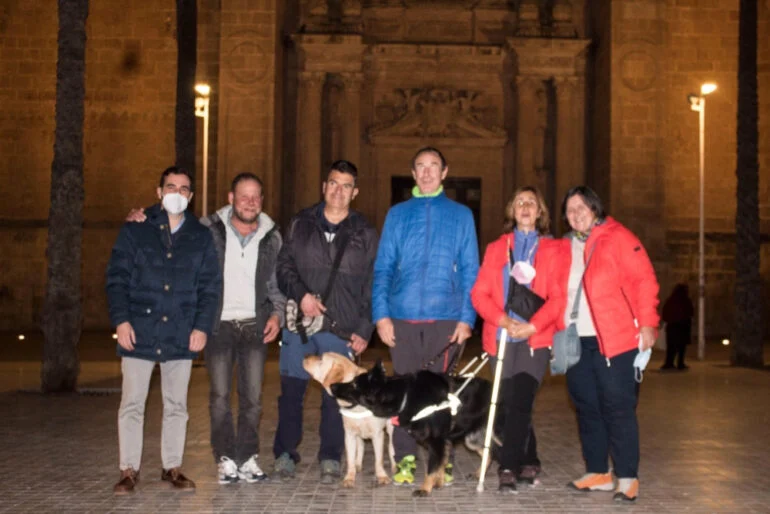
An increasingly inclusive Path
In recent years, the Camino de Santiago has made significant progress in terms of accessibility. There is more and more information, resources and services adapted to people with disabilities.
From prepared accommodation to signposted routes or digital tools, everything points towards a more inclusive model.
However, there are still challenges to improve, especially in some more demanding or less adapted stages.
Social impact: a message that inspires
The stories of blind people on the Camino de Santiago are generating a great social impact. Not only do they make visible the importance of accessibility, but they also inspire other people to overcome their own limits.
These experiences show that the Camino has no barriers, and that anyone can experience it with adequate preparation.
The message is clear: the Camino is for everyone.
Conclusion: the Camino feels beyond sight
The Camino de Santiago continues to evolve, adapting to new realities and demonstrating that inclusion is part of its essence.
For blind people, traveling through it is not only possible, but can become one of the most intense and transformative experiences of their lives.
Because the Camino cannot be seen... it is lived, felt and shared.

















