



The political use of a spiritual symbol, with Francoism
Recent historical research has brought back to the table a little-known aspect of the Camino de Santiago: the use that the Franco regime made of the Jacobean tradition as a tool to reinforce the national and Catholic identity of Spain.
During those years, the figure of the Apostle Santiago was not only promoted as a religious reference, but also as an ideological symbol. The Camino and the pilgrimages were integrated into the official discourse as part of a vision of Spain deeply linked to Catholicism and national unity.
Organized pilgrimages and ideological message
In this context, organized pilgrimages were promoted, many of them linked to the military or institutional sphere. These marches not only had a spiritual meaning, but also served to transmit values such as discipline, sacrifice and identification between religion, homeland and State.
The use of historical and religious symbols allowed us to reinforce a political story that sought to legitimize itself through tradition. The Camino, with centuries of history behind it, offered a perfect setting for that purpose.
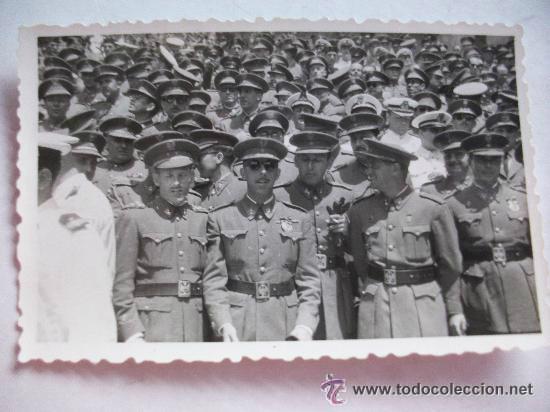
Santiago as an image of Spain abroad
The phenomenon was not limited to the internal sphere. In some cases, these initiatives also sought to project abroad an image of Spain as a nation united around faith and its traditions. The Xacobeo thus became a cultural and symbolic tool that served to reinforce the country's identity at a time of international isolation.
The political use of religious symbols was not exclusive to the Camino, but the historical and spiritual force of Santiago de Compostela made the phenomenon have special relevance.
A Path with many stages in history
Historians remember that the Camino de Santiago has had very different meanings over the centuries. It was a great medieval pilgrimage route, it went through periods of decline, it was recovered in the 20th century and today it is an experience open to people from all over the world with very diverse motivations.
Knowing these episodes helps to understand that the Camino is not only a physical itinerary, but also a historical construction that has changed over time.
The current Camino, very different
Today, the Camino de Santiago is experienced in a very different way. Pilgrims of all nationalities and beliefs travel there for personal, cultural, sporting or spiritual reasons, in a much more plural and open environment.
Looking at the past allows us to better understand the present and remember that, beyond any political or ideological use, the Camino has survived thanks to the thousands of anonymous pilgrims who have kept it alive generation after generation.

















