



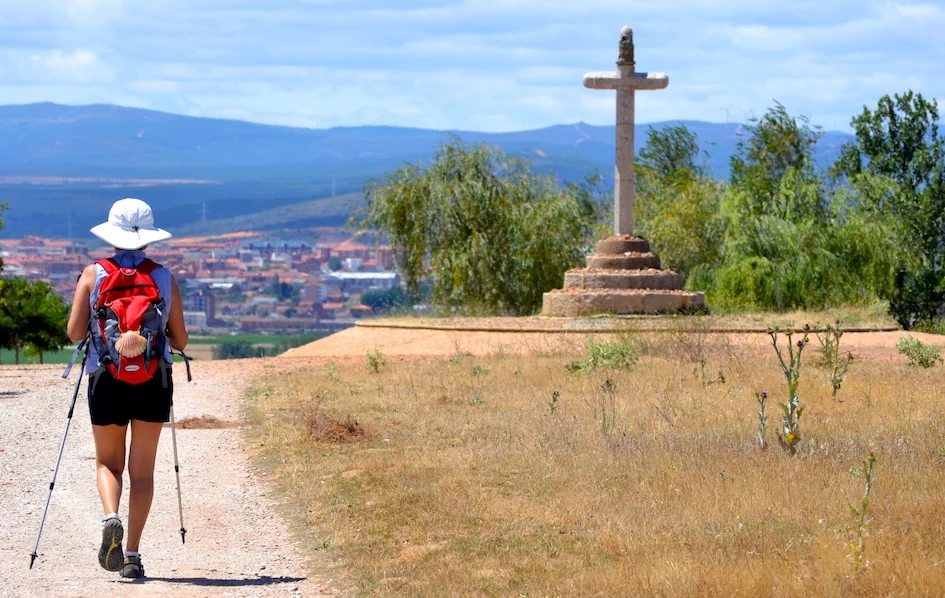
The Ertzaintza investigates the suspect after detecting an alleged pattern of action against foreign women who walked the Camino de Santiago alone
The safety of women traveling Camino de Santiago is once again at the center of the debate after the arrest of a man from 76 years in Hondarribia (Guipúzcoa), accused of committing alleged crimes against the sexual freedom of several pilgrims who were traveling alone on the Jacobean route.
As reported by the Ertzaintza, the arrested man approached women who were walking unaccompanied, started a conversation and, suddenly, hugged and kissed them without their consent. The investigation suggests that this behavior could have been repeated with at least eight pilgrims since last June.
I always chose women who traveled alone
Police investigations indicate that the suspect acted following a very similar pattern.
He was looking for rural sections of the Camino de Santiago, where he boarded foreign pilgrims who walked alone. After engaging in an apparently cordial conversation, he attempted to kiss and hug the women against their will.
One of the victims managed to get away from the man and immediately reported the incident to the Ertzaintza, which allowed the investigation to begin.
An operation allowed him to be arrested
After collecting the complaint and verifying that there could be more cases with the same modus operandi, the Ertzaintza deployed a surveillance device with plainclothes agents in the area where the incidents had occurred.
During the operation, the agents located a man whose description matched that provided by the victims and observed how he allegedly tried to repeat the same behavior with another pilgrim. At that moment he was arrested.
The arrested person was transferred to police stations and the investigation remains open to locate possible new victims.
A case that raises concern
The event has generated concern among Jacobean associations and pilgrims, especially because many people decide to walk the Camino alone, one of the most common and valued experiences of the pilgrimage.
Although these types of events are rare compared to the enormous volume of people who travel the Jacobean routes each year, the case has reopened the debate on the need to reinforce information, prevention and safety on certain isolated stretches.
The Camino de Santiago is considered one of the safest pilgrimage routes in the world, but the authorities remind that any inappropriate behavior must be reported immediately to prevent it from being repeated with other people.
El Camino must remain a safe place
Thousands of women walk the Camino de Santiago alone every year without suffering any incident. Precisely for this reason, pilgrim associations insist that cases like this should not tarnish the image of a route characterized by hospitality and respect, although they do serve to remind us of the importance of acting quickly in the face of any behavior that violates the freedom or integrity of pilgrims.
The Ertzaintza has requested citizen collaboration to identify possible victims who have not yet filed a complaint, while the judicial investigation into the case continues.

















