



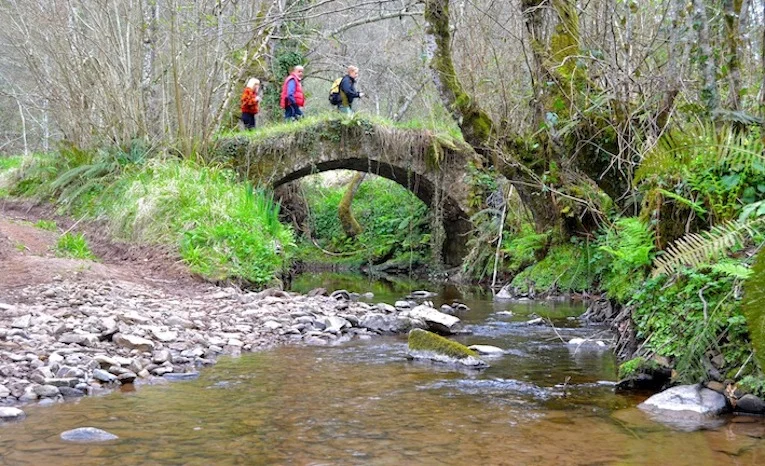
The first Chinese volunteer hospitaleros arrive on the French Way
The Camino de Santiago continues to grow as an international phenomenon and now adds a new historical chapter: the arrival of the first Chinese volunteer hospitaleros to the shelters of the French Way in the province of León.
The first volunteers from China have already begun their reception work in the shelters of Ponferrada and Astorga thanks to a new cultural cooperation agreement related to the Camino de Santiago. The news has generated enormous expectation within the Jacobean world and reflects the extent to which the Camino has become a global experience capable of uniting completely different cultures.
The new Chinese hospitaleros participate in tasks of caring for, welcoming and helping international pilgrims within one of the most innovative Jacobean volunteer programs developed in recent years.
The initiative was born after the collaboration established between the Camino Francés Federation and the Beijing Camino International Cultural Exchange Center, a Chinese organization linked to the growing interest in the Camino de Santiago in Asia.
León becomes the international gateway of the Camino
The first shelters to receive these Asian volunteers are the San Nicolás de Flüe public shelter in Ponferrada and the Siervas de María shelter in Astorga.
Both spaces thus become the first on the French Way to integrate Chinese hospitaleros into an official Jacobean hospitality program.
The incorporation of volunteers began this month of May and the first sensations between pilgrims and reception teams have been very positive.
According to those in charge of the hostels, the new hospitaleros stand out for their close, participatory attitude and for the enormous interest they show towards the Jacobean tradition and the experience of welcoming pilgrims.
The project also represents an important step in the internationalization of the Camino de Santiago and confirms the growing weight that Asia has within the pilgrim phenomenon.
China discovers the Camino de Santiago
Interest in the Camino de Santiago in China continues to grow.
During recent years, the number of Chinese pilgrims has increased significantly on the Spanish Jacobean routes, especially on the French Way and the Portuguese Way.
Many Asian travelers see the Camino as an experience related to:
- welfare,
- cultural tourism,
- nature,
- personal growth,
- and emotional disconnection.
The rise of hiking, spiritual tourism and the so-called “slow travel” is also greatly promoting this phenomenon.
More and more young Chinese are seeking trips related to authentic experiences and human contact, and the Camino de Santiago fits perfectly within that global trend.
Now, some of those pilgrims no longer just come to walk.
They also want to be an active part of Jacobean hospitality.
Nearly twenty Chinese volunteers will participate this year
The program foresees that during 2026 about twenty Chinese volunteers will participate in different fortnightly shifts in shelters on the French Way.
All of them will carry out completely altruistic tasks:
- reception of pilgrims,
- help in shelters,
- coexistence tasks,
- logistic support,
- and cultural accompaniment.
The organizers emphasize that the objective is not only to help in the daily management of the hostels, but also to promote human and cultural exchange between pilgrims from all over the world.
The Camino de Santiago thus becomes a true international bridge between Europe and Asia.
Hospitality remains the soul of the Camino
The figure of the volunteer hospitalero is one of the great historical traditions of the Camino de Santiago.
For decades, former pilgrims have dedicated part of their free time to helping out for free in hostels and reception spaces for walkers.
Many consider that this experience represents “the other side of the Camino.”
It's not just about walking.
Also to care for, listen to and accompany those who arrive tired after long stages.
It is precisely this human dimension that has fascinated many Chinese volunteers who now want to be part of this tradition.
The Spanish Federation of Associations of Friends of the Camino de Santiago has been organizing international training courses for new volunteer hospitaleros for years in countries around the world, including China, Australia, the United States and Germany.
The Camino de Santiago becomes a global phenomenon
Tourism experts consider that the Camino is experiencing one of its moments of greatest international expansion.
The growth of foreign pilgrims is completely transforming the profile of the Camino de Santiago.
Currently walkers arrive from:
- South Korea,
- USA,
- Brazil,
- Germany,
- Japan,
- Italy,
- and increasingly from China.
The mixture of:
- adventure,
- spirituality,
- hiking,
- nature,
- culture,
- and human experiences
has turned the Camino into one of the great tourist and emotional phenomena of the 21st century.
León also appears as one of the key territories within this international transformation thanks to its historical importance within the French Way.
The future of the Camino will be increasingly international
The agreement with Chinese organizations provides for a future expansion of the international hospitaleros program.
In fact, those responsible for the project are already studying considerably increasing the number of Chinese volunteers over the coming years.
Many experts believe this trend will continue to grow as the Camino de Santiago gains popularity in Asia.
And as thousands of pilgrims continue walking towards Santiago de Compostela, something seems increasingly evident:
The Camino no longer belongs only to Spain.
It belongs to the world.

















