

Debunking the Myth! The Catholic Faith Remains at the Heart of the Camino de Santiago, Despite Those Trying to Rewrite Its History
The data for 2025 are conclusive: almost 80% of the pilgrims who arrive in Compostela do so with religious motivations. A reality that contradicts self-serving narratives that seek to separate the Route from its deep spiritual roots.
Santiago de Compostela, Spain – While the Camino de Santiago continues to break records for annual influx, already exceeding 240,000 pilgrims so far in 2025 (8% more than the previous year), a recurring controversy attempts to blur its true essence. From certain sectors, there is an insistence on presenting the Camino as a purely sporting, tourist or leisure experience, stripping it of its undeniable root: the Catholic faith. However, the official data of the Pilgrim's Office in Santiago de Compostela they are stubborn and reveal an inescapable truth.
The statistics for 2025 categorically deny any attempt to secularize the pilgrim motivation. The numbers speak for themselves:
- An overwhelming 46,25% of the walkers declares a exclusively religious motive.
- Other 33,68% combines the religious motivation with other interests (cultural, sports, etc.).
- Just a 20% does it exclusively for non-religious reasons.
This means that, overall, Almost 80% of the pilgrims who arrive in Santiago do so driven, at least in part, by faith. An overwhelming majority that highlights the artificiality of certain discourses that seek to reinterpret the essence of the Camino.
The Voice of the Church: Recognize All Motivations, Without Forgetting the Goal
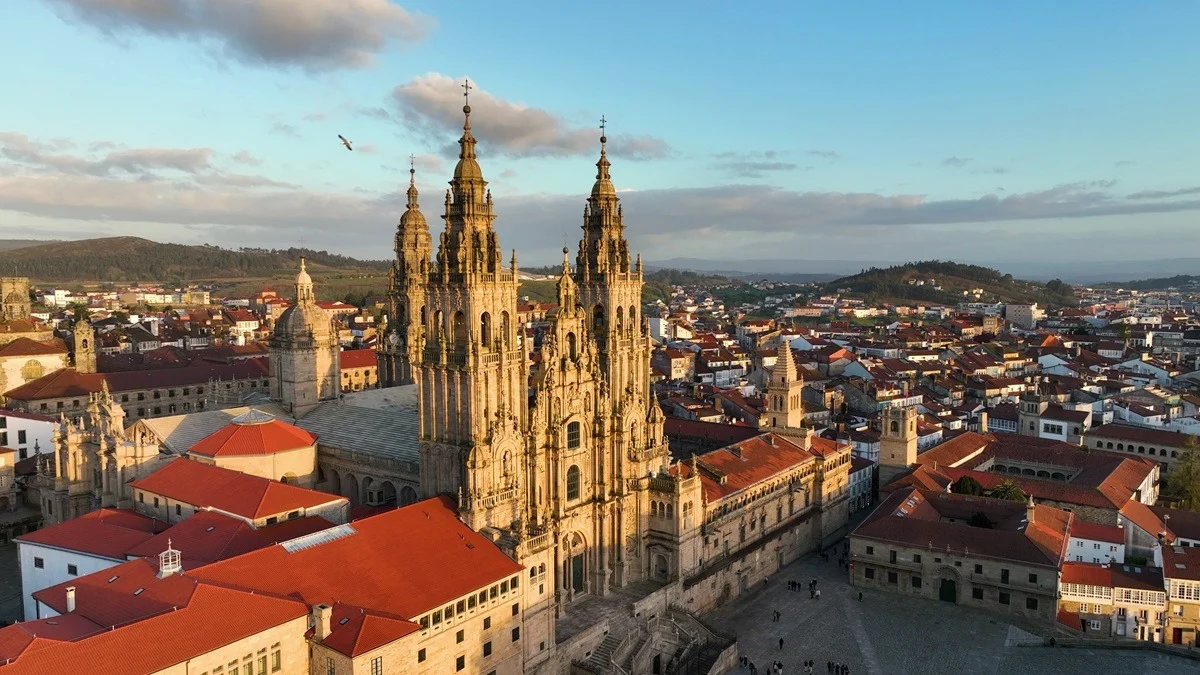
Given this panorama, the position of the Church, and in particular of the Archbishop of Santiago de Compostela, Monsignor Francisco José Prieto Fernández, is clear and nuanced. Already in January, the Archbishop insisted on the "legitimacy" of all motivations. However, he did not hesitate to remember the words of Pope Francis and claim the fundamental truth: this pilgrimage "has meaning because it has a goal, the goal is the Cathedral that houses the memory of the Apostle's tomb."
Pope Francis himself, last December, although he celebrated the numerical increase in pilgrims, invited a crucial reflection on whether they really carry out a "true pilgrimage." An invitation not to lose sight of the soul of the Camino, beyond figures and fashions.
A Global Phenomenon with Local Roots
The Camino de Santiago continues to attract people from all over the world. Of the more than 241,000 pilgrims in 2025, almost 150,000 are foreigners, with the Americans (9.23%) in the lead, followed by Germans (5.6%), Portuguese (5.6%) and Italians (4.3%). This global reach only reinforces the universality of a phenomenon that, although it embraces diverse cultures, maintains its unbreakable anchorage in an ancient tradition of faith.
In short, official statistics are a resounding echo of history. The Camino de Santiago, in its contemporary heyday, remains largely a journey of faith. Ignoring or attempting to rewrite this reality is not just data manipulation, but an attempt to strip the Jacobean Route of its deepest and truest identity.