



Mystery on the Camino de Santiago in Lugo that surprises pilgrims
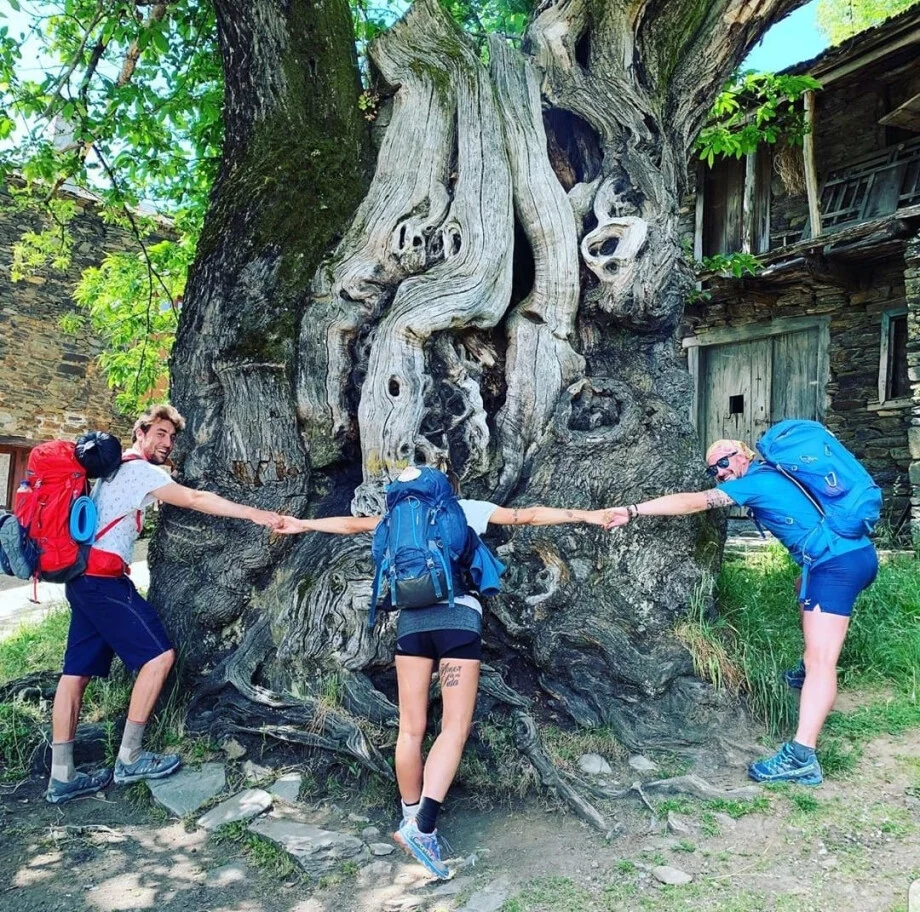
In full Camino de Santiago, in the province of Lugo, there is a place that is attracting more and more attention within the tourism in Galicia and of hiking in Spain. A small town near Triacastela keeps one of the oldest secrets of the Camino: a chestnut tree that is more than 800 years old that, without making a noise, has become a mandatory stop for many pilgrims.
It does not appear in the guides as a great monument, nor is it a massive tourist spot. But whoever passes by there usually stops.
And that's what makes it different.
A centenary tree that marks the Camino
Known as the Castiñeira de Ramil, this tree not only stands out for its size or age. What is really surprising is what is happening around him.
Pilgrims traveling the French Way, one of the most important routes in the tourism of the Camino de Santiago, they feel the need to stop.
No signs. No explanations.
It just happens.
These types of places fit within the growing interest in experiential tourism, he inner journey and routes that combine nature, history and real emotions.

More than eight centuries of history on the Camino
This chestnut tree already existed when the Camino began to establish itself as a pilgrimage route in Europe. Since then, it has seen thousands of people pass by, entire generations of walkers looking for something more than just getting to Santiago.
Today, in the midst of the rural tourism in Galicia and of long distance hiking, these types of corners are gaining value.
Not only because of their history, but because of what they transmit.
The mystery: a stop that is not explained
The curious thing is not the tree itself, but what happens to the pilgrims.
Many describe similar sensations:
- need to stop
- unexpected silence
- moments of reflection
- connection with the environment
It is not something that can be easily measured or explained. But it is part of that less visible side of the Camino that does not appear in brochures or social networks.
The Path beyond tourism
The growth of tourism on the Camino de Santiago It has brought more services, more accommodations and more visibility. But it has also sparked interest in this type of more authentic places, where the experience is different.
Here there is no:
- hotels
- large infrastructures
- no tourist attractions
Just nature, history and a feeling that is difficult to describe.
And that, for many pilgrims, is precisely what they are looking for.
A place that remains in memory
On an increasingly busy Camino, these small corners make the difference. They are unexpected pauses that break the rhythm and connect with something deeper.
Because he Camino de Santiago It is not just walking, nor just tourism.
It's also finding places you didn't know you needed.
And this, in Lugo, is one of them.

















