



The Hidden Flavor of Lugo: The Gastronomic Route
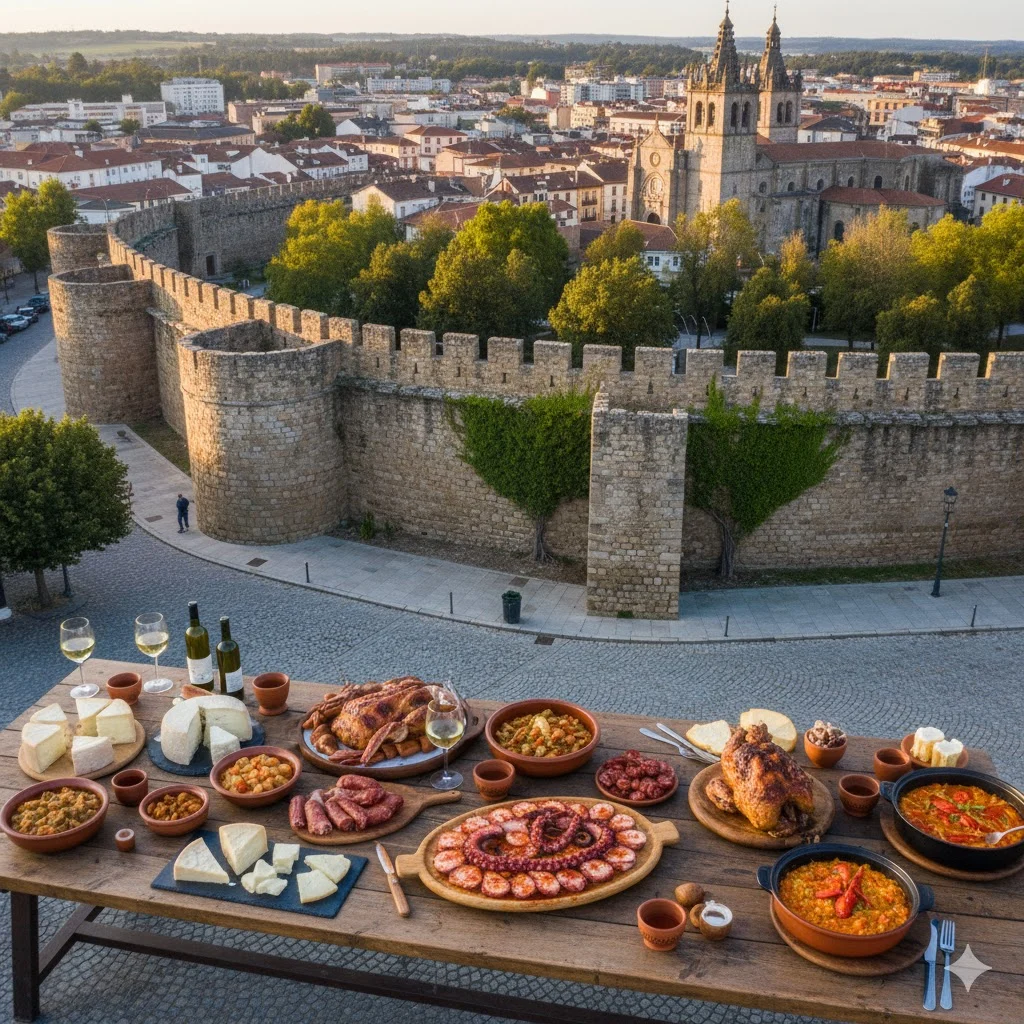
The province of Lugo, known internationally for the Roman Wall that embraces its capital and for being the gateway to a large part of the Camino de Santiago, hides a less visible but equally monumental treasure: its gastronomy.
Recently, the prestigious magazine National Geographic has traced an unavoidable route through the Lugo towns where you eat the best, highlighting a cuisine that is distinguished by the excellence of its raw materials, respect for tradition and the uniqueness of its Denomination of Origin products.
This selection travels through the province from sea to mountain, demonstrating that in Lugo each region has a culinary gem to offer.
The Excellence of the Interior and the Road
The list of National Geographic pays tribute to the flavors of the land and the products that have historically sustained the pilgrim:
- Vilalba: The Kingdom of Capon In the heart of A Terra Chá, Vilalba is synonymous with a traditional culinary delicacy: the Capon. These castrated chickens, raised in freedom and fed with corn, are the stars of a centuries-old pre-Christmas fair that attracts lovers of haute cuisine. The magazine highlights that in places like the Vilalba Parador o To Nova Ruta This gem is honored, often accompanied by San Simón da Costa Cheese, a smoked emblem of the province.
- Palas de Rei: Dairy Cradle and Octopus Famous for being a key point of the French Way, Palas de Rei is located in the A Ulloa region, birthplace of the creamy Arzúa-Ulloa Cheese. National Geographic invites you to learn about projects like Archeixal, which combine agrotourism and artisanal production. For the pilgrim, the Grocery store A Nosa Terra, where the most iconic product of Galician gastronomy is served.
- Pedrafita do Cebreiro: The Hat-Shaped Cheese At the eternal gateway to Galicia, Pedrafita do Cebreiro boasts a unique cheese: Cebreiro cheese. With a unique mushroom or chef's hat shape, this fresh, unctuous dairy product with a slight acidic touch is a display of delicacy, highlighted by the publication as one of the great cheese references in the community.
- Suarna Ship: Butelos and Androllas Among the inland mountains, Navia de Suarna keeps the cult of the pig alive. The area is famous for its artisan sausages, such as androllas and the butelos, close relatives of botillo berciano. These products, made with ribs, bacon and smoked lean, are the center of a gastronomic festival at the beginning of March and can be tasted in traditional establishments such as To Roxoa o To Tumbadoira.
The Treasures of the Mariña Lucense after Lugo
The northern coast of Lugo, known as A Mariña, brings the most exquisite flavors of the Cantabrian Sea to the list of National Geographic:
- Viveiro: Hake with National Reputation This municipality is praised for having what is, according to the magazine, "perhaps the most renowned hake in the country". Thanks to its port of Celeiro, one of the most important in terms of volume and quality of fishing, Viveiro is an unmissable destination for lovers of fresh fish and seafood, with an atmosphere that "lives by and for the sea."
- Ribadeo: Rice with Lobster and Coastal Luxury On the eastern edge of the province, Ribadeo is a reference that combines seafaring tradition with a touch of modernity. It is especially famous for its Soup Rice with Lobster, a dish that attracts diners from all over Galicia. The magazine highlights its ability to offer grilled meats and stews, complementing a high-class gastronomic experience.
- Lourenzá: The Most Precious Faba Although it is not seafood, Lourenzá, in the Mariña of Lugo, is synonymous with spoon and the famous Faba de Lourenzá. This legume, white and with an exceptionally creamy texture, combines wonderfully with both sea and land products, consolidating its reputation throughout Spain.
Lugo thus demonstrates that its wealth lies not only in its monumental heritage, but in a deep and authentic cuisine, capable of seducing the most demanding palate. The selection of National Geographic It is an invitation to explore Galicia beyond its clichés, spoon in hand and with the certainty that each stop will be a tribute to flavor.

















