



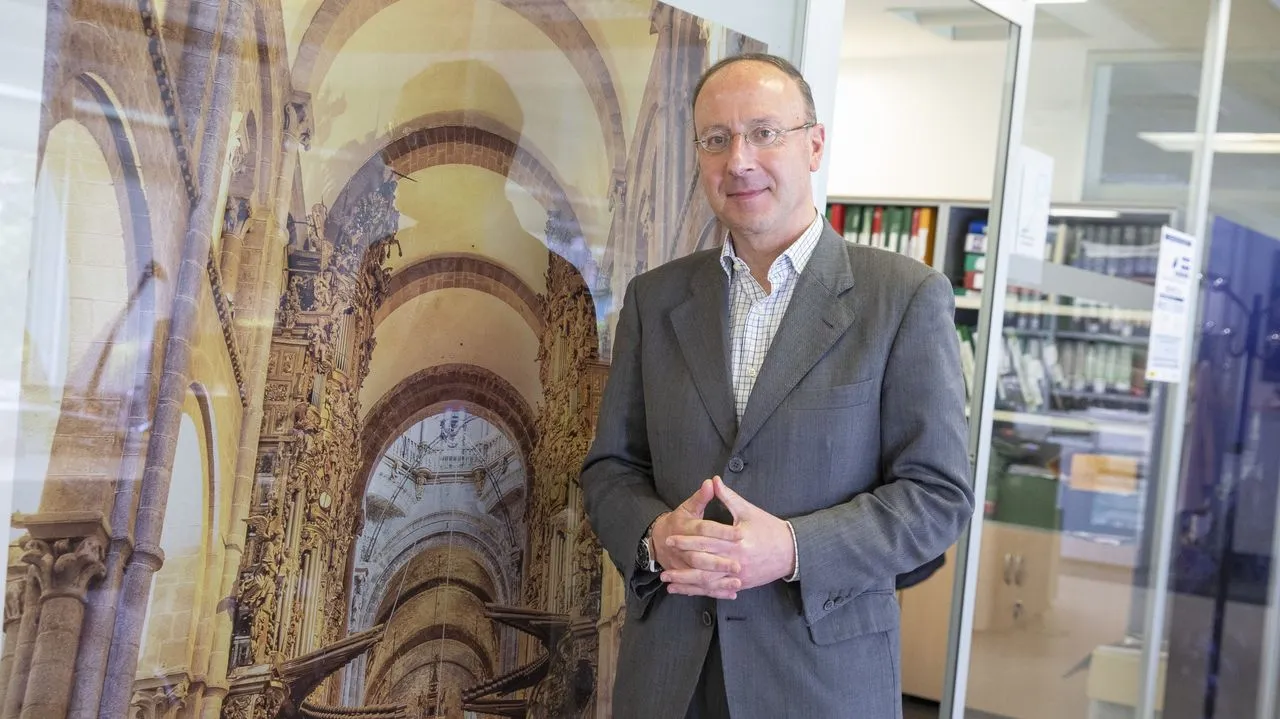
Francisco Singul: An Expert Who Navigates the Past and Future of the Camino de Santiago
Francisco Singul, historian, writer and director of the Culture Area of the Xacobeo Plan Management Society, is recognized as one of the greatest experts on the Camino de Santiago. From his position, he has decisively influenced the national and international dissemination of the route over the last three decades.
Doctor in history and author of more than 30 books on Jacobean themes and other genres, Singul values the evolution of the Camino as "very positive" since the Holy Year of 1993, a turning point. The exponential growth of pilgrims and the revitalization of Jacobean associations stands out, the result of greater research and dissemination promoted by the Xacobeo Plan.
Challenges and Perceptions of the Current Path
Singul addresses concerns about «tourism» of the Camino, especially in its final sections. He emphasizes that the majority of pilgrims do not see themselves as tourists and warns against the idea of selling the Camino as a mere tourist package. Insists on the need for administrations, associations and media highlight civic, spiritual and cultural values that differentiate the pilgrimage from a simple pleasure trip.
Regarding the "massification" In certain sections, Singul clarifies that, although there are specific concentrations during peak hours and months of good weather near Santiago, we cannot speak of overcrowding in the rest of Galicia. It recognizes that the Camino boosts the local economy, a reality since the Middle Ages.
Long-Distance Routes and International Collaboration
Regarding lengthening the minimum distance for the Compostela, Singul clarifies that it is an exclusive decision of the Church (Cathedral Chapter), outside its power. However, he emphasizes the promotion of long-distance routes, citing historical examples such as the Catalan pilgrims and the recovery of ancient trails.
Highlights the international coordination through the European Federation of the Camino de Santiago, which he presides this year. The objective is to promote the real physical connectivity between Jacobean paths throughout Europe, making it easier for pilgrims to start their trip from their own countries and travel along well-marked and attended routes. It confirms that Europe is firmly betting on long-distance pilgrimage.
Heritage, Relics and Pilgrims of the 21st Century
Singul offers his personal opinion on the Iron Cross, advocating to care for and pamper heritage and traditions, both tangible and intangible. As for the museumization of the Portico of Glory, explains that the restriction of visits is a necessary measure for its conservation after the restoration, ruling out a 3D recreation for now.
Regarding the authenticity of the Apostle's relics, he welcomes the use of scientific methods to increase knowledge, but points out that experts doubt conclusive results due to the contamination and fragmentation suffered by the remains over the centuries. It confirms that the "multiplication" of relics was a common practice in the Middle Ages.
Finally, regarding the interest of current pilgrims, Singul believes that the desire to do selfies is not at odds with interest in history and culture. He highlights that many pilgrims, especially foreigners and repeat pilgrims, come specifically to learn about the cultural and gastronomic heritage of the route, and thanks Gronze.com for its work of dissemination and reference for pilgrims.

















