



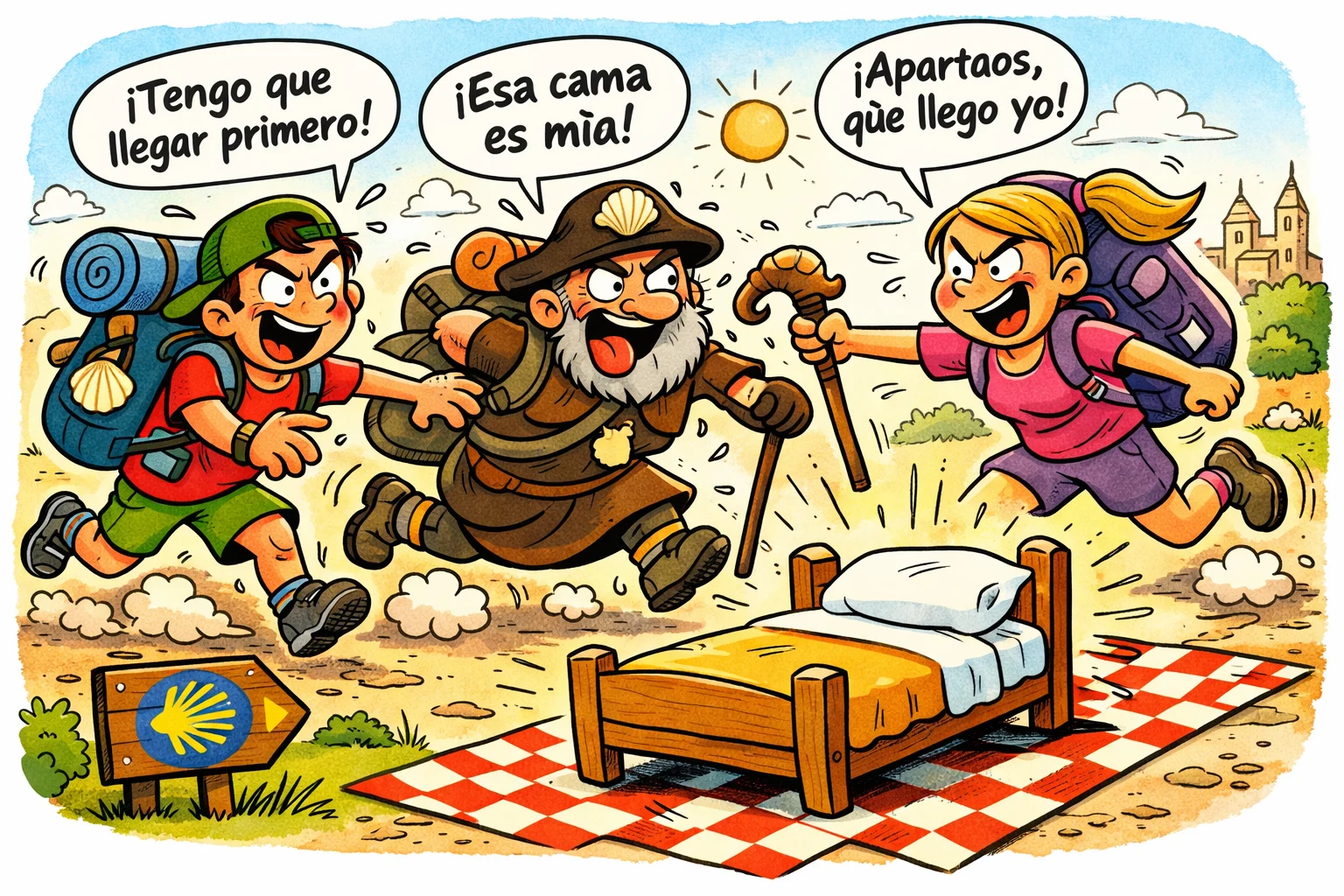
The “Race for the Bed”: The Challenge of Saturation on the Camino de Santiago from Sarria
He Camino de Santiago is experiencing an unprecedented transformation in 2026, but not all the changes are positive. One of the news that has been the most talked about in recent weeks is the involuntary "competition" that is generated in the final stretch of the route, especially from Sarria. What should be an experience of introspection and spirituality is becoming, for many, a morning race to secure a place in the shelters.
The 100 Kilometer Phenomenon: The Sarria Funnel
Sarria is the most popular starting point in the French Way, since it allows you to obtain the Compostela by complying with the minimum of 100 kilometers on foot. However, this popularity comes at a price. The overcrowding on this stretch has caused pilgrims to begin their stages at ungodly hours—sometimes at 4 or 5 in the morning—with the sole objective of reaching the next town before the sign goes up. "complete".
This dynamic alters the spirit of the Camino. Rest, a leisurely chat with other walkers and a visit to the small Romanesque temples in the area are sacrificed by the rush. The constructive criticism here is clear: the first-come, first-served system of public shelters, while traditional, is fostering competitiveness that clashes with Jacobean values.
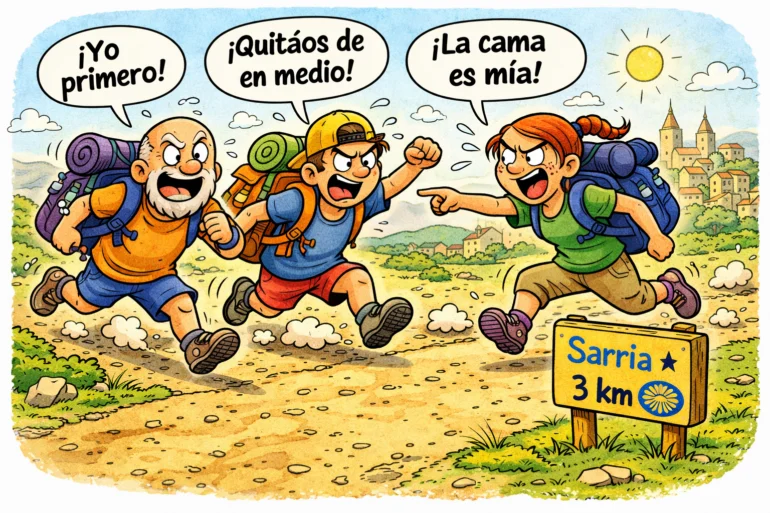
Towards a more Sustainable Management Model
So that the Camino de Santiago does not die of success, it is necessary that both the authorities and the pilgrims themselves adopt new strategies. Here we propose three key points to improve the situation:
- Promotion of Digital Reserve: Although the romance of arriving unplanned is part of the essence, the logistical reality of 2026 demands greater use of booking platforms in private hostels and hostels. This would reduce the walker's anxiety and allow them to enjoy the stages without looking at the clock.
- Route Diversification: It is vital to encourage Winter Road or the North Road to decongest the Sarria-Santiago axis. Galicia offers wonderful alternatives that still preserve the peace that the French section is losing at times.
- Expansion of Seasonal Places: Local authorities must anticipate occupancy peaks on specific dates, such as Holy Week or summer, enabling temporary reception spaces that are dignified to prevent any pilgrim from being left on the street.
The Role of the Pilgrim: Calm vs. Speed
The pilgrim must also engage in self-criticism. The Camino is not a sports speed test. Opting for stages outside the conventional stops (the so-called "end of stage towns") can be the perfect solution to find empty hostels and enjoy true Galician hospitality. At the end of the day, the goal is not to get to Santiago first, but to get there better.

















