He Camino de Santiago It is not just a hiking trail; It is an open-air museum that houses some of the most important architectural treasures in Europe. Upon entering Galicia, the landscape is transformed and the temples begin to tell stories of miracles, resistance and Romanesque art. For the pilgrim of 2026, visiting these stops is mandatory to understand the magnitude of the Jacobean Route.
Santa María la Real de O Cebreiro: The Beginning of the Galician Dream
At more than 1,300 meters above sea level, at the entrance to the French Way to Galicia, stands the church of Santa María la Real. This pre-Romanesque temple from the 9th century is famous for guarding the "Holy Miracle": a 12th century chalice and paten linked to the legend of the Holy Grail. Its robust stone structure, adapted to the snow and fog of the mountains, offers one of the most mystical experiences for those who cross the Pyrenees and arrive in Lugo.

The Monastery of Saint Julian of Samos
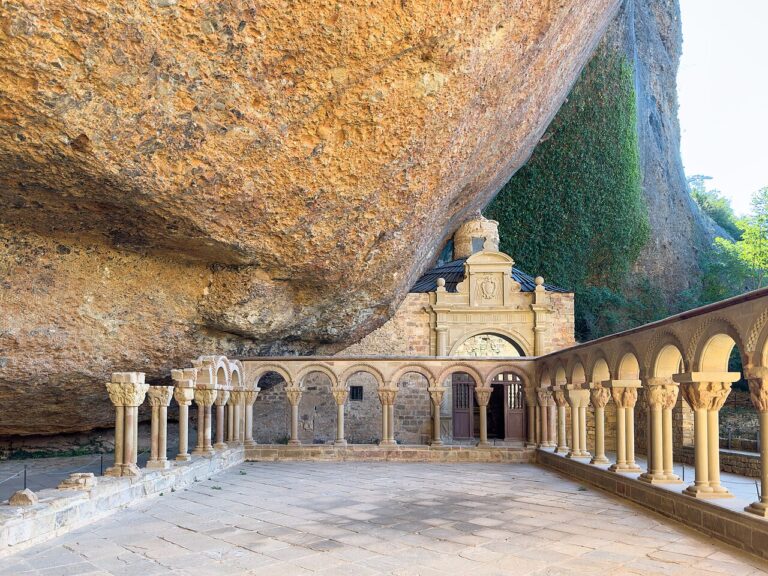
Following the route towards Sarria, the Samos Monastery It presents itself as a monumental vision in a deep valley. It is one of the oldest monastic foundations in Spain (6th century). Its Father Feijoo cloister is one of the largest on the peninsula, and its mix of styles—from Romanesque to Baroque—makes it an essential stop for art history lovers.

San Nicolás de Portomarín: The Church that “Walked”
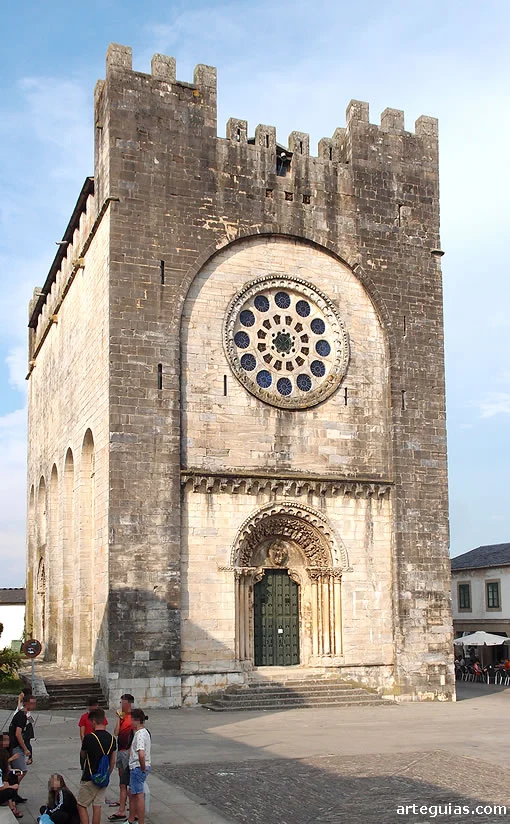
One of the most unique temples is the Church-Fortress of Saint Nicholas (or San Juan) in Portomarín. This Romanesque building is famous not only for its military appearance and its impressive rose windows, but also for its recent history: in the 1960s it was moved stone by stone from the old town, which was submerged under the Belesar reservoir. Today, you can still see the numbers on its ashlars, testimony of that historic rescue.
Iria Flavia and the Sanctuary of Slavery
Near Santiago, in the province of A Coruña, the Collegiate Church of Iria Flavia It marks the place where, according to tradition, the episcopal seat was before moving to Compostela. Very close, the Sanctuary of Our Lady of Slavery, with its impressive baroque façade, is a key point in the Portuguese Way, remembered for the healing miracles attributed to its source.

The Cathedral of Santiago de Compostela: The Final Destination
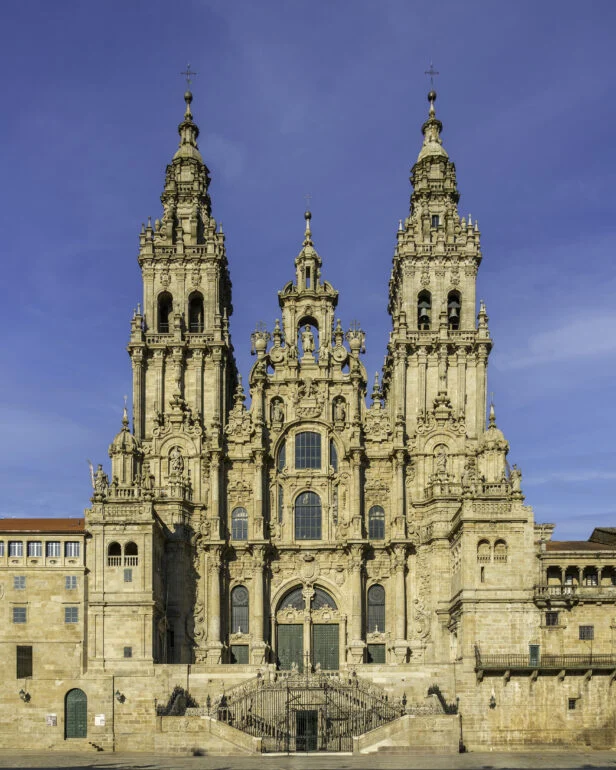
Obviously, no list is complete without the Santiago Cathedral. After restorations in recent years, the Portico of Glory shines in all its splendor. For this 2026, the Cathedral has implemented new simultaneous translation services in masses and volunteer programs, preparing for the next Holy Year 2027, whose Holy Door will open on December 31 of this year.