




The Quetzal Route Concludes its 35th Edition in Santiago After Traveling Several Paths
Two hundred young people from the emblematic expedition were received in the Plaza del Obradoiro after an adventure that merged history, culture and the Caminos de Santiago.
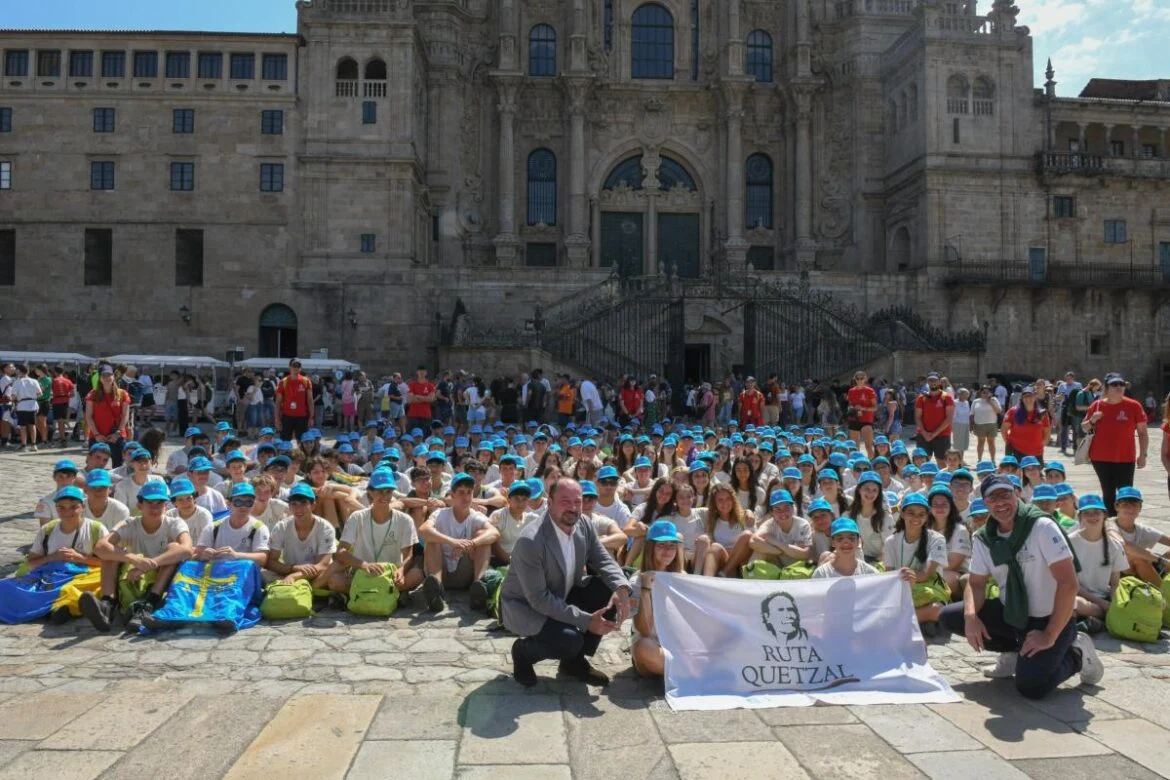
Santiago de Compostela put the finishing touch to the 35th edition of the Quetzal Route, receiving its 200 young participants this afternoon in the iconic Plaza del Obradoiro. After weeks of adventure, the expedition members completed sections of three historic Caminos de Santiago: the Portuguese Coastal Way, the Mozarabic Way and the Northern Way.
Xosé Merelles, director of Tourism of Galicia, welcomed the young people, emphasizing the value of this initiative. Merelles highlighted how the Quetzal Route "combines adventure with knowledge of the culture, history and heritage of the territories it crosses," which contributes to enhancing the Jacobean experience and bringing the Camino de Santiago closer to new generations. He also underlined the firm support of the Xunta for these projects that promote youth interest in culture and knowledge of the Camino, helping to disseminate the route internationally.
A Journey along Historical Paths and Rising Figures
The expedition began last June 29 exploring the Portuguese Coastal Way in the O Salnés region, following in the footsteps of Father Sarmiento. between the July 3 and 6, the young people moved to Estremadura to enter enclaves of the Mozarabic Way, knowing its history and relevant characters.
Since last Monday, the Quetzal Route returned to Galicia to continue your journey through the North Road, visiting such emblematic places as As Catedrais beach, Mondoñedo, Vilalba and Vilanova de Arousa, before arriving in Santiago de Compostela.
Interest in the Jacobean routes continues to rise. So far this year, the Portuguese Coastal Way has registered 41,480 pilgrims, a 20% more than in 2024. The Mozarabic Way accounted 4,705 pilgrims (+2%), and the North Road sumo 8,566 pilgrims (+8%).
The arrival of the Quetzal Route to Santiago not only celebrates the success of this expedition, but also reinforces the role of the Camino as a vital cultural and spiritual nexus. It continues to attract people from all over the world, especially youth, who find in this experience a unique form of adventure and learning.

















