




Jacobean associations promote a plan to renew signage
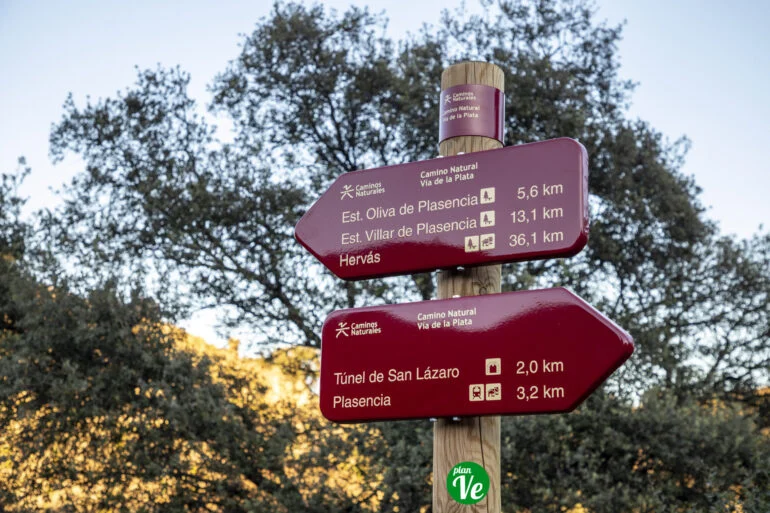
The Vía de la Plata is once again at the center of the Camino de Santiago. This historic route, which crosses the province of Zamora and connects the south with the north of Spain, has taken an important step towards its modernization with a joint project promoted by Jacobean associations.
The initiative does not come from nowhere. It is the result of months of work and a need that many pilgrims had already been pointing out: improving the signage and updating the route to adapt it to the current reality of the Camino.
A joint project for a clearer Path
The project, which brings together different associations linked to the Camino de Santiago, has a very specific objective: to review the entire route and improve its signage in a coordinated manner.
It's not just about painting arrows or putting up signs. The idea is much more ambitious. The teams will travel the Vía de la Plata section by section, analyzing the current state of the road, detecting problems and proposing technical solutions that allow clearer and more effective signage.
All this work will be collected in a technical document that will serve as a basis for future official actions.
“Mark, sign and walk”: a clear roadmap
The initiative is part of a joint work plan promoted by several Jacobean associations of Castilla y León. Under the motto “Mark, Signal, Walk”, the project seeks to unify criteria and improve the pilgrim's experience along the entire route.
Among the entities involved are associations from Zamora, Salamanca, Astorga and other key areas of the Camino, which reinforces the collaborative nature of the project.
The initial meeting, held at an emblematic point of the Camino such as the Fuenterroble hostel, served to lay the foundations for this collaboration.
Zamora, key point of the Vía de la Plata
The province of Zamora occupies a strategic position within the Vía de la Plata. This section connects directly with the Camino Sanabrés, which leads to Santiago de Compostela, and also with variants that even cross into Portugal.
Therefore, improving signage in this area is not a minor detail. It is key to guarantee the continuity of the route and avoid confusion for pilgrims, especially in rural sections where orientation can be more complicated.
Furthermore, the Vía de la Plata is one of the longest routes of the Camino de Santiago, originating in Seville and traveling towards the north of the peninsula, which increases the importance of maintaining a clear and well-defined route.

A historic route with new challenges
The Vía de la Plata has more than two thousand years of history, as it largely follows the layout of an ancient Roman road. This gives it enormous heritage value, but also poses challenges.
Unlike other busier roads, here the stages are usually long, the towns smaller and the infrastructure more limited. This makes signage even more important.
The experts themselves agree that this route offers a very authentic experience, similar to what the French Way had decades ago, but they also recognize that it needs improvements to adapt to the current growth of Jacobean tourism.
Financing and institutional support
The project has public financing through programs aimed at promoting tourism in the region. Specifically, it is part of aid for tourism actions with regional impact, managed by the regional administration.
This support is key so that the proposals that arise from the technical work can become real actions on the ground.
More than signage: improving the pilgrim experience
Although the main focus is on signage, the project has a broader scope. Improving the Camino also implies facilitating the pilgrim's experience.
Clear signage not only prevents losses or route errors. It also improves security, reduces uncertainty and allows you to enjoy the environment more.
On routes like the Vía de la Plata, where there are fewer services than on other roads, these details make the difference.
A necessary boost for a growing route
In recent years, the Vía de la Plata has been gaining prominence among pilgrims looking for less crowded alternatives.
Its calmer character, its rich landscape and its authenticity make it an increasingly attractive option. However, that growth also requires improvements.
This project comes at a key moment to consolidate the route and position it as a solid option within the Camino de Santiago.
Conclusion: a step forward for the Vía de la Plata
The renewal of signage in Zamora is not just a technical improvement. It is a bet on the future of the Camino.
Collaboration between associations, institutional support and work on the ground show that the Vía de la Plata is alive and evolving.
And that is, deep down, what keeps the Camino de Santiago current: its ability to adapt without losing its essence.

















