
Tradition, emotion and countryside united in a unique farewell
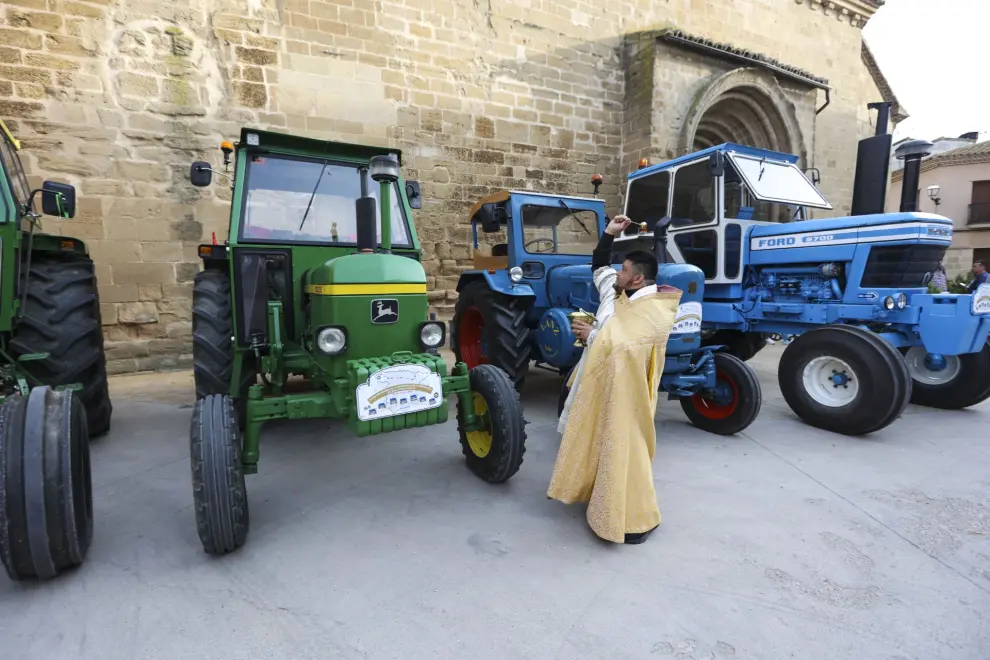
In the small municipality of Berbegal, in the heart of Somontano Huesca, the Camino de Santiago has experienced an unusual scene these days, but full of symbolism. It was not backpacks or walking sticks that were prepared to begin the route, but rather tractors. And before starting, there was something essential: the blessing.
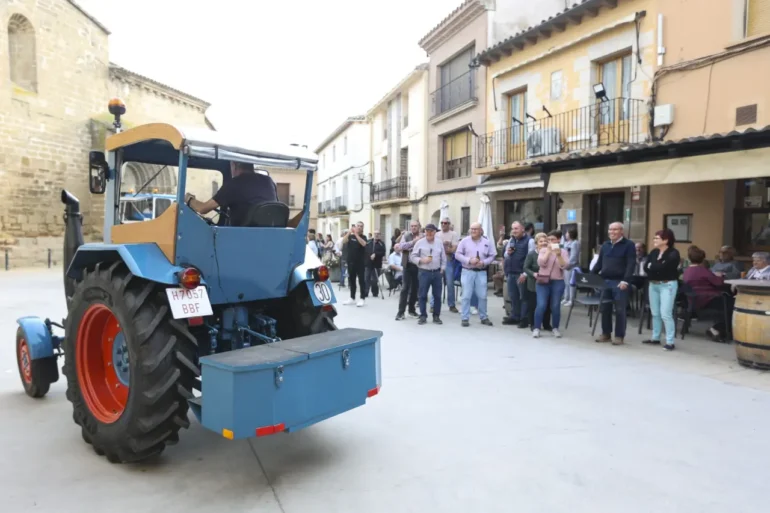
The event, held in front of the church of Santa María la Blanca, brought together neighbors, family members and onlookers who wanted to say goodbye to the protagonists of this very special adventure. Because what is about to begin is not just any journey, but a different pilgrimage, made on wheels, but with the same spirit of the Camino.
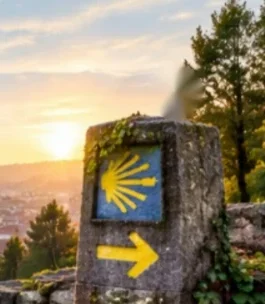
Each tractor carried its own shell, the universal symbol of the pilgrim, blessed in a simple but very emotional ceremony. A gesture that unites religious tradition, rural identity and that special connection that the Camino de Santiago continues to generate in every corner.
A different path, but with the same meaning
The initiative comes from a group of neighbors linked to the rural world, lovers of agricultural machinery and the Camino itself. Among them, Eugenio Cabau and Isabel Laporta stand out, promoters of an idea that mixes passion for the countryside and pilgrim spirit.
It is not common to see the Camino de Santiago done by tractor, but the objective is not to compete with other forms of pilgrimage, but to experience it from another perspective. Slower, closer to the terrain, more connected to the landscape.
The journey will not be short. We are talking about about 1,600 kilometers round trip, divided into several stages and lasting several days.
A farewell that mobilizes an entire town
The scene before departure was almost as important as the trip itself. The Berbegal square was filled with life with tractors lined up, ready to start, but waiting for that symbolic moment of blessing.
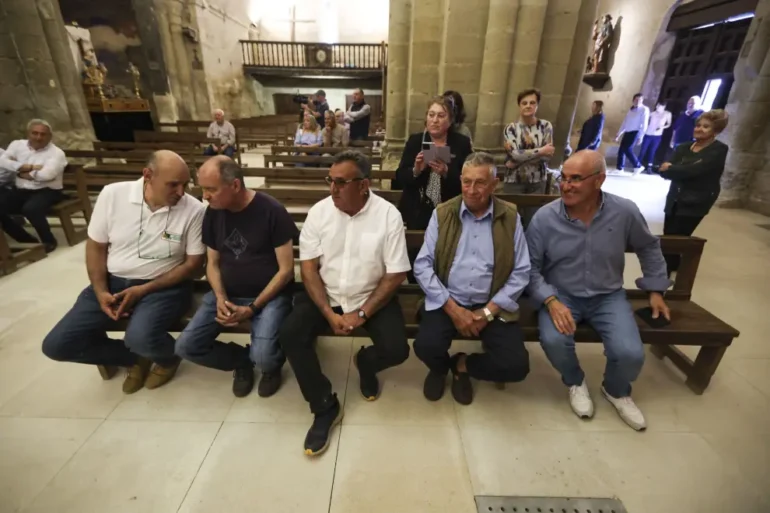
Neighbors of all ages attended the event. Some out of curiosity, others out of closeness with the participants, but all with the feeling of experiencing something special.
The local priest was in charge of blessing the vehicles, in an image that mixes the everyday with the extraordinary. Because in Berbegal, the tractor is not just a tool, it is part of life.
The countryside and the Camino, united in the same story
What makes this initiative special is precisely that union between two worlds that have always been connected, although rarely in such a visible way: the countryside and the Camino de Santiago.
For centuries, the Camino has crossed rural territories, small towns, farmlands. Places where life follows another rhythm, slower, more real.
This tractor pilgrimage recovers that spirit. It's not about getting there quickly, but about enjoying the journey, observing the landscapes, understanding the territory.
A route that will cross half of Spain
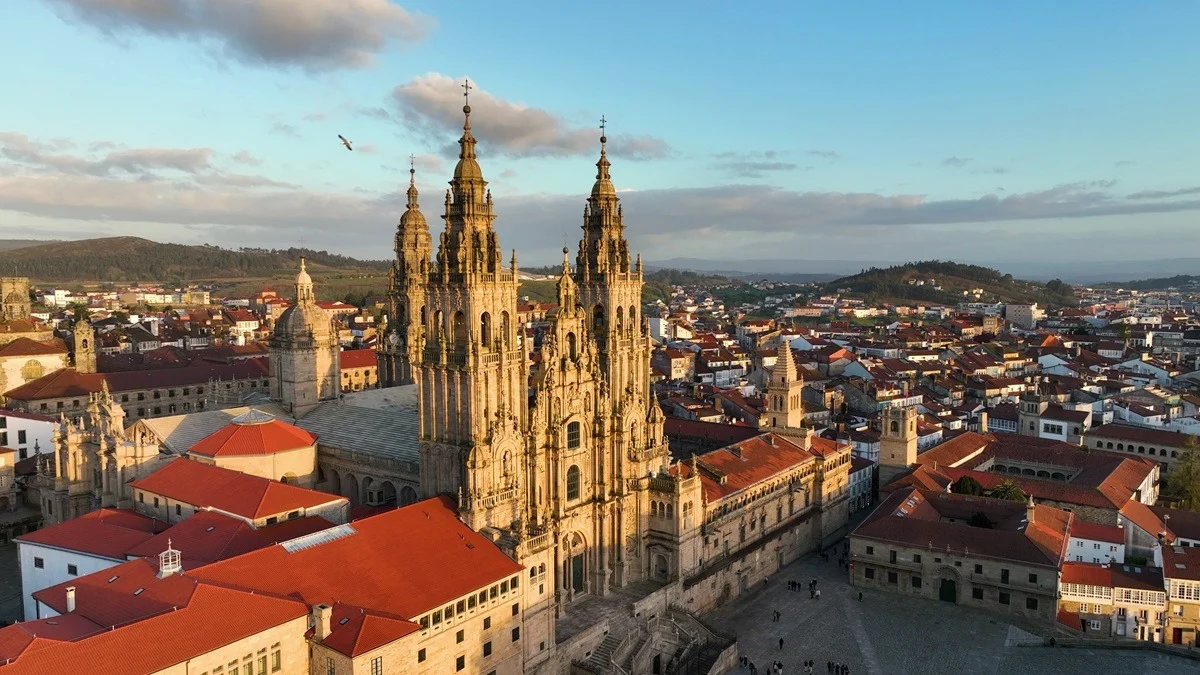
The planned route includes several key stages connecting Aragon with Galicia. From Berbegal, the group will advance through towns such as Borja, Santo Domingo de Silos, Sahagún or Villafranca del Bierzo, until reaching Santiago de Compostela.
Each day will involve traveling between 150 and 170 kilometers, a considerable distance taking into account the pace of these classic vehicles.
In addition, along the way other participants from different parts of Spain will join, which will turn the experience into something collective.
More than a trip: a way to reclaim the rural world
Behind this initiative there is also a clear message. It is not just about doing the Camino, but about valuing the rural world, its history and its traditions.
The tractors used are not modern. They are classic vehicles, some with decades of history, that represent a way of life that is gradually disappearing.
Walking the Camino with them is also a way of paying tribute to the countryside, its people and its memory.
A Camino without Compostela, but with meaning
It is important to clarify that this pilgrimage does not allow you to obtain the official Compostela, since the rules establish that it must be done on foot, by bicycle or on horseback.
But that doesn't detract from the experience. On the contrary, it reinforces it.
Because the Camino de Santiago is not just a document or accreditation. It is a personal experience, an experience that each person adapts in their own way.
And in this case, the tractor becomes the means to experience that path in a different way.
The power of the stories that are born in the towns
What happened in Berbegal demonstrates something that is repeated more and more: great stories are not always born in big cities.
Sometimes they arise in small towns, where life continues to have a different rhythm and where ideas are built from proximity.
This tractor pilgrimage is one of those stories. A mix of tradition, creativity and emotion that connects with the essence of the Camino.
Conclusion: when the Camino adapts to those who live it
The Camino de Santiago continues to evolve. The forms change, the profiles of pilgrims change, even the means change.
But there is something that does not change: the meaning of the trip.
In Berbegal, that spirit has been lived in a different way, on wheels, but with the same background.
Because in the end, the Camino is not how you do it... but what it leaves you with.