



Tattoos of the Camino de Santiago: the mark that does not erase
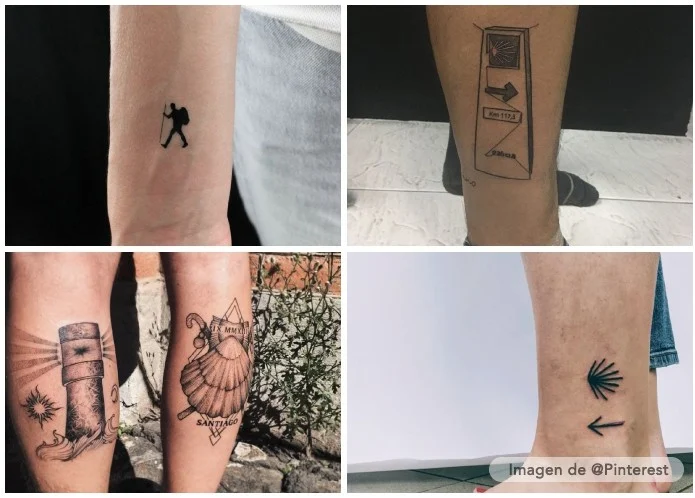
There are those who return from Camino de Santiago with blisters, who returns with lifelong friendships... and who decides to take the Camino engraved on their skin. Tattoos inspired by this unique experience have become an intimate and permanent way of remembering something that, for many pilgrims, marks a before and after.
Because the Camino is not always explained in words. Sometimes it is best summed up in a small, discreet, almost secret symbol. A scallop shell on the ankle, a yellow arrow on the wrist, a date, a simple word like thank you o I continue. Tattoos that do not seek to impress, but to remember.
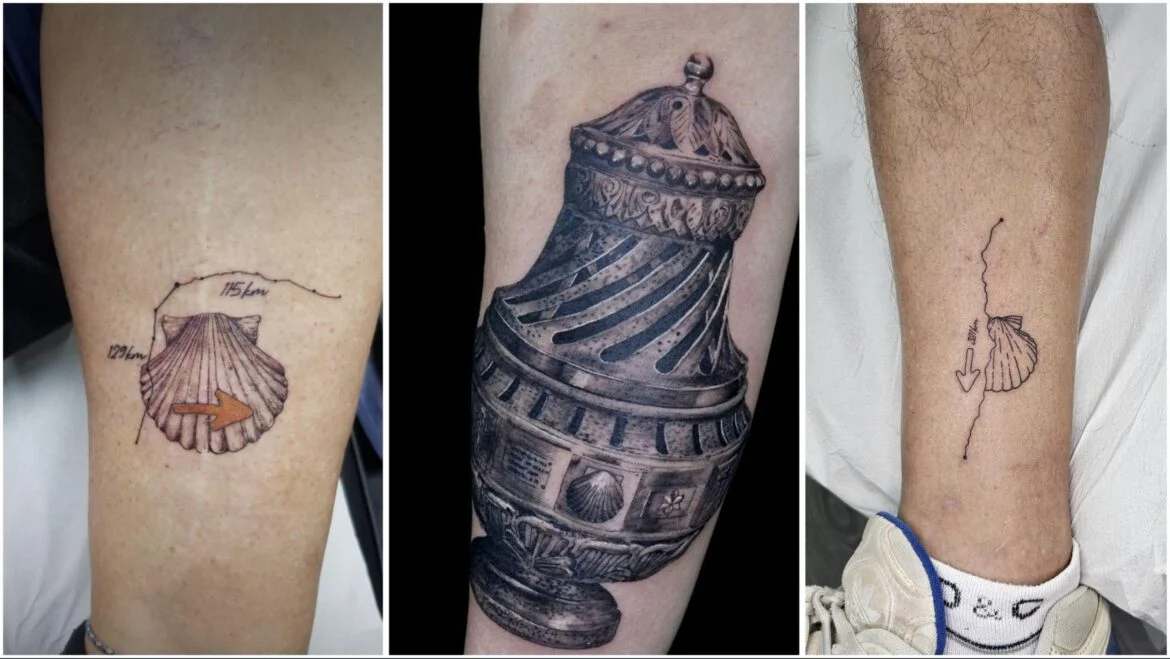
Each tattoo has its story. Some pilgrims do it at the end of the route, as a closing ritual. Others have it planned from the first day and do it when they arrive in Santiago, like someone making a commitment to themselves. And there are those who decide months later, when the Camino continues calling from within and asks to stay forever.
The designs are usually minimalist, loaded with meaning. The yellow arrow represents the direction when life doubts. The shell symbolizes the origin, the end and the shared path. The coordinates of Santiago, a backpack, a staff or even a phrase heard in a shelter that, without knowing why, changed everything.
Beyond aesthetics, these tattoos speak of transformation. Of people who came looking for something and left finding each other. Of long silences, of unexpected conversations, of hard stages and dawns that fix everything. The tattoo is not the memory: it is the reminder.
On the Path, the body walks, but so does the soul. And when both come back different, there are those who decide to mark that change in a visible way. Not for fashion. Not because of a trend. But for truth.
In the end, a Camino tattoo does not say “I was there.” It says something much deeper:
“The Camino is still with me.”

















