



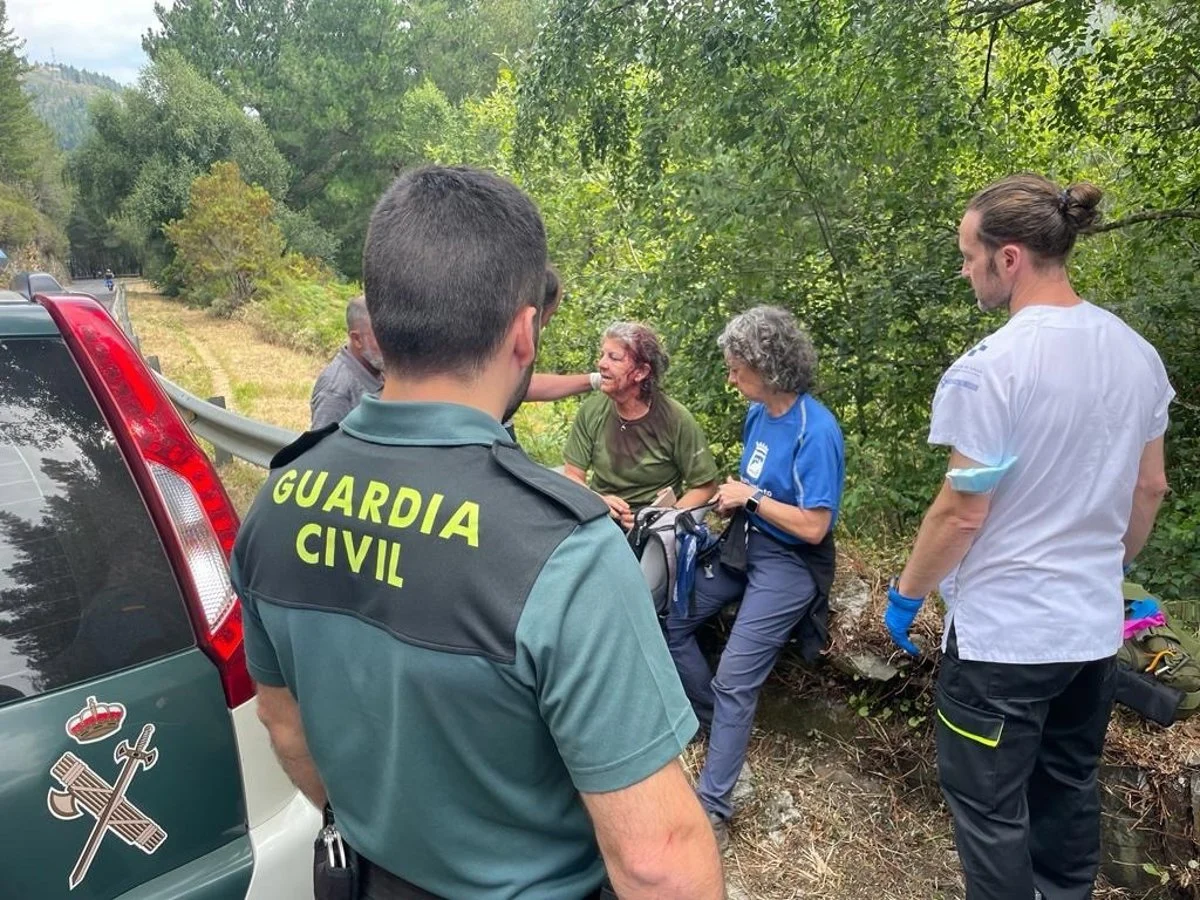
A young French woman is evacuated to hospital after suffering injuries
A 23-year-old pilgrim of French nationality had to be taken to hospital after being injured while walking the Camino de Santiago as she passed through the Navarrese town of Zuriain.
The event occurred on Monday morning, when the young woman suffered an injury during her stage of the Camino. It was at that moment when the assistance protocol was activated, involving members of the Civil Guard who were in the area within the pilgrim care device.
After being treated at the scene, the pilgrim was taken by ambulance to the University Hospital of Navarra, where medical tests were performed to evaluate the extent of her injuries.
Action within the special device of the Camino
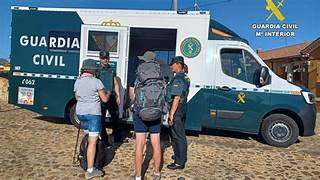
The intervention is part of the specific operation that the Civil Guard maintains active on the Camino de Santiago as it passes through Navarra. This device includes the presence of the Mobile Pilgrim Assistance Offices (OMAP), whose objective is to offer assistance, prevention and accompaniment to walkers.
These types of actions are not isolated. During the same weekend, other incidents were recorded, such as the assistance to two German pilgrims - mother and daughter - in another nearby section, one of them with hip problems that prevented her from continuing the march.
These interventions reflect the continuous work of surveillance and support that is carried out on one of the busiest routes of the Camino de Santiago.
The Camino in Navarra, a demanding and busy section
The Navarrese section of the Camino de Santiago is one of the most emblematic, but it can also be demanding for many pilgrims. The combination of unevenness, uneven terrain and long stages means that it is not unusual for physical incidents to occur, especially among those who are not fully prepared.
Zuriain, located in the Esteríbar valley, is a common area of passage in the first days of the French Way after crossing the Pyrenees. It is an attractive natural environment, but it also requires physical effort, especially for those beginning the pilgrimage.
Frequent injuries among pilgrims
Injuries like the one suffered by this pilgrim are not unusual on the Camino de Santiago. Among the most common are:
- muscle problems
- Joint injuries
- Effort overloads
- Falls on uneven terrain
In many cases, accumulated fatigue and lack of progressive adaptation to effort are determining factors.
For this reason, specialists insist on the importance of preparing the Camino before starting it, especially if it involves mountain stages or demanding sections.
The importance of roadside assistance
The Camino de Santiago has an increasingly structured support system, especially in communities like Navarra, where the passage of pilgrims is constant throughout the year.
The work of the Civil Guard and other emergency services is essential to guarantee the safety of walkers. Its presence not only allows action in emergency situations, but also prevents problems and guides pilgrims.
Furthermore, the Mobile Pilgrim Assistance Offices They provide information, direct assistance and support en route, improving the overall experience of the Camino.
An increasingly international Path
The case of this French pilgrim reflects the international diversity of the Camino de Santiago. Every year, thousands of people from different countries travel these routes, turning the Camino into a global experience.
This growth also implies new challenges in terms of security, assistance and communication, especially in rural areas where resources may be more limited.
Prevention: key to avoiding incidents
Although most pilgrims complete their journey without serious problems, situations like this remind us of the importance of prevention.
Before starting the Camino, it is recommended:
- Progressive physical preparation
- Use of appropriate footwear
- Realistic stage planning
- Constant hydration
- Listen to body signals
The Camino de Santiago is a unique experience, but it also demands respect for its conditions.
El Camino remains safe, but requires responsibility
The transfer of this wounded pilgrim in Zuriain highlights two realities of the Camino de Santiago. On the one hand, the existence of an effective assistance system that responds quickly to incidents. On the other hand, the need to face the Camino with preparation and prudence.
The Camino remains one of the great travel and pilgrimage experiences in Europe, but each step must be taken responsibly.
Because beyond getting to Santiago, the important thing is to do it in safe conditions.

















