

More pilgrims than ever are arriving in Santiago, but experts warn that growth must be managed carefully
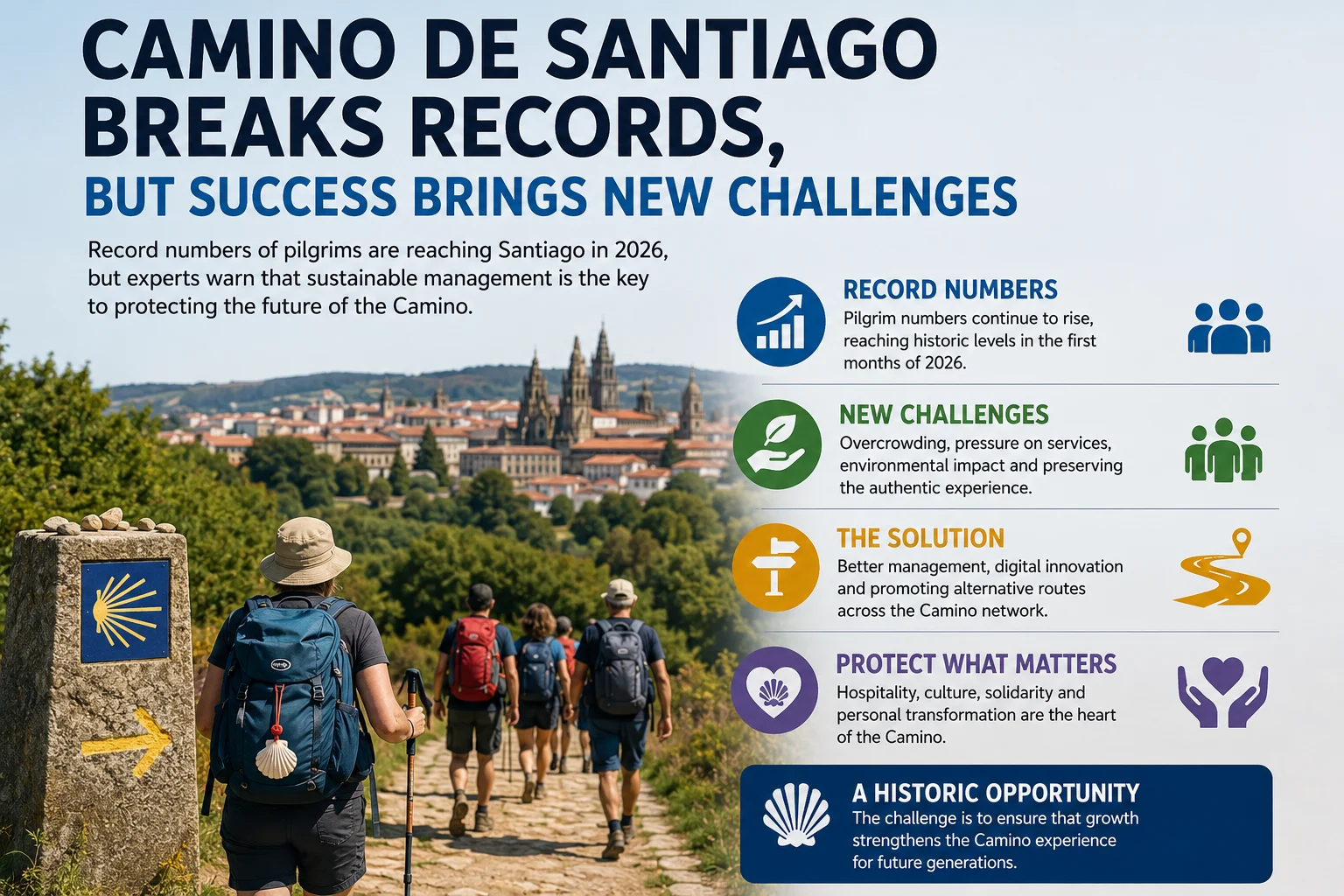
The Camino de Santiago continues to reach unprecedented levels of popularity. Record pilgrimage figures registered during the first months of 2026 confirm that the Camino is experiencing one of the strongest periods of growth in its modern history. However, many experts believe that the real challenge is no longer attracting pilgrims — it is managing that success sustainably.
The latest figures highlight a remarkable increase in pilgrim numbers, reflecting years of investment in infrastructure, international promotion, cultural preservation, and tourism development. The Camino has evolved into one of Europe’s most successful cultural and spiritual tourism destinations, attracting visitors from every continent.
Growth Is a Sign of Success
The continued expansion of the Camino de Santiago demonstrates the global appeal of pilgrimage travel. More people are seeking meaningful experiences that combine nature, history, culture, personal reflection, and physical activity.
For Galicia, the Camino represents far more than a tourist route. It generates economic activity across rural communities, supports local businesses, fills hostels and restaurants, and helps preserve villages that might otherwise struggle with depopulation.
The Camino has become a powerful example of how cultural heritage can create sustainable opportunities for local communities while maintaining a strong international identity.
The Real Challenge: Managing the Pilgrim Boom
While record numbers are good news, they also create new pressures.
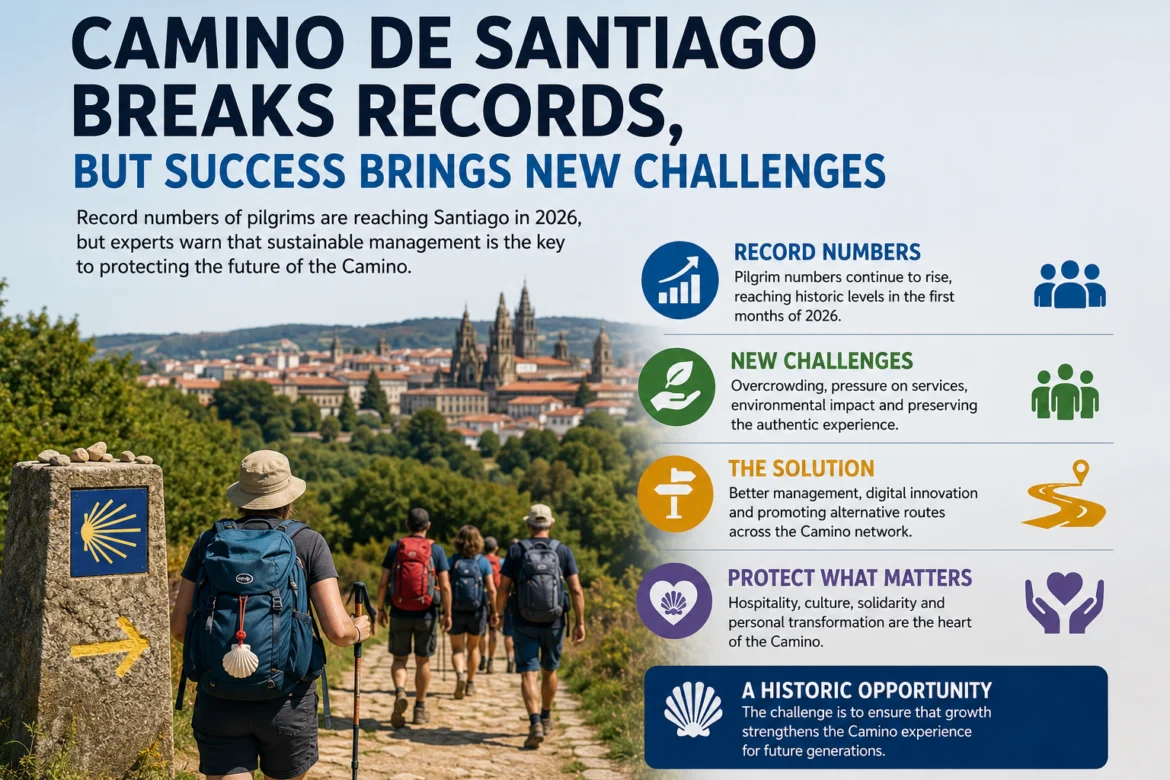
Popular sections of the Camino, especially during peak seasons, face increasing concerns about overcrowding, pressure on public services, accommodation availability, environmental impact, and the preservation of the authentic pilgrim experience.
Experts involved in the long-term planning of the Camino emphasize the importance of sustainable management, digital innovation, route diversification, and better distribution of pilgrim flows across different itineraries. The goal is to ensure that growth benefits all regions while protecting the unique character of the pilgrimage.
Beyond the Camino Francés
One of the strategies increasingly supported by tourism planners is encouraging pilgrims to explore alternative routes beyond the traditionally crowded Camino Francés.
Routes such as the Camino del Norte, Camino Primitivo, Camino Inglés, Vía de la Plata, and Camino Portugués offer unique experiences while helping distribute visitor numbers more evenly throughout the pilgrimage network.
This approach not only improves the experience for pilgrims but also creates economic opportunities for rural communities located along lesser-known routes.
Protecting What Makes the Camino Special
The greatest strength of the Camino de Santiago has never been its numbers.
Its success comes from values that cannot be measured by statistics: hospitality, solidarity, cultural exchange, personal transformation, and human connection.
Tourism experts warn that preserving these values must remain the priority as pilgrim numbers continue to grow. Digitalization, sustainability, improved services, accessibility, and local involvement are increasingly seen as essential tools for protecting the future of the Camino.
A Historic Opportunity
The record-breaking figures of 2026 demonstrate that the Camino de Santiago is stronger than ever. Yet they also present a historic responsibility.
If growth is managed wisely, the Camino can continue bringing economic development, cultural visibility, and international recognition to Galicia and the regions crossed by the pilgrimage routes. If not, overcrowding and loss of authenticity could threaten the very qualities that attract pilgrims in the first place.
For now, the message is clear: the Camino de Santiago is enjoying extraordinary success. The challenge for the coming years will be ensuring that this success strengthens the pilgrimage experience rather than diminishing it.