



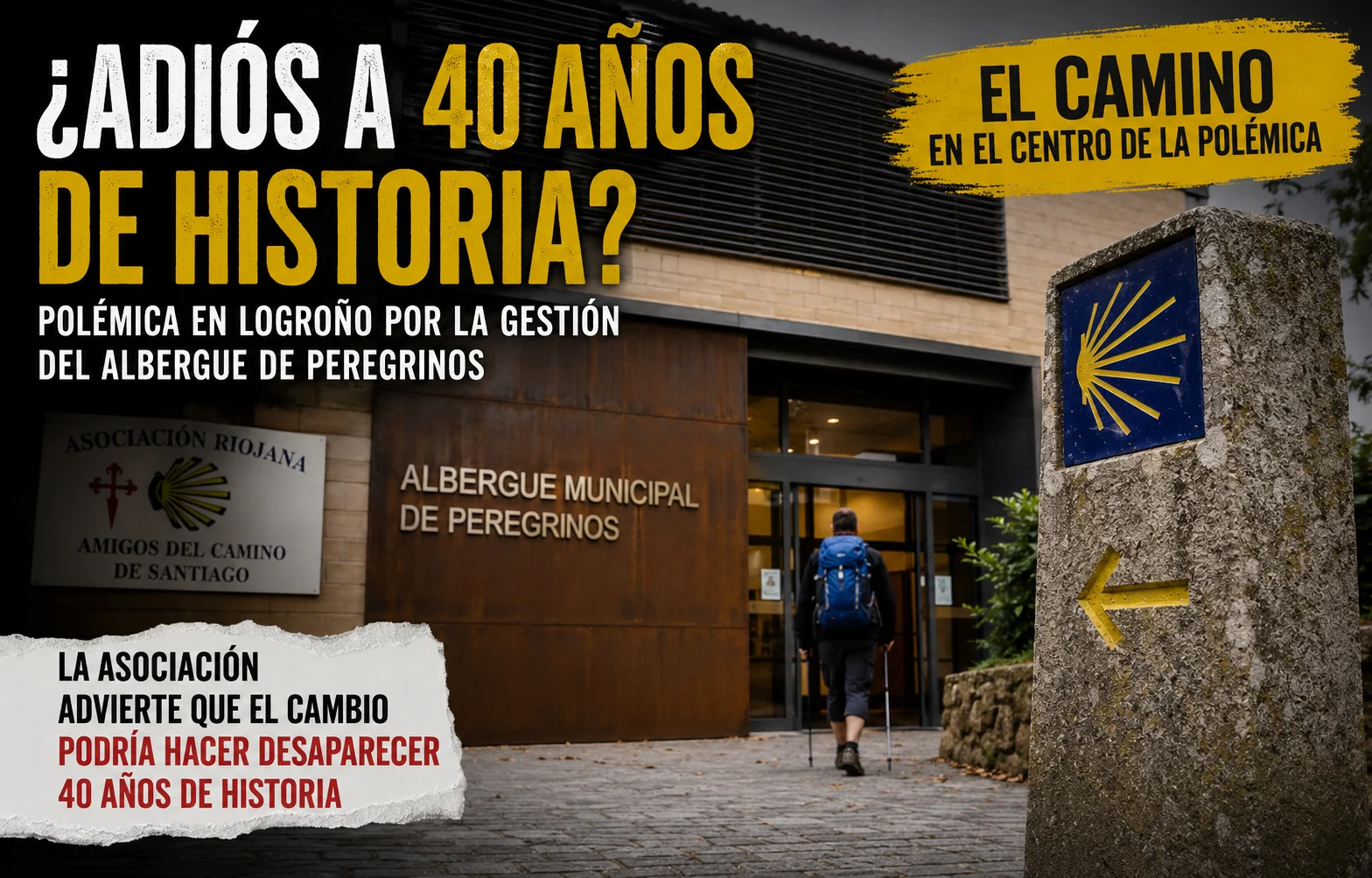
The management of the Logroño hostel confronts the City Council and the Friends of the Camino
One of the biggest controversies of the year in the Camino de Santiago has exploded in La Rioja. The awarding of the management of the municipal pilgrim hostel of Logroño has provoked a strong reaction from the Rioja Association of Friends of the Camino de Santiago, which warns that the decision could endanger a reception model that has been operating for more than three decades.
The association, considered one of the oldest in Spain and linked to the Camino for almost forty years, denounces that the new award process represents a radical change in the traditional philosophy of welcoming pilgrims. According to those responsible, the system based on volunteer hospitaleros and the direct management of Jacobean associations is part of the historical essence of the Camino de Santiago.
Fear of the disappearance of a historical association
The controversy goes far beyond the management of a building. The entity assures that the shelter constitutes the main axis of activity of the association and warns that the loss of this link could seriously affect its future and even compromise its long-term continuity.
The organization remembers that for more than thirty years it has received thousands of pilgrims from all over the world, turning the Logroño hostel into one of the benchmarks of the French Way. Furthermore, they maintain that other previous attempts to modify the model failed to consolidate and finally it was necessary to trust the association itself again to guarantee the operation of the service.
A debate that affects the entire Camino de Santiago
The concern of the Jacobean groups is not limited to Logroño. Various voices from the pilgrim world consider that what happened could set a precedent for other public shelters historically managed by Friends of the Camino associations.
Critics of the decision fear a progressive professionalization of spaces that have traditionally functioned thanks to volunteerism and the spirit of hospitality that has characterized the Camino de Santiago for decades.
For its part, the City Council defends the need to modernize the facilities and improve the services offered to pilgrims, in a context of constant growth in users and greater demands in terms of management and maintenance.
The future of the Jacobean model, at the center of the debate
The controversy has opened an intense debate about what the future of the public shelters on the Camino de Santiago should be. While some defend the professionalization of certain services, others consider that the differential value of the Camino lies precisely in the selfless welcome of hospital workers and volunteers.
What seems evident is that the decision adopted in Logroño has generated deep concern among many Jacobean associations in Spain. For them, the question is no longer just who manages a hostel, but what model of the Camino de Santiago they want to preserve for the next generations of pilgrims.

















