




El Camino is presented in Beijing and confirms a growth that is already unstoppable
The Camino de Santiago continues to cross borders, and this time it has done so with force in Asia. A few days ago, in Beijing, there was something more than a simple tourist presentation: it was a careful staging, designed to excite, to explain and, above all, to awaken the interest of an audience that is increasingly looking towards Europe.
The initiative, promoted by Turespaña together with the Cervantes Institute, was called “The Camino that inspires you: from Beijing to Santiago de Compostela”. It wasn't just another talk. It was an experience. A small trip within another trip, where attendees were able to understand what it really means to do the Camino de Santiago.
And what is interesting is not only the event, but what it confirms: the Camino is entering the Chinese market with force.
A Path that is no longer just European
For years, the Camino de Santiago was a European thing. Then the Americans, the Koreans, the Australians arrived... and now China is beginning to take the step decisively.
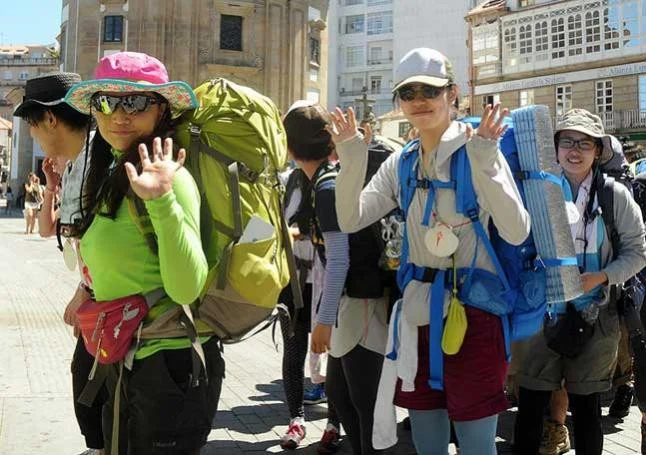
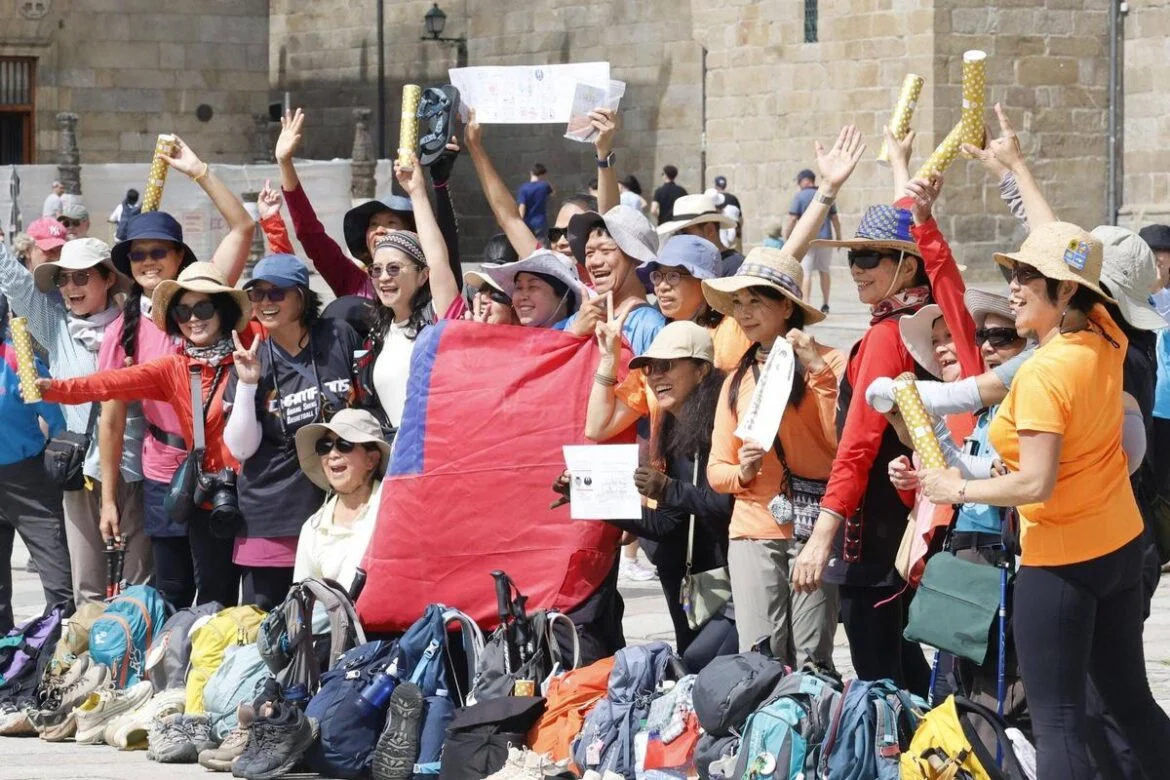
The data speaks clearly. In 2025, the number of Chinese pilgrims grew by 65%. It is not a specific increase, it is a trend.
And furthermore, the profile is very specific: young people, between 18 and 45 years old, and mostly women.
That completely changes the game.
Because we are no longer just talking about religious pilgrimage. We talk about experiential tourism, meaningful trips, about people who want to experience something different. And there the Camino has a brutal advantage over other destinations.
What China sees on the Camino (and why it works)
In Beijing they didn't just talk about routes or kilometers. They talked about values. Of culture. Of nature. Of history. About that concept that is difficult to explain but that everyone understands when they live it: the Camino as an experience.
The presentation included an interactive tour where real moments of the pilgrimage were recreated. From the pilgrim's passport to the most recognizable symbols of the Camino.
That connects a lot with the Chinese public.
Because what they are looking for is not just to travel, it is to experience something authentic. And the Camino, with its stages, its towns, its encounters and its slow pace, fits perfectly with that idea.
Tourism, money and real opportunity
Here is another key fact that cannot be ignored.
Chinese tourism is growing at high speed in Spain. In the first few months of 2026 alone, visitor numbers have skyrocketed, with increases of more than 100% at times.
And it's not just any car. It is a profile that spends more, plans more and seeks complete experiences.
Translated:
- More hotel reservations
- More consumption in restaurants
- More cultural visits
- More economic impact on the Camino
And this is directly noticeable in rural areas, which are the biggest beneficiaries.
The routes that interest the most (and it is not a coincidence)
During the event it was made clear which paths are attracting the most attention:
- French Way
- Portuguese Way
- Primitive Path
It's not a coincidence. They are well-organized routes, with services, clear signage and consolidated experience.
But here is an interesting read: the Portuguese Way is gaining a lot of weight. Especially from cities like Porto, where more and more international pilgrims begin their route.

El Camino as a global product
What is happening now is something that seemed impossible years ago.
The Camino de Santiago is no longer just a historical itinerary. It is a global product. A symbol.
It is being sold as:
- spiritual experience
- cultural route
- personal trip
- Nature tourism
And that fits perfectly with today's type of traveler.
The challenge: grow without losing your soul
But not everything is positive.
Every time the Camino grows, the same question arises: how far can it grow without losing its essence?
Because more pilgrims means more pressure on:
- Hostels
- Popular stages
- Infrastructure
- natural environment
And that is already beginning to be noticed on some routes.
For this reason, many experts insist on something key: diversify. Bet on less saturated roads and distribute the flow better.
What's coming now
China is not an anecdote. It's an open door.
If growth continues at this pace, in a few years we will see a clear change in the profile of the pilgrim on the Camino de Santiago.
More international, more diverse, more global.
And that is going to transform many things.
From the way of traveling to the way of understanding the Camino itself.
Conclusion: El Camino already plays in another league
What happened in Beijing is important, but not because of the event itself.
It is important because it confirms something that has already been seen: the Camino de Santiago is no longer a European secret.
Now it is a world reference.
And when a country like China begins to look towards the Camino... there is no one to stop it.

















