



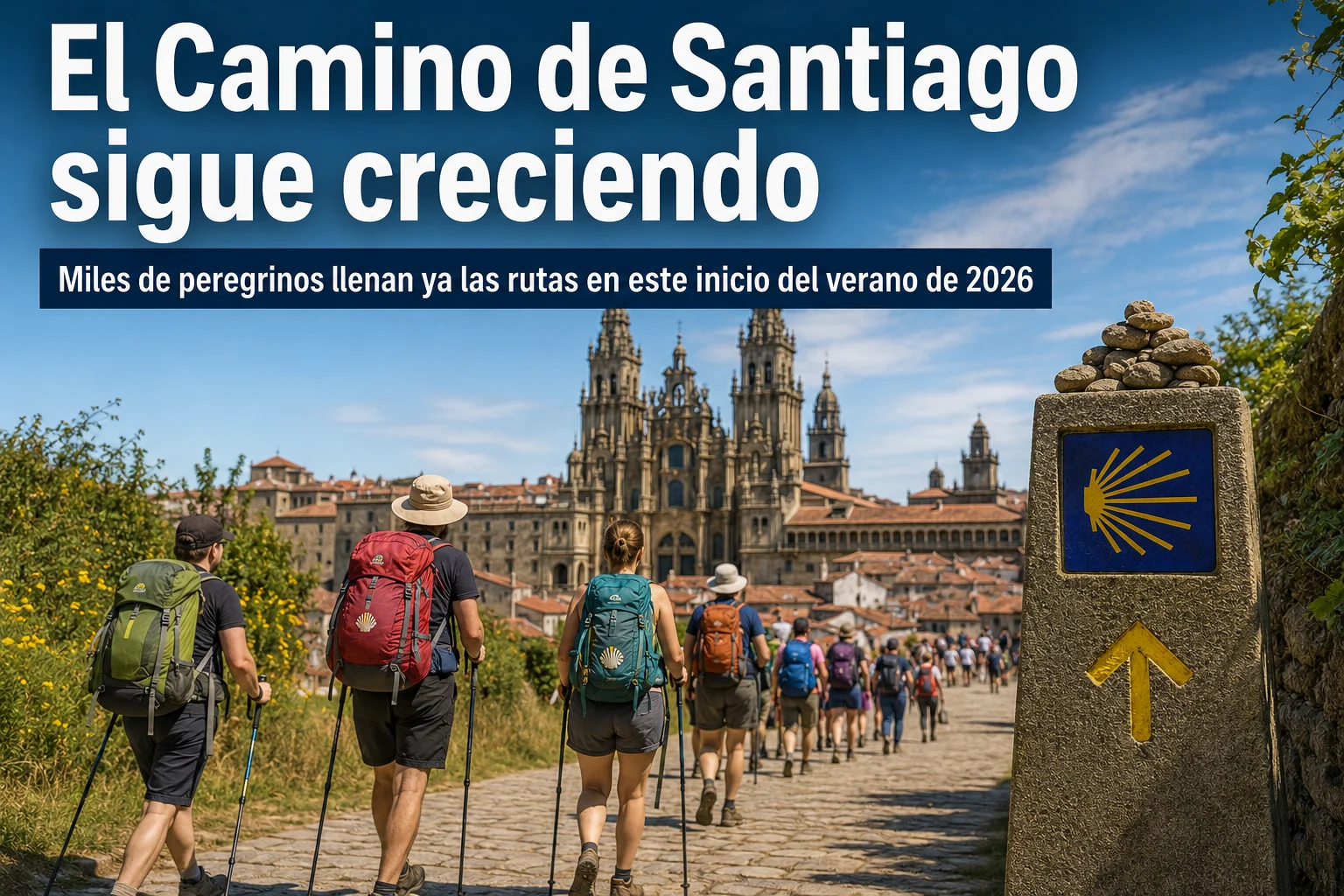
The Camino de Santiago continues to grow: thousands of pilgrims already fill the routes
The Camino de Santiago confirms its strength with historical numbers of pilgrims
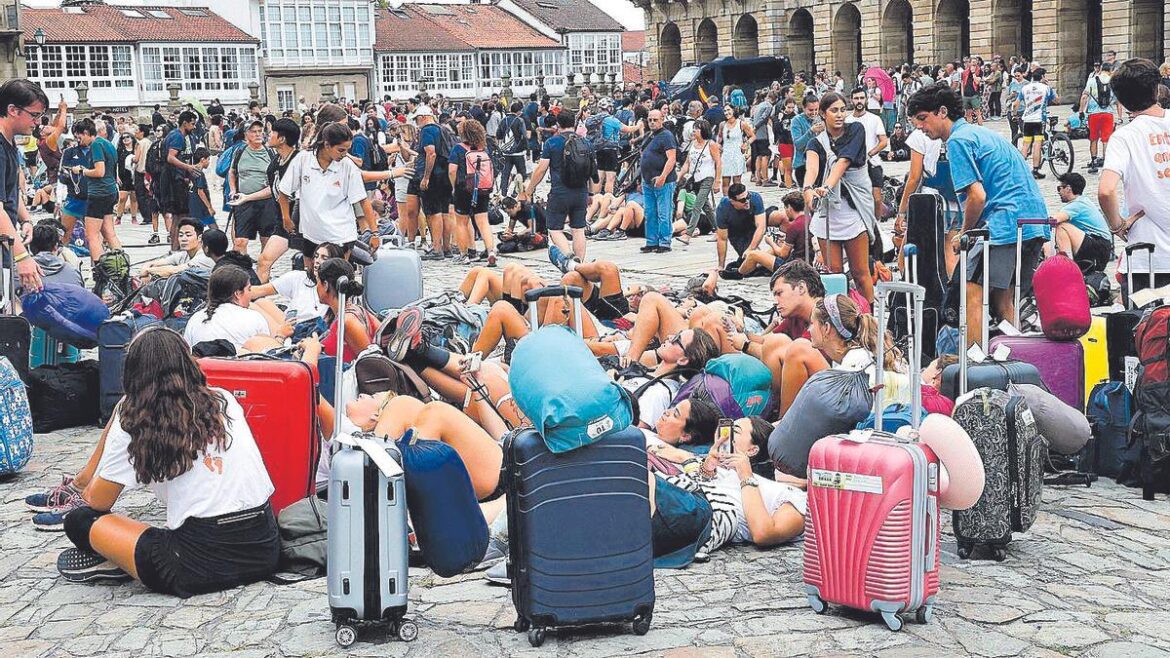
The Camino de Santiago once again demonstrates at the beginning of the summer of 2026 that it continues to be one of the great tourist, cultural and spiritual phenomena of Europe. The main Jacobean routes register intense activity from the early hours of the morning, with thousands of pilgrims from all corners of the world advancing towards the Plaza del Obradoiro.
In many municipalities along the Camino, especially those located on the Camino Portugues, the Camino Francés and the Camino del Norte, the presence of walkers is already part of the daily landscape. Hospitallers, merchants and neighbors agree that the high season has begun with a constant influx of pilgrims, a trend that has been consolidated in recent years.
Official figures support this reality. During 2025, the Pilgrim's Office delivered a total of 530.987 Compostelas, becoming the best data recorded in the history of the Camino de Santiago. This record far exceeds the pre-pandemic figures and confirms that the Jacobean pilgrimage is going through one of its moments of greatest international projection.
Of the total number of pilgrims who obtained the Compostela last year, 297,480 came from other countries, while 228,527 were Spanish. This data highlights the enormous international appeal of the Camino and its ability to bring together people of different cultures, languages and beliefs under a common goal: reaching Santiago de Compostela.
Among the routes that have grown the most, the Portuguese Coastal Route, which continues to gain prominence among those looking for a quieter experience closer to the sea. This itinerary exceeded 90,000 pilgrims in 2025, consolidating itself as one of the great alternatives to the traditional French Way.
For its part, the Camino Frances maintains its leadership as the most traveled route, while the Camino del Norte continues to arouse enormous interest thanks to its spectacular landscapes and its rich heritage. More and more pilgrims are opting for these less crowded routes, looking for a more leisurely and authentic experience.
The diversity of profiles is another of the characteristics of the current Camino. Young people who make the pilgrimage after finishing their studies, families who share a few days together, retirees who fulfill a pending dream or international travelers who discover Spain through its trails are part of an increasingly large and heterogeneous community.
According to the latest records of the Pilgrim's Office, in some recent days there have been more than 2,600 Compostelas delivered in a single day, a figure that reflects the intensity with which the pilgrimage is experienced during the busiest months.
But the impact of the Camino de Santiago goes far beyond numbers. Its importance is fundamental for dozens of municipalities that find in the arrival of pilgrims a source of economic and social revitalization. Hostels, cafes, small businesses, taxis and service companies linked to the Camino are experiencing a notable increase in activity thanks to the constant passage of walkers.
Added to this is an aspect increasingly valued by pilgrims themselves: the possibility of disconnecting from the accelerated pace of daily life. In a society marked by immediacy and hyperconnectivity, the Camino represents an opportunity to regain contact with nature, encourage human encounters and dedicate time to personal reflection.
Many pilgrims claim that they began the trip attracted by sporting, cultural or tourist reasons, but that they ended up discovering a transformative experience that left their mark forever. Precisely this ability to offer something different is one of the factors that explain the sustained growth of the Jacobean phenomenon.
The forecasts for this summer are optimistic. Although it is still early to know the final figures for 2026, the high occupancy recorded in numerous hostels and the intense activity observed on the main routes suggest that the Camino could once again close an extraordinary year.
More than a thousand years after the discovery of the tomb of the Apostle Santiago, the Camino continues to write new stories every day. Stories of effort, friendship, improvement and hope that turn each stage into a unique and unrepeatable experience.
Because, beyond the statistics and records, the true success of the Camino de Santiago continues to be in the thousands of people who decide to put their backpack on their shoulders and begin a journey that, on many occasions, ends up changing their lives.
Highlights of the Camino de Santiago:
- 530,987 Compostelas delivered in 2025.
- 297,480 international pilgrims.
- 228,527 Spanish pilgrims.
- More than 90,000 pilgrims on the Portuguese Coastal Route during 2025.

















