



People with Down syndrome will participate as volunteer hospitaleros on the Camino
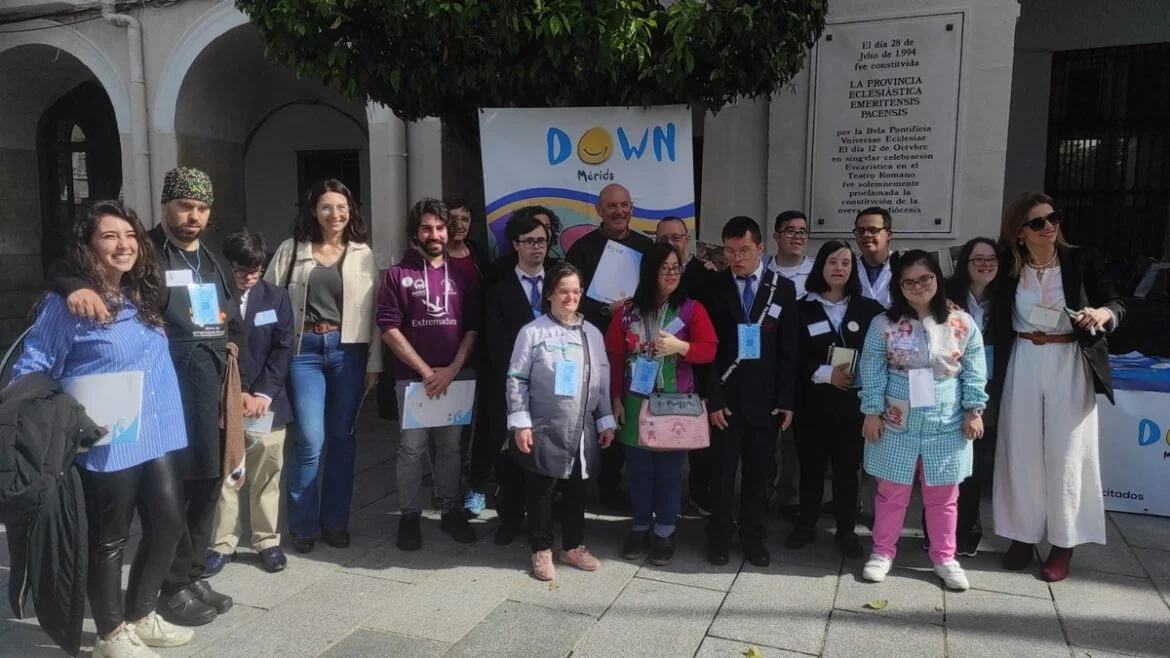
The Camino de Santiago continues taking steps towards an increasingly humane and inclusive welcome. The Down Mérida association will participate this week in the signing of the agreement “Hospitaleros con Alma: an inclusive welcome”, a project that will train and prepare people with Down syndrome and intellectual disabilities to participate as volunteer hospitaleros on the Camino de Santiago.
The initiative is one of the most innovative social inclusion projects currently linked to the Jacobean universe and seeks to turn the Camino into an even more accessible, participatory and enriching space from a human point of view.
The agreement will be signed jointly by:
Down Merida,
the Association of Friends of the Camino de Santiago Vía de la Plata-Camino Mozárabe de Mérida
and Hospitaleros Voluntarios (HOSVOL), belonging to the Spanish Federation of Associations of Friends of the Camino de Santiago.
The Camino as a tool of inclusion and coexistence
The project, financed by the “la Caixa” Foundation, aims to promote equal opportunities and the active participation of people with intellectual disabilities within one of the most important traditions of the Camino de Santiago:
pilgrim hospitality.
Thanks to this agreement, participants will receive specific training adapted to the volunteer hospital worker profile, learning tasks related to:
welcoming the pilgrim,
coexistence,
hostel management
and the human values of the Camino.
In addition to theoretical training, the program will include real practices in accessible shelters and continuous support from specialized professionals and volunteers throughout the process.
From Down Mérida they highlight that this initiative represents a huge opportunity to continue advancing in the full social and labor inclusion of people with intellectual disabilities, promoting real experiences of participation, autonomy and coexistence.
Hospitality remains the soul of the Camino
The figure of the volunteer hospitalero is one of the most emblematic traditions of the Camino de Santiago.
Thousands of pilgrims remember every year the importance of those people who receive, help, listen and accompany walkers during their journey to Santiago de Compostela.
Precisely for this reason, the “Hospitaleros con Alma” project has been received with enormous interest within the Jacobean world.
Because it focuses on one of the great values of the Camino:
human inclusion.
The Spanish Federation of Associations of Friends of the Camino de Santiago has been promoting programs related to volunteer hospitaleros and Jacobean training for decades, keeping alive a tradition that many consider essential to the spirit of the Camino.
The Camino de Santiago increasingly accessible
In recent years, the Camino de Santiago has developed multiple projects related to:
accessible tourism,
integration,
social inclusion,
emotional well-being
and active participation of groups with disabilities.
There are more and more initiatives aimed at making it easier for all people to live the Jacobean experience regardless of their physical or intellectual abilities.
The rise of inclusive tourism and so-called experiential tourism is also promoting this type of programs throughout Spain.
Many experts consider that the Camino has an enormous integrative capacity precisely because it encourages:
coexistence,
respect,
mutual aid
and equality between pilgrims.
Down Mérida reinforces its social commitment
The Down Mérida association has been developing projects related to:
inclusive employment,
independent living,
adapted sport,
leisure,
training
and social participation.
He currently works with dozens of families and people with Down syndrome and intellectual disabilities in Mérida and its region, promoting programs focused on personal autonomy and equal opportunities.
The new agreement related to the Camino de Santiago thus joins other inclusive initiatives developed by the entity in recent years.
El Camino continues to transform in 2026
The project also comes at a time of enormous international growth on the Camino de Santiago.
More and more pilgrims arrive looking for:
rural tourism,
nature,
hiking,
wellness travel,
authentic human experiences
and personal growth.
And precisely within this transformation, social inclusion appears as one of the great challenges of the modern Camino.
Because the Jacobean phenomenon is no longer understood solely as a historical or religious route.
It has also become a space for coexistence, diversity and social participation.
A more human path
Many pilgrims claim that one of the great teachings of the Camino is discovering that we all walk at the same human pace.
Regardless of age,
language,
origin
or capabilities.
And projects like “Hospitaleros con Alma” reflect precisely that philosophy.
The idea that the Camino de Santiago can continue to grow without losing the most important thing:
the welcome,
empathy
and the human side that for centuries has defined the pilgrim experience.

















