



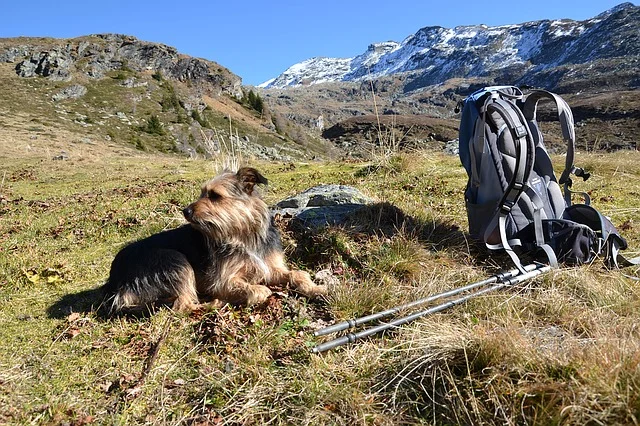
More and more walkers choose to share the Jacobean experience with their four-legged friends
He Camino de Santiago It has always been a company trip. Friends who meet at one stage, hospitable people who leave their mark, strangers who become allies. But in recent years an increasingly common image has grown on the Jacobean trails: that of the pilgrim walking with his dog.
Far from being a passing fad, pilgrimage with a pet is becoming established as a different way of living the Camino. For many walkers, leaving their four-legged companion behind is no longer an option. The experience, they say, changes completely when the journey is shared with someone who does not judge, does not ask questions and simply walks alongside.

A challenge that requires planning
Walking with a dog is not improvising. It involves studying stages, looking for accommodation that accepts animals, adapting distances and paying constant attention to the animal's well-being. Not all sections are the same nor are all times of the year suitable.
Those who have already done it agree that the key is responsibility: frequent hydration, adequate breaks, protection from heat and prior veterinary examination. The Camino can be demanding even for humans; For an animal, it is even more so.
More links, more stories
The presence of pets also generates a special atmosphere. Many pilgrims recognize that a dog in the group breaks the ice, provokes conversations and arouses sympathy. The photos multiply, the caresses too. The animal becomes, almost unintentionally, a small ambassador of good cheer.
In Santiago de Compostela, the arrival takes on a different nuance when the furry companion also crosses the square. For its owners, it is not just the end of a stage: it is the culmination of a shared effort.

El Camino, a space for coexistence
The increase in pilgrims with pets also poses challenges: respect for other walkers, care for the natural environment and compliance with rules in accommodation and public spaces. Coexistence is possible when there is common sense and responsibility.
The Camino de Santiago has been able to adapt over the centuries to new realities and profiles of pilgrims. Today, that diversity also includes those who decide to walk with their best friend.
Because on the Camino, every step counts. And when it is given to the rhythm of four legs and two synchronized hearts, the experience is multiplied.

















