



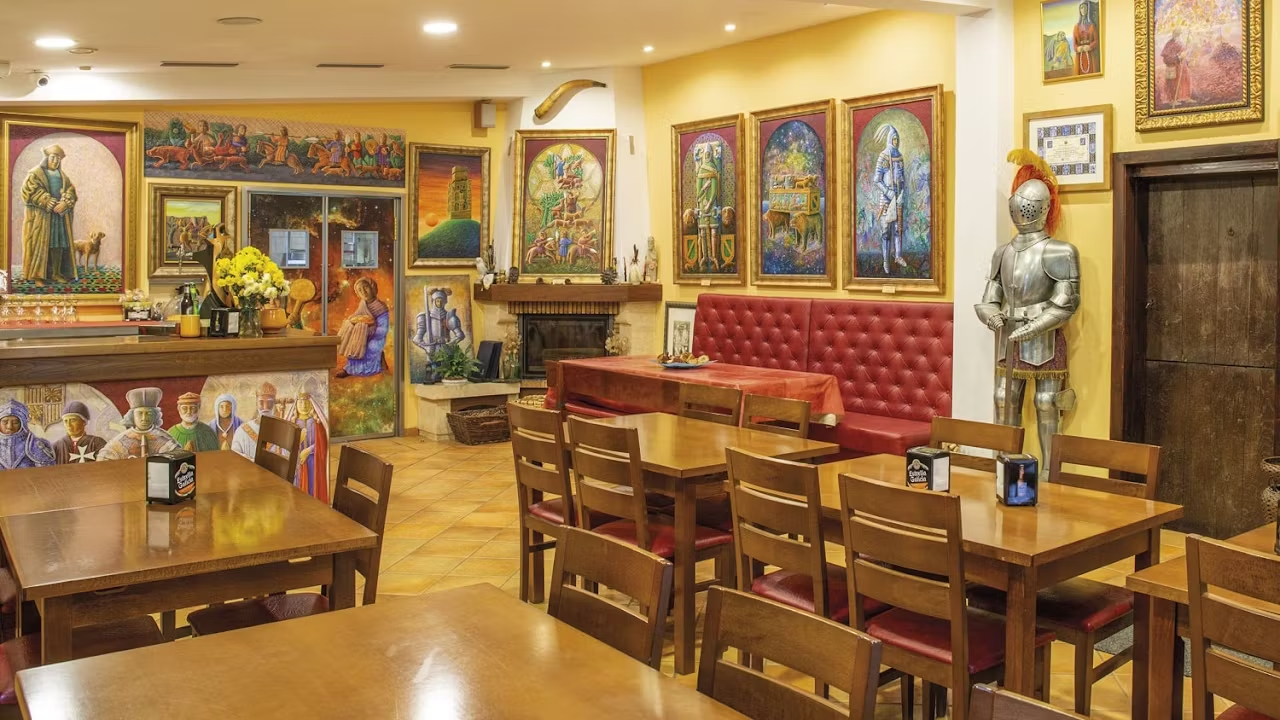
A Galician inn surprises pilgrims with traditional cuisine and an extraordinary artistic collection: they arrive looking to regain strength and end up contemplating its walls as if they were in an exhibition
He Camino de Santiago It is full of places that do not appear among the great monuments in the guides, but that end up becoming some of the pilgrim's most special memories.
Sometimes it is a small fountain. Other times, a lost church, a shelter, an unexpected conversation or that bar you enter simply because you are hungry.
And then something happens that was not planned.
That is precisely what happens in a Galician establishment that is attracting the attention of those who walk the Camino. Pilgrims come attracted by the possibility of sitting at the table and enjoying a good Galician broth, but when they look up they discover that the place hides much more.
Its walls are full of works by the Galician artist and historian Alfredo Erias, until turning a gastronomic stop into an unexpected cultural experience.
There are those who summarize it in a very simple way:
It's like eating inside a museum.
First the broth, then the pictures
After walking for hours, the pilgrim's priorities are usually quite basic.
Take off your backpack.
Feel.
Drink.
And eat something hot.
A good plate of Galician broth can then become one of the greatest pleasures in the world.
But here, while they regain their strength, many pilgrims begin to observe the walls and discover that that stop has a very different personality.
Gastronomy and art coexist in the same space, creating an experience that goes far beyond sitting down to eat.
Those little surprises that make the Camino great
Anyone who has ever made a pilgrimage knows perfectly well that the Camino is full of plans that go wrong and coincidences that end up turning out wonderfully well.
One can start the morning thinking only about getting to the next town and end up sitting for hours talking to a stranger.
You can enter a church to protect yourself from the rain and discover an architectural gem.
Or you can enter an inn looking for a hot dish and end up discovering an artistic collection.
That is one of the great attractions of walking.
When you travel slowly, things that we normally don't see start to appear.
Galician gastronomy to regain strength
Food occupies a special place within the Camino de Santiago experience.
After a demanding stage, sitting in front of a traditional dish is almost part of the pilgrim's daily ritual.
Galician broth is one of those dishes especially linked to that feeling of home: simple, hot and comforting.
But around the Camino there are also empanadas, octopus, cheeses, meats, fish and dozens of local recipes that allow you to get to know Galicia in a completely different way. Because you also make a pilgrimage with your palate.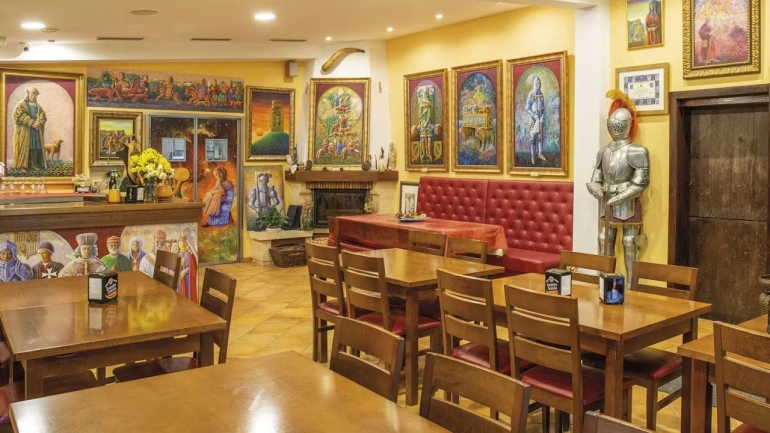
An unexpected museum
The presence of the works of Alfredo Erias makes the establishment something unique.
Erias, historian and artist closely linked to Galician culture, has developed an extensive career related to heritage, history and artistic creation.
Their works transform the walls of the inn into a small exhibition that especially surprises those who arrive without previously knowing what they will find inside.
And perhaps that is precisely where its charm lies.
It is not necessary to purchase a ticket.
Nor organize a visit.
It just happens.
You enter.
You leave the backpack.
You order something to eat.
And you start looking around.
The Camino is also built around a table
For centuries, shops, taverns, inns and small eating houses have been an inseparable part of pilgrimage routes.
They were places to rest, but also to exchange news, meet people and regain strength before continuing.
Much has changed since then.
But something remains.
A table continues to be one of the places where differences between pilgrims most easily disappear.
People from different countries can sit without knowing each other and, half an hour later, share stories as if they have been walking together for days.
The places we end up remembering
Probably in a few years many pilgrims will not remember exactly how long it took them to complete a certain stage.
Maybe they don't remember the name of all the towns they passed through either.
But they will remember that place where they ate extraordinarily well.
To that person who cared for you with love.
The conversation with another walker.
Or that inn where they entered looking for broth and ended up looking at paintings.
Because he Camino de Santiago It's also made of that.
Of small surprises.
From places that one was not looking for.
Of doors that open.
And of stories that begin simply because a pilgrim was hungry.

















