



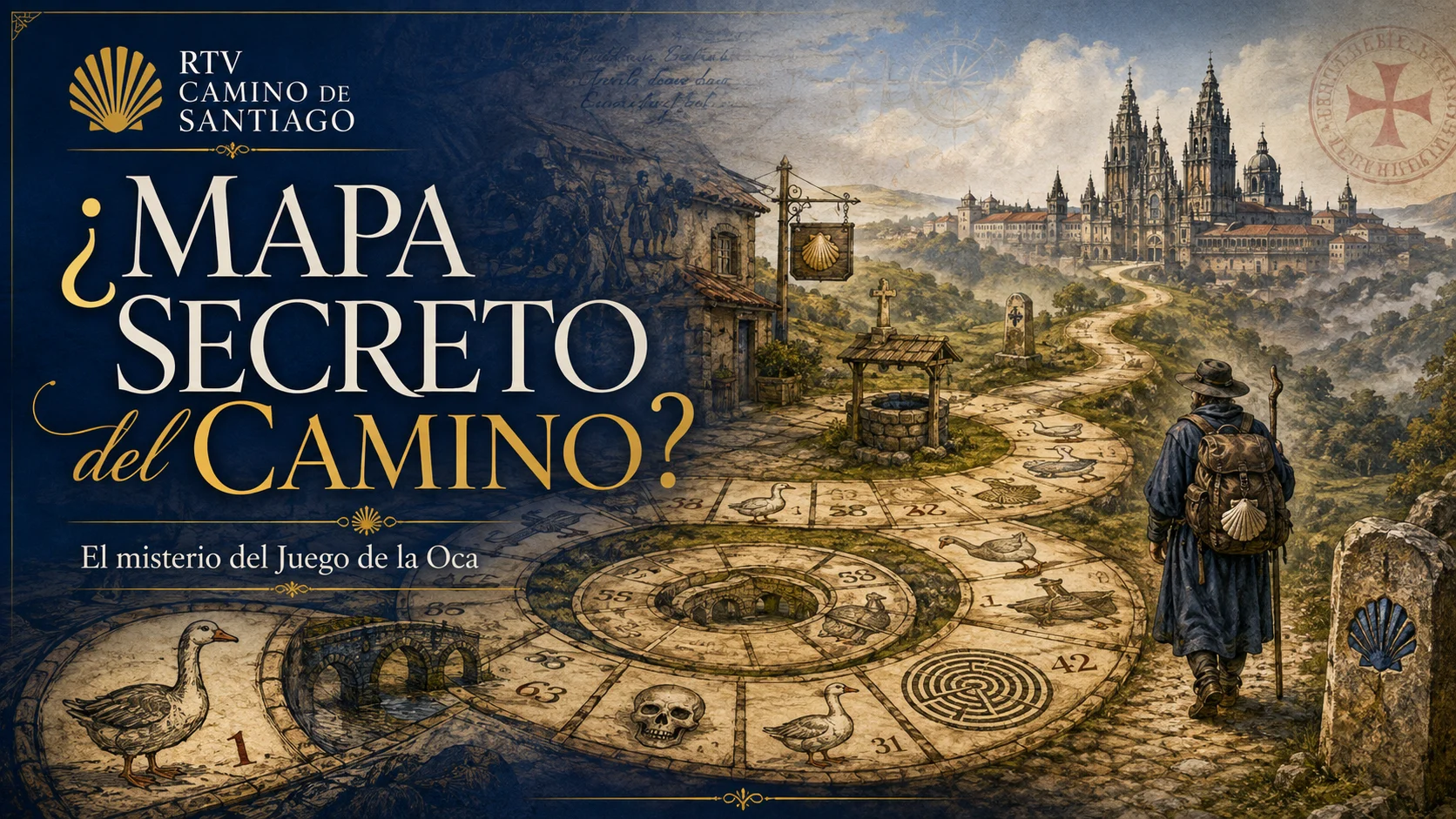
There are theories that claim that one of the best-known board games in Europe could hide something much deeper than a simple chip race.
He Goose Game, with its 63 squares, bridges, inns, wells, labyrinths, skulls and geese, has been related for years to the Camino de Santiago.
According to this interpretation, the board would symbolically represent the pilgrim's journey: moving forward, overcoming obstacles, stopping, going back and even facing death before reaching the final destination.
A fascinating theory.
But also a story in which it is advisable to separate very well what is documented from the legend.
63 squares and a journey full of obstacles
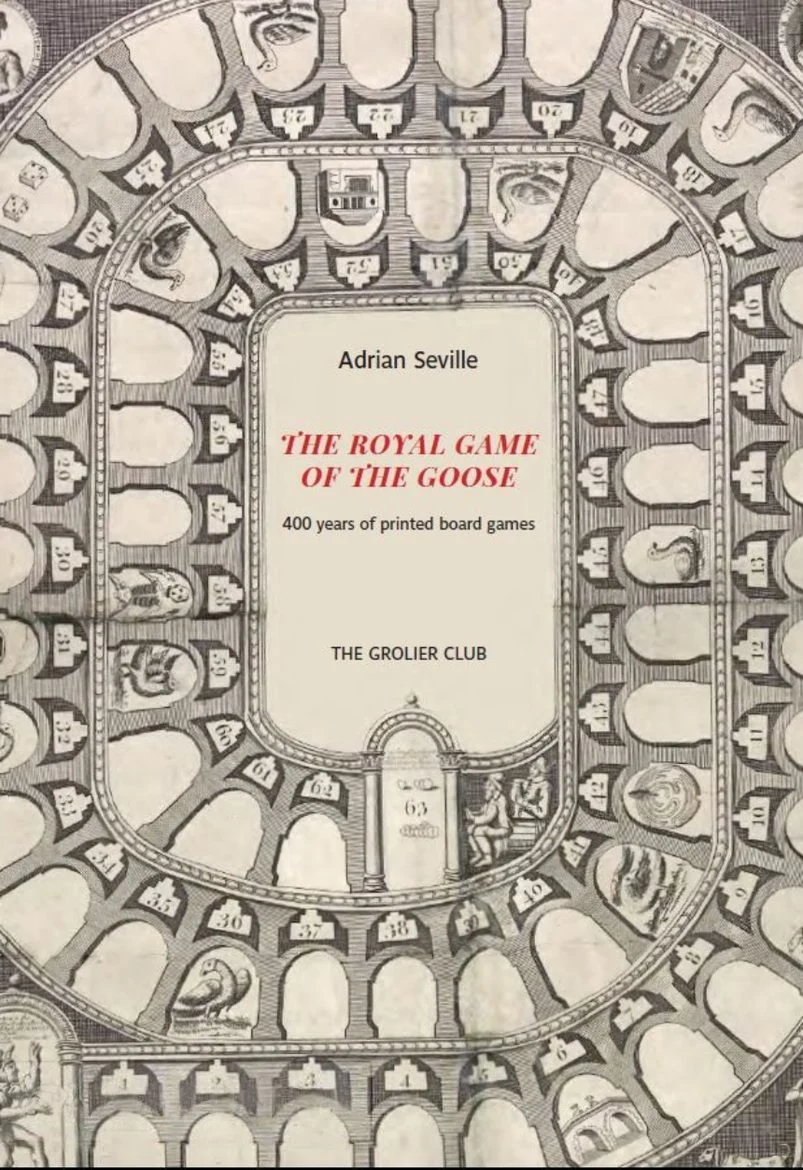
The traditional board is formed by a spiral path of 63 boxes.
Along the way special spaces appear that alter the player's journey.
There are bridges.
Posadas.
Wells.
A labyrinth.
The jail.
Death.
And, of course, the geese that allow us to move forward quickly with the famous expression:
“From goose to goose and I shoot because it's my turn.”
Those who defend the Jacobean connection interpret these elements as symbols of a medieval pilgrimage.
The bridges would remind us of steps over rivers.
The inns, the welcoming places.
The labyrinth would represent the loss of the path.
Death would symbolize failure before reaching the goal.
And the center of the board would be the arrival at the spiritual destination.
And what do geese have to do with the Camino?
Here begins one of the most mysterious parts of the theory.
Some interpretations relate the goose to ancient symbols used to mark paths and safe places.
There has also been speculation about a possible participation of the templars, whose presence was related to numerous territories crossed by medieval pilgrimage routes.
According to these theories, the Goose Game would have functioned as a kind of symbolic map or code that allowed us to remember places, dangers and stages.
It is a tremendously attractive story.
The problem is that There is no solid historical evidence to show that the game was born as a secret map of the Camino de Santiago.
What we do know about the Goose Game
Historical studies place the development of the game in Italy.
There are references to goose games since the 15th century and we know that at the end of the 16th century they were already widely circulating among European courts. One particularly well-known source documents that 1585 Francesco I de' Medici sent a copy of the game to Philip II of Spain.
At the end of the 16th century we already find versions or references of the game in Spain, England, France and Germany, which shows that its European expansion was very rapid.
Historical research on the Goose Game considers it one of the most influential printed games in European culture.
What is not documented with the same clarity is its supposed Jacobean or Templar origin.
So is it all a legend?
Not necessarily.
That we cannot prove that the Goose Game was created as a secret map of the Way does not mean that the similarities are uninteresting.
The board represents a journey.
There are stages.
There are obstacles.
There are resting places.
The player moves forward and backward.
And only after overcoming numerous difficulties can you reach the end.
This structure is surprisingly similar to the symbolic experience of any pilgrimage.
That is why the relationship between both worlds has continued to fuel books, popular research and theories for decades.
The Camino has always been full of symbols
The Camino de Santiago is much more than a geographical route.
For centuries it has been built around recognizable symbols.
The scallop.
The stars.
The arrows.
The bridges.
The pilgrim hospitals.
The churches.
Even certain numbers and legends have acquired their own meanings within the Jacobean tradition.
It is not strange that a game based precisely on a journey full of obstacles has ended up being related to the Camino.
A secret map or a magnificent coincidence?
We will probably never be able to fully answer that question.
The documented history of the Goose Game points to Italy and its expansion through European courts during the 15th and 16th centuries.
The Jacobean theory belongs to a field that is much more difficult to demonstrate.
But perhaps that is precisely where its charm lies.
The next time you land at an inn, cross a bridge, get lost in the maze or advance from goose to goose...
You may just be playing a game.
Or perhaps, symbolically, you are doing your own Camino towards Santiago.

















