



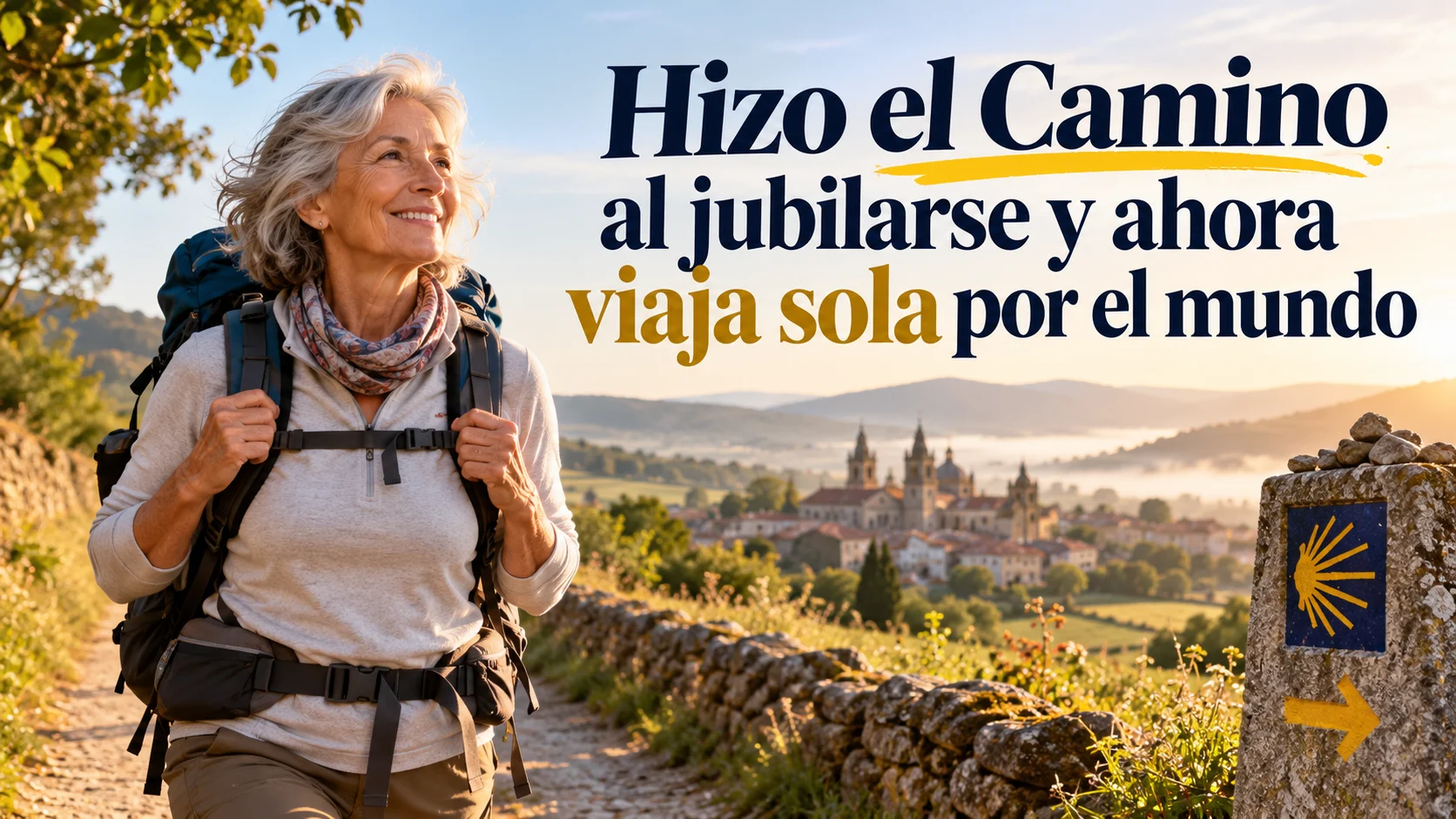
There are people for whom the Camino de Santiago does not end when they reach Compostela. Sometimes, what begins as a pilgrimage ends up becoming a new way of understanding life.
That's what happened to Rosa.
After retiring, he decided to change his routine for a backpack and undertake the Camino de Santiago. That experience opened a door that he no longer wanted to close. She discovered a sense of freedom that, over time, took her far beyond the Jacobean route.
Since then, Rosa has traveled alone to more than 50 countries and has traveled to places as different as Iran, Jordan and Peru.
The Camino as a starting point
For Rosa, the Camino was not just another trip.
It came at a time of vital change, just after retirement, when many people are beginning to wonder what to do with a completely new stage of their life.
Instead of standing still, she decided to walk.
And that first step ended up transforming his way of traveling and relating to the world.
The backpack became a symbol of independence, but also a way to discover that there were still many places to visit.
More than 50 countries traveling alone
Over time, what began on the Camino de Santiago became an authentic way of life.
Rosa began to travel alone and little by little she accumulated destinations that for many people would be unthinkable.
Iran, Jordan and Peru are just some examples of the more than 50 countries he has visited.
His story also breaks with a fairly widespread idea: that certain adventures have an age.
For her, retirement did not mean stopping, but exactly the opposite.
It was time to start moving.
The other side of adventure
But behind that freedom there is also another reality.
Rosa's every trip generates concern in her son Jorge, who experiences with anxiety the idea that his mother could be alone thousands of kilometers from home.
That clash between a mother's need for freedom and a child's desire for protection is precisely one of the most human parts of her story.
Rosa wants to continue traveling.
Jorge wants me to be safe.
And between them a question that is difficult to answer appears: how far should we let the people we love fly.
A story closely linked to the spirit of the Camino
Perhaps that is why its history is so closely related to the Camino de Santiago.
The Camino forces you to walk alone many times, even when accompanied.
It also forces us to make decisions, take risks, trust strangers and accept that we cannot always control what happens around us.
For many pilgrims, that experience ends up changing something.
In Rosa's case, her way of understanding freedom changed.
After the Camino another path begins
There are pilgrims who arrive in Santiago and return home.
Others return years later.
And some discover along the route that what they were really looking for was not a specific goal, but a different way of living.
Rosa belongs to that last group.
The Camino de Santiago was the beginning of a stage that has taken her through more than fifty countries and that still continues.
His story reminds us that retiring doesn't always mean closing a door.
Sometimes it means, precisely, opening it.
-
English Way passes 30,000 pilgrims

The English Way has crossed a symbolic barrier before the end of the year. More than 30,000 pilgrims have already completed the Camino Inglés in 2026, allowing the route to surpass the total recorded during the whole of 2025 while there are still more than two months left before the end of the year. The…
-
Luján promotes religious tourism
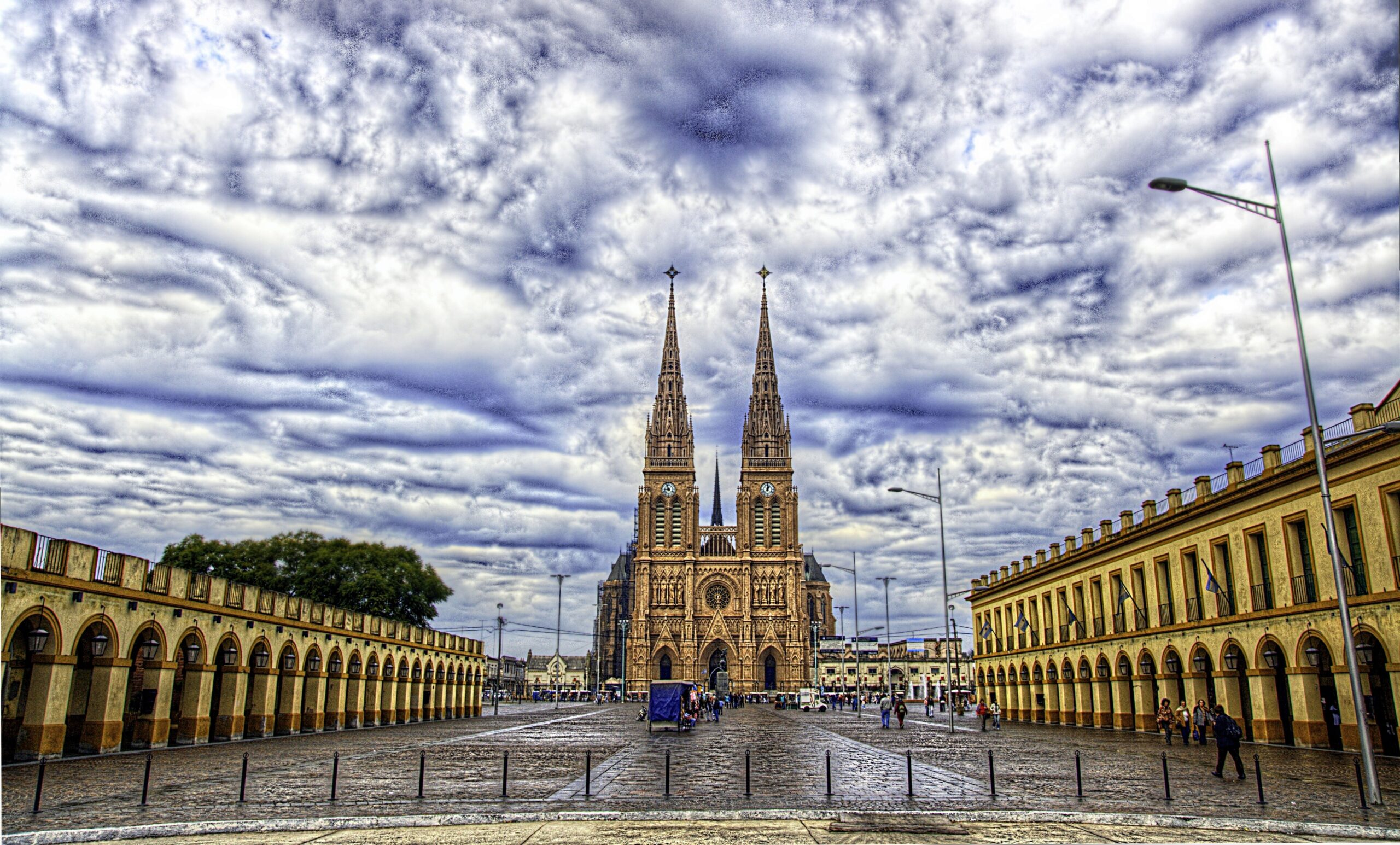
Luján has just taken a step that goes far beyond organizing a massive pilgrimage. The Argentine city wants to convert the experience accumulated over decades receiving millions of faithful into a model of cooperation between some of the great Marian sanctuaries in Latin America. The First Ibero-American Forum of Marian Cities, held on…
-
The sign that baffles pilgrims
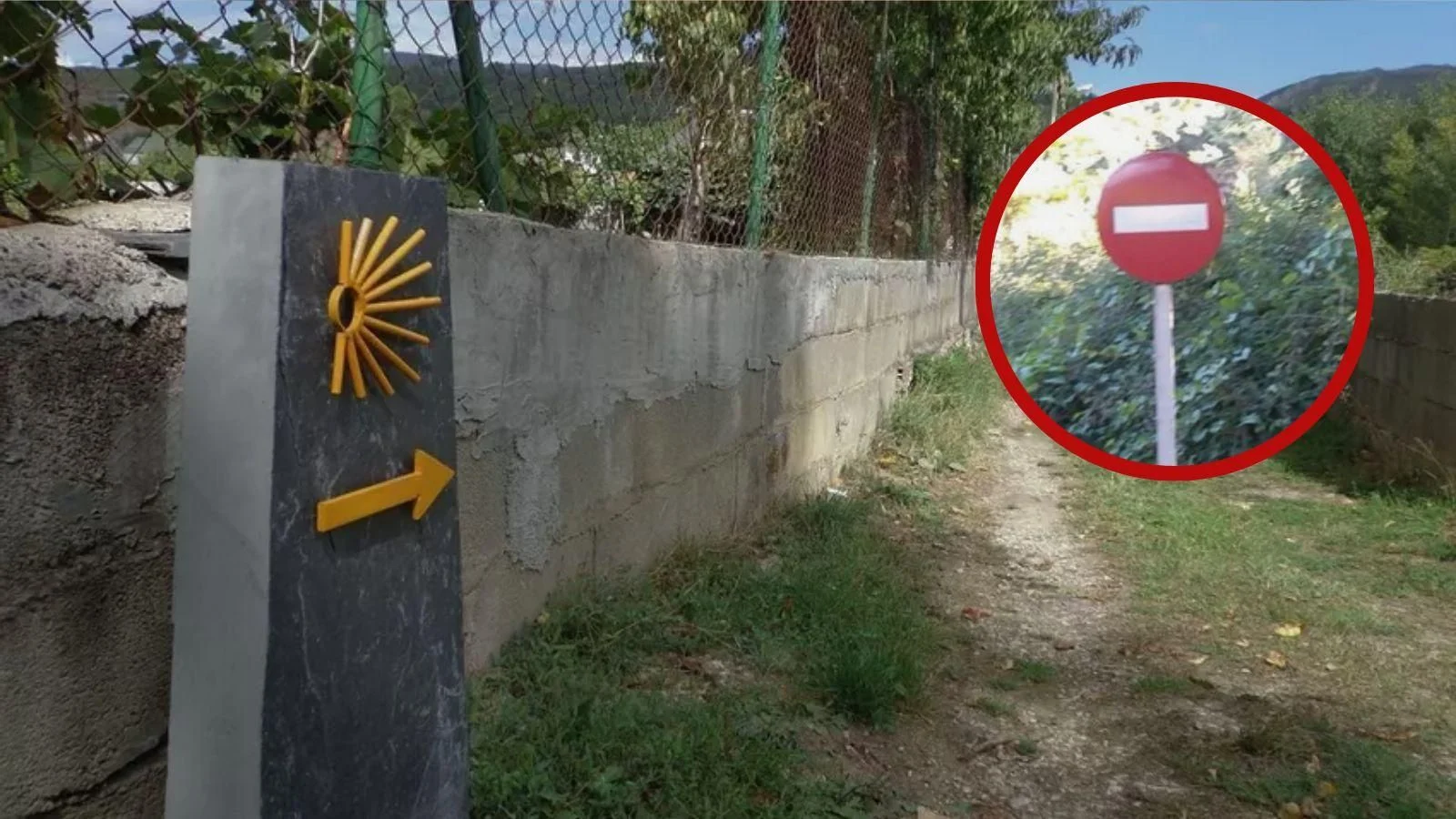
On the Camino de Santiago one soon learns to look at the signs. Yellow arrows, scallops, cairns and small indicators become inseparable companions for hundreds of kilometers. But in Vilamartín de Valdeorras, in the middle of the Camino de Invierno, a traffic sign has achieved precisely the opposite: attracting attention and causing surprise among those...
















