



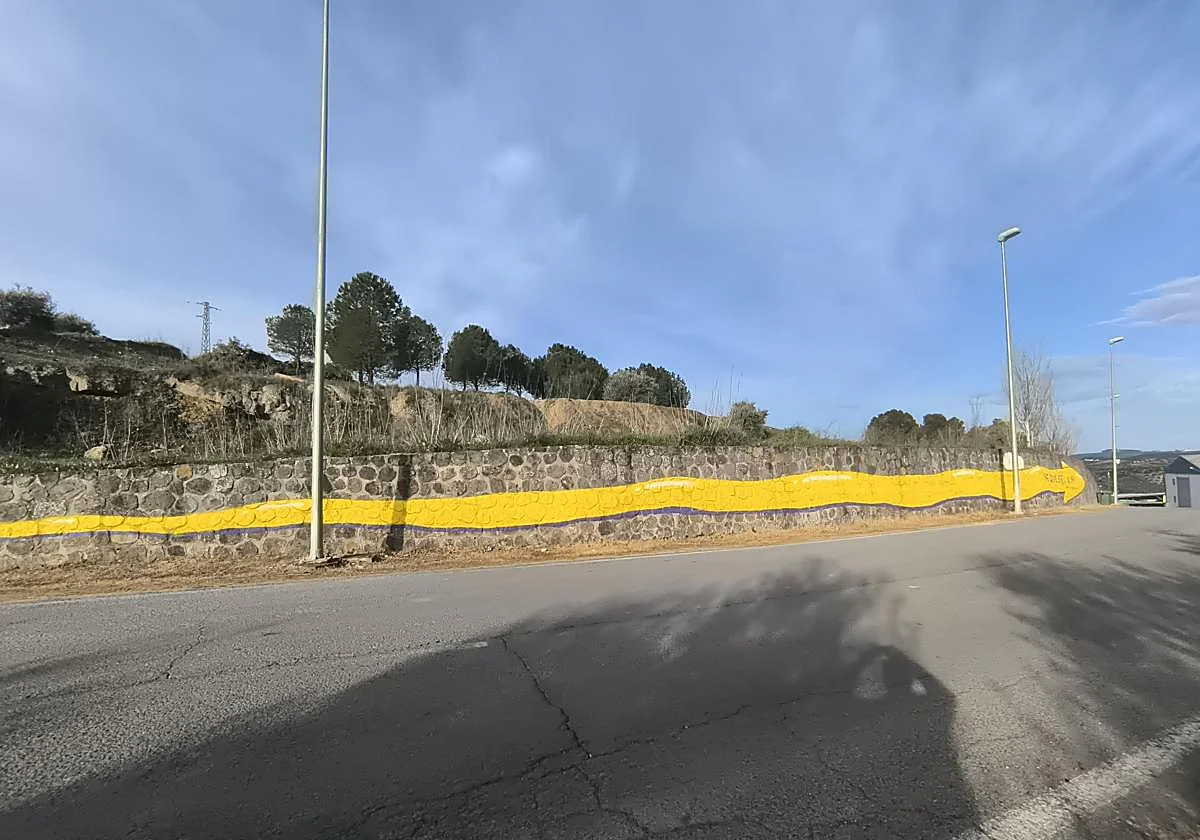
A gigantic Jacobean symbol turns Purullena into a new reference point for the Mozarabic Way
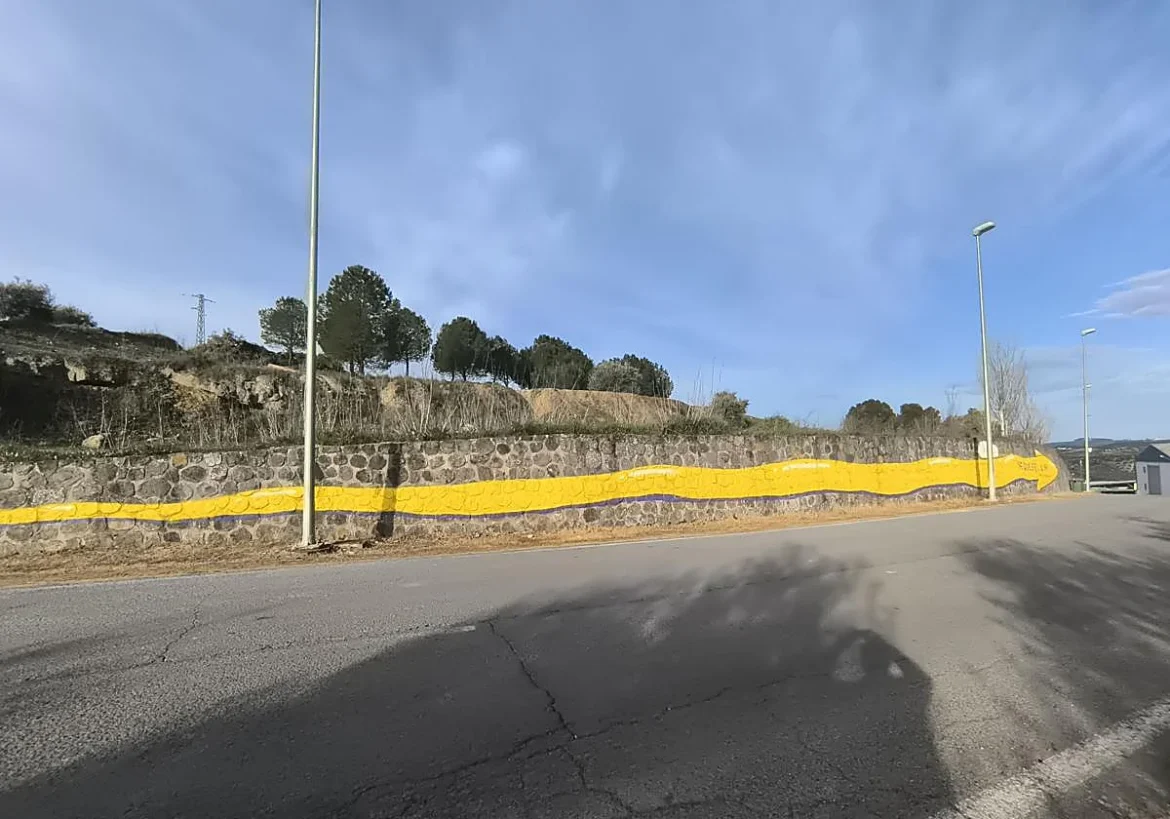
The unmistakable yellow arrow that has guided millions of pilgrims to Santiago de Compostela for decades has acquired a new dimension in Andalusia. The Granada town of Purullena boasts of housing what many consider the largest yellow arrow of the Camino de Santiago in the world, a spectacular artistic intervention that has become a tourist attraction and a tribute to one of the most universal signs of the Jacobean pilgrimage.
Approximately 40 meters long, this enormous arrow can be seen from a great distance and has become an icon for those who travel the Mozarabic Way from Santiago. Its objective goes far beyond the visual impact: it aims to draw attention to this historic Jacobean route and promote cultural and nature tourism in the Granada Geopark.
A tribute to the Mozarabic Way
Purullena is part of the Mozárabe Way of Santiago, one of the historical routes that connect Andalusia with the Vía de la Plata to continue later to Compostela.
Although the French Way continues to be the best-known itinerary, the Mozárabe is experiencing significant growth thanks to the interest of pilgrims seeking less crowded routes, with great heritage and landscape wealth.
The gigantic yellow arrow serves as a letter of introduction for this route and aims to attract both walkers and tourists interested in discovering a lesser-known part of the Jacobean universe.
The importance of a simple yellow arrow
Few signs have as much symbolic force as a yellow arrow for a pilgrim.
After miles of walking, in rain, heat or fog, finding an arrow means peace of mind, confidence and the certainty of continuing on the right path.
For thousands of people, this simple symbol represents much more than a direction: it symbolizes hope, perseverance and unity between people from all over the world.
The legacy of Elías Valiña
To talk about yellow arrows is to inevitably talk about Elías Valiña Sampedro, the priest from O Cebreiro considered one of the great promoters of the modern revival of the Camino de Santiago.
During the eighties he began to paint yellow arrows along numerous Jacobean routes to facilitate the orientation of pilgrims at a time when current signage did not yet exist.
His initiative forever changed the Camino experience and ended up becoming an international standard.
Today it is practically impossible to imagine any Camino de Santiago without those characteristic yellow arrows that appear on walls, trees, stones, posts or roads.
Urban art at the service of pilgrimage
The enormous arrow of Purullena has been made as a work of urban art that combines tradition and modernity.
Far from being just a decorative mural, the intervention aims to reinforce the Jacobean identity of the municipality and consolidate it as one of the highlights of the Mozarabic Way.
In addition, the project focuses on the importance of continuing to improve the accessibility of this route so that anyone can enjoy the experience of the pilgrimage regardless of their physical abilities.
A claim for tourism
More and more municipalities are seeking to differentiate themselves within the Jacobean routes through unique elements capable of attracting visitors.
Some recover old pilgrim hospitals, others restore medieval bridges or create interpretation centers.
Purullena has opted for a universal symbol that any pilgrim instantly identifies.
The enormous arrow has already become one of the most photographed places on the Mozarabic Way and contributes to giving greater visibility to a route that still retains much of its authenticity.
El Camino continues to reinvent itself
The success of the Camino de Santiago shows that tradition and innovation can coexist perfectly.
While old medieval paths are recovered and historical monuments are restored, new initiatives capable of awakening the interest of future generations of pilgrims also appear.
The large yellow arrow of Purullena is an example of how such a simple element can become a powerful tourist and cultural attraction without losing the essence of the Camino.
Because, in the end, all pilgrims know that a yellow arrow never points only in one direction.
It also invites you to move forward, discover new landscapes, meet new people and continue a journey that, for more than a thousand years, has united Europe on the way to Santiago de Compostela.

















