



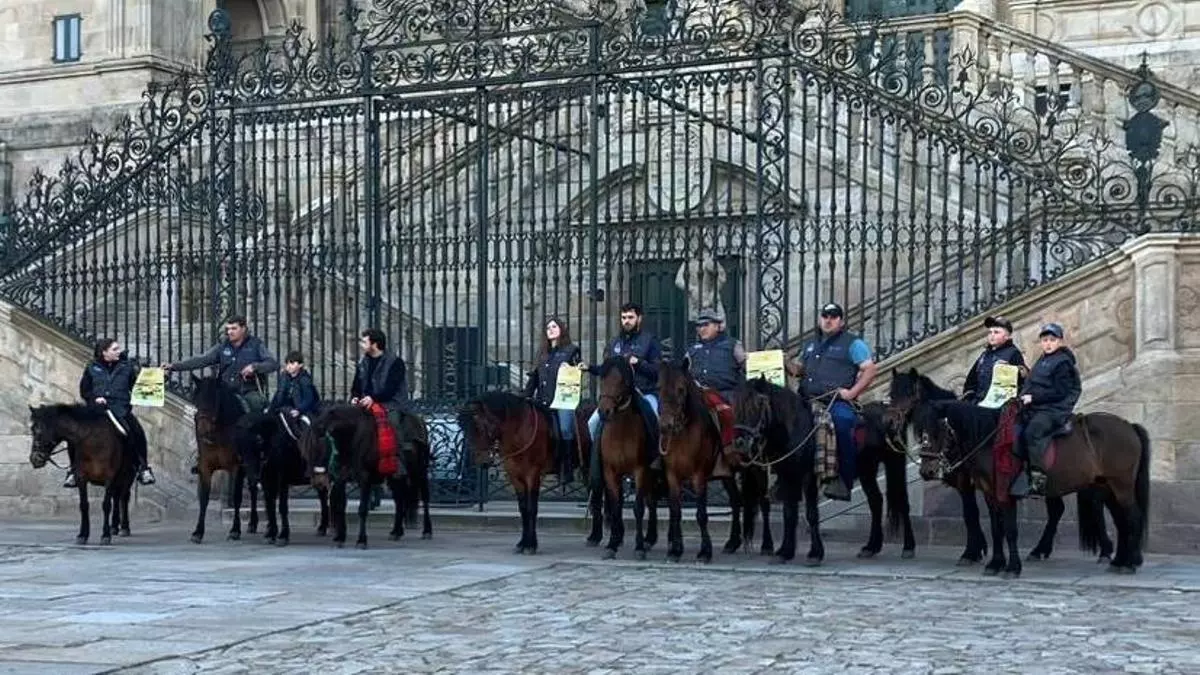
Native horses star in a new image of the Camino
The Camino de Santiago continues to reinvent itself without losing its essence, and this time it does so with the help of one of the least known jewels of Galician heritage: the Purebred Galician horse. In recent days, this native breed has been the protagonist in different actions linked to the Camino, showing a different image, more linked to the territory and its traditions.
Far from being a simple anecdote, the presence of these horses in the Jacobean environment responds to a clear strategy: to make visible a breed in danger of extinction and, at the same time, reinforce the link between the Camino and the Galician rural world.
A unique breed linked to the history of Galicia
The Purebred Galega horse is not just any animal. It is the only native equine breed of Galicia, with centuries of history and a strong connection with the territory. Traditionally it has lived freely in the mountains and mountains, adapting to difficult conditions and forming part of the Galician natural landscape.
For years, this breed was at risk due to the mechanization of the countryside and the loss of traditional uses. However, in recent decades conservation programs have been promoted that have allowed part of its population to recover.
Today, its presence in public events and cultural activities seeks precisely to consolidate this recovery process.
The Camino as a natural showcase
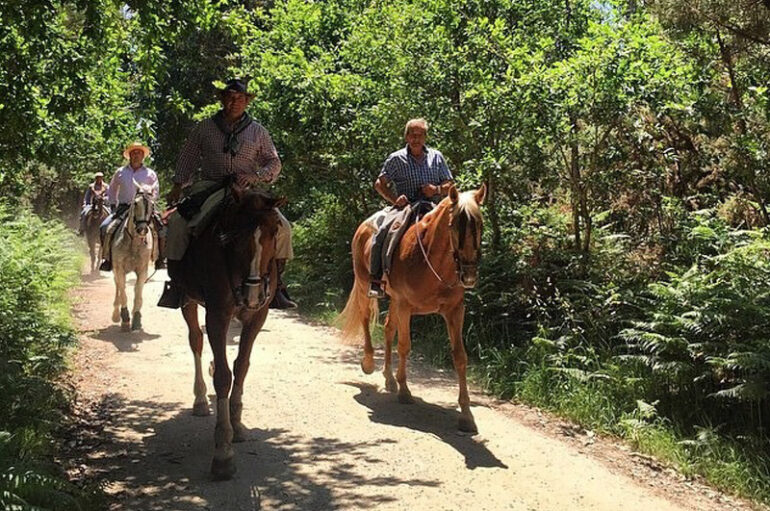
The Camino de Santiago has become a perfect setting for this type of initiatives. Not only because of the number of people who visit it each year, but because of its ability to connect tradition, culture and nature.
In this context, the appearance of Purebred Galician horses in activities linked to the Camino is not coincidental. It is a way of showing the world a living, moving heritage that is part of the identity of Galicia.
Furthermore, these actions help reinforce an idea that is gaining more and more weight: the Camino is not just a route, it is a territory.
Exhibits and activities that attract attention
Recently, different events in Galicia have featured the participation of specimens of this breed, especially in equestrian exhibitions and cultural activities.
One of the most visible examples has been its presence in traditional fairs, where dressage demonstrations and exhibitions have been held that have been very well received by both the Galician public and Portuguese visitors.
These activities not only seek to entertain, but also educate and raise awareness about the importance of preserving this breed.
A direct connection with the rural world
The role of the Pura Raza Galega horse goes far beyond the show. Its presence is directly related to the rural world and with key functions such as forest clearing and fire prevention.
At a time when rural abandonment is a growing concern, initiatives such as these highlight the role of animals and traditional activities in the management of the territory.
The Camino de Santiago, which crosses numerous rural areas, thus becomes an ideal space to make this reality visible.
The rise of experiential tourism drives these initiatives
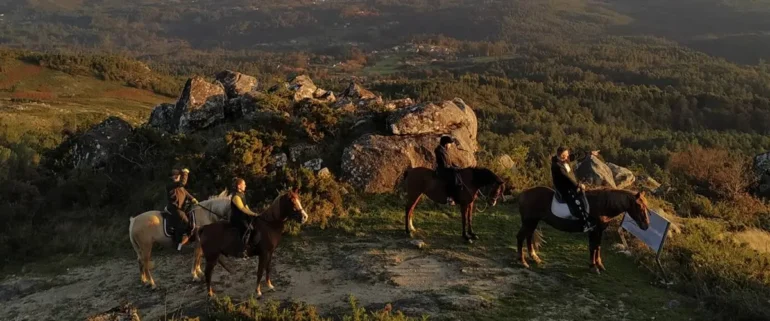
Interest in authentic experiences is booming, and this is also noticeable on the Camino. More and more pilgrims are looking for something more than walking: they want to understand the territory, learn about its culture and live different experiences.
The presence of horses on the Camino provides precisely that added value. It introduces an unexpected element that connects with history and nature.
This type of proposal fits perfectly with the new pilgrim profile, more interested in what is local and authentic.
A different image of the Camino de Santiago
For years, the image of the Camino has been associated with backpacks, walking sticks and shelters. But little by little that image expands.
Today, the Camino is also:
- Culture
- Nature
- Tradition
- Innovation
The incorporation of elements such as the Purebred Galega horse contributes to enriching that image, showing that the Camino is much more diverse than it seems.
The challenge: maintaining balance
As with many initiatives on the Camino de Santiago, the challenge is finding balance.
On the one hand, it seeks to innovate and attract attention. On the other hand, it is essential to maintain the essence of the Camino, preventing it from becoming a simple tourist product.
In this case, the key is respect for the environment and tradition. And everything indicates that these initiatives are going in that direction.
Conclusion: tradition and future go hand in hand on the Camino
The emergence of the Pure Galician Breed on the Camino de Santiago is a clear example of how tradition and modernity can coexist.
It is not about changing the Camino, but about enriching it. To show new faces of a reality that has always been diverse.
The Galician horse, with its history and connection to the land, fits perfectly into that story.
And perhaps that is the key to the success of the Camino: in its ability to continue evolving... without ceasing to be what it has always been.

















