Every October 12, thousands of people look towards Zaragoza and towards the Virgin of the Pilar. But behind one of the best-known devotions in Spain there is also a deep connection with the Camino de Santiago, a story that unites the Ebro, the apostle Santiago and the pilgrims who have been advancing towards Compostela for centuries.
Today Zaragoza is experiencing one of its most special days. The celebration of the Virgen del Pilar once again fills the city with flowers, tradition and pilgrims arriving from numerous places, with one of the most multitudinous offerings in the Spanish festive calendar.
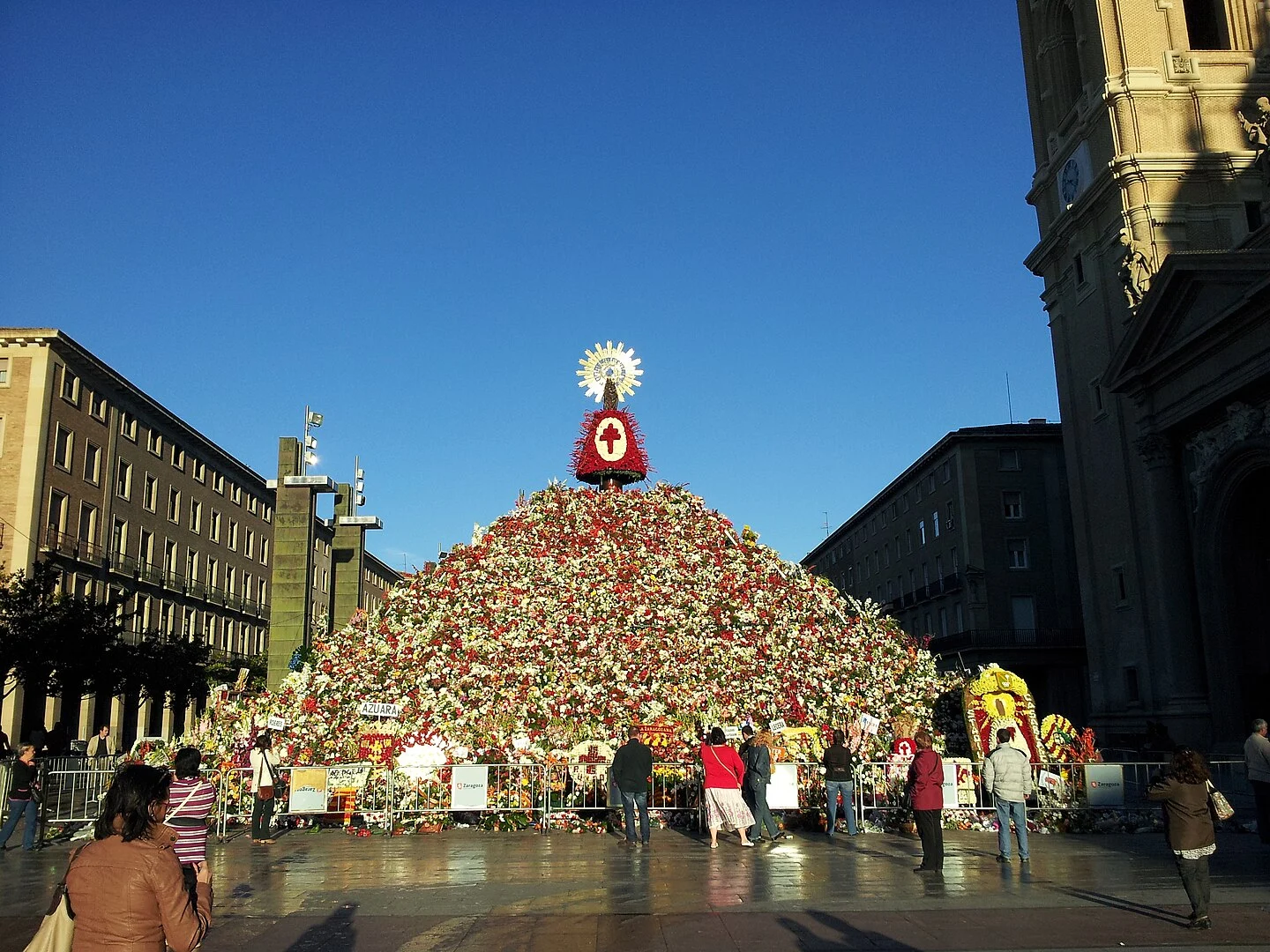
This year, nearly 100,000 people are part of the groups registered for the Flower Offering, which runs through the streets of the center of Zaragoza until it reaches Plaza del Pilar. There, millions of flowers form the great mantle dedicated to the Virgin throughout the day.
A tradition linked to the apostle Santiago
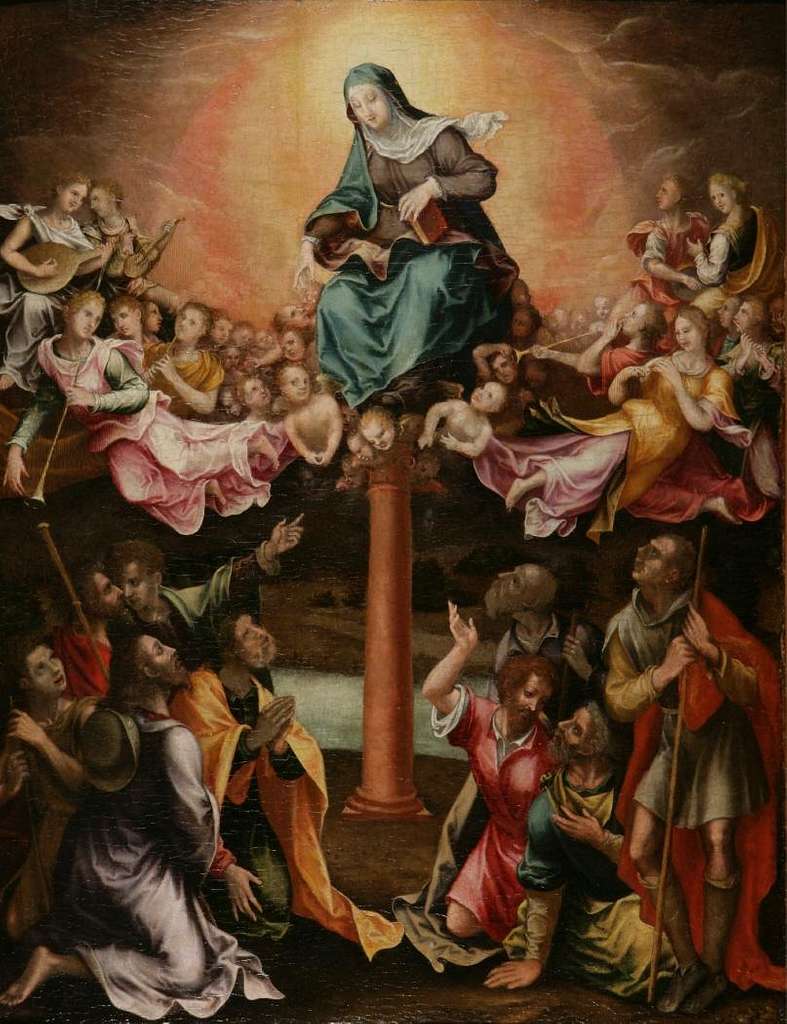
According to an ancient Christian tradition, in the year 40 AD the apostle Santiago was preaching in Zaragoza, next to the Ebro River, when the Virgin Mary came to comfort him.
Tradition indicates that Mary appeared on a column or pillar and encouraged the apostle to continue his mission. That episode became, over the centuries, the origin of devotion to the Virgin of Pilar and one of the oldest links between Zaragoza and Santiago.
For this reason, the Pilar is not only one of the great Marian sanctuaries in the world. It is also part of Jacobean memory.
In Santiago de Compostela there is the tomb attributed to the apostle. In Zaragoza the tradition of one of the most symbolic moments of his preaching in the Peninsula remains alive.
Two cities separated by hundreds of kilometers, but united by the same history.
The Camino also passes through the Pilar
The relationship does not belong only to religious tradition.
The Camino Jacobeo del Ebro crosses Zaragoza and turns the city into one of the great spiritual stops on this route to Santiago de Compostela.
This itinerary follows the course of the Ebro from the Mediterranean and crosses Aragon before continuing towards Navarra, where it links with other great Jacobean routes.
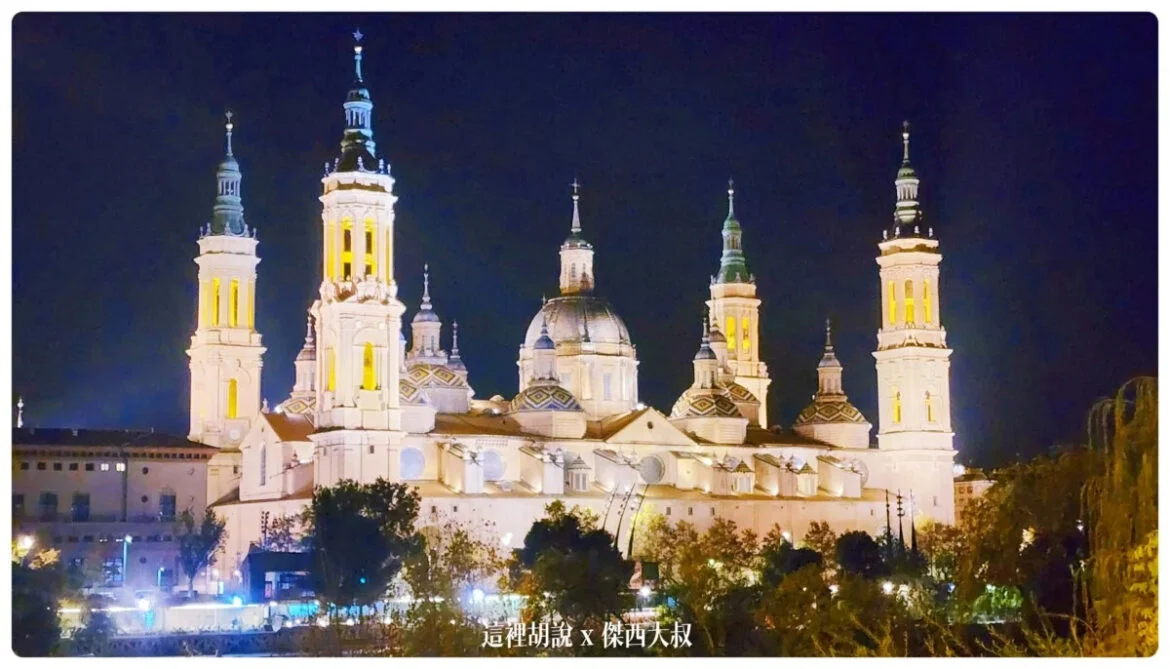
For many pilgrims, arriving in Zaragoza means stopping in front of the Basilica del Pilar before continuing towards Galicia.
It is a stage where two great pilgrimage traditions intersect: the Marian and the Jacobean.
A different stop on the Camino
The pilgrim who enters Zaragoza today finds a city very different from other stages of the Camino.
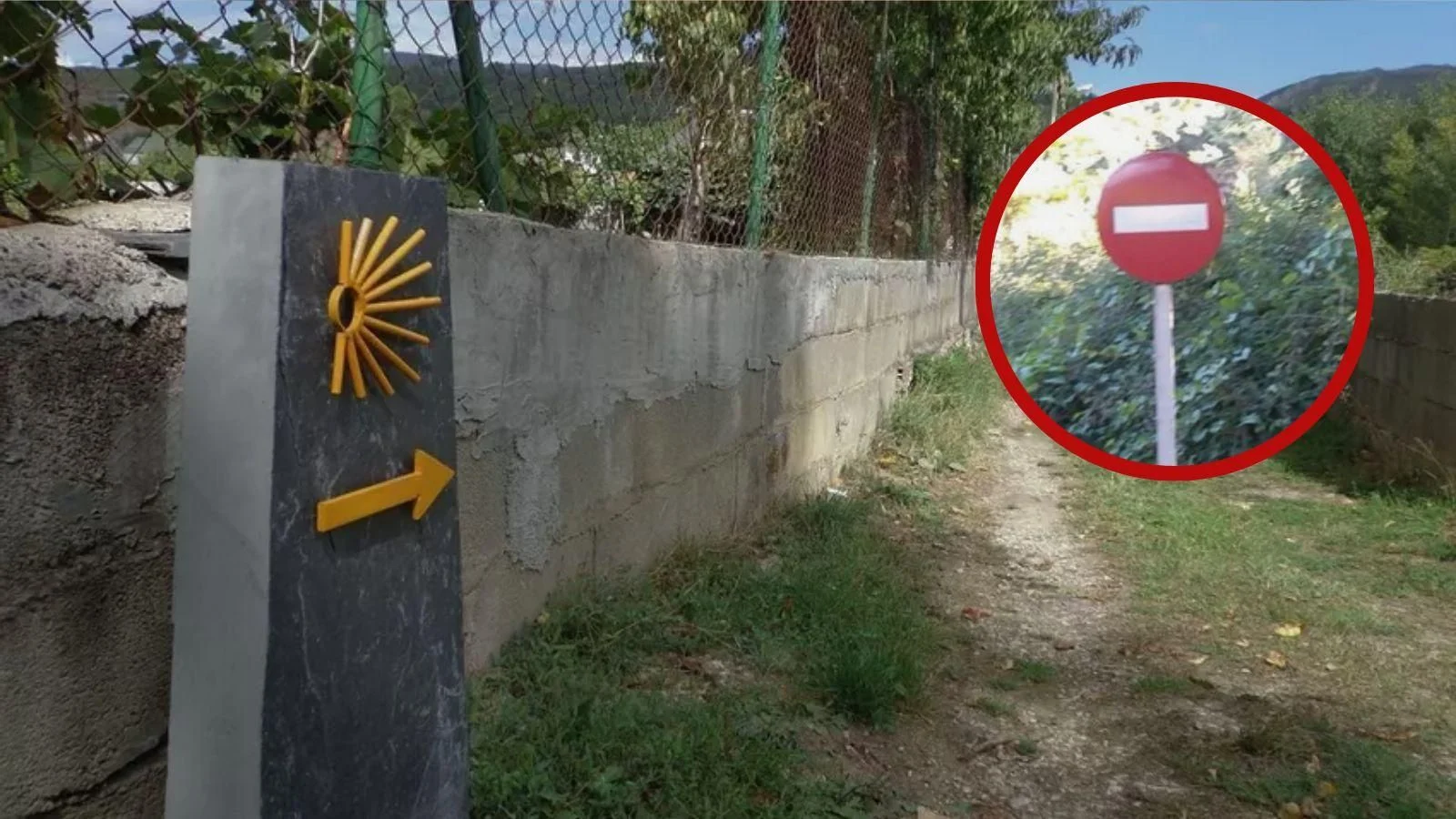
Here there are not only hostels, yellow arrows and rural roads. There is a great city crossed by the Ebro, a monumental basilica, centuries of art and a history directly linked to the apostle Santiago himself.
The Basilica del Pilar also preserves important artistic and religious works and continues to be one of the great pilgrimage centers in Spain.
For many walkers, stopping in front of the Pilar means more than just a tourist visit. It is a way to connect the trip to Compostela with one of the oldest episodes associated with Santiago.
October 12, a special day for the pilgrim
Today that connection becomes even more visible.
The Plaza del Pilar is transformed for hours into a huge stage of popular tradition, music, regional costumes and flowers.
While thousands of people participate in the Offering, other visitors and pilgrims discover a story that often goes unnoticed: before Santiago became a destination for millions of pilgrims, tradition already placed the apostle next to the Ebro.
Therefore, when a pilgrim enters Zaragoza today following the Camino Jacobeo del Ebro, he is not simply passing through another city.
You are passing through one of the places where the history, tradition and memory of Santiago meet again.