



VIA KÜNIG: THE PATH OF SANTIAGO OF THE GERMAN MONK WHO CROSSED EUROPE TOWARDS COMPOSTELA
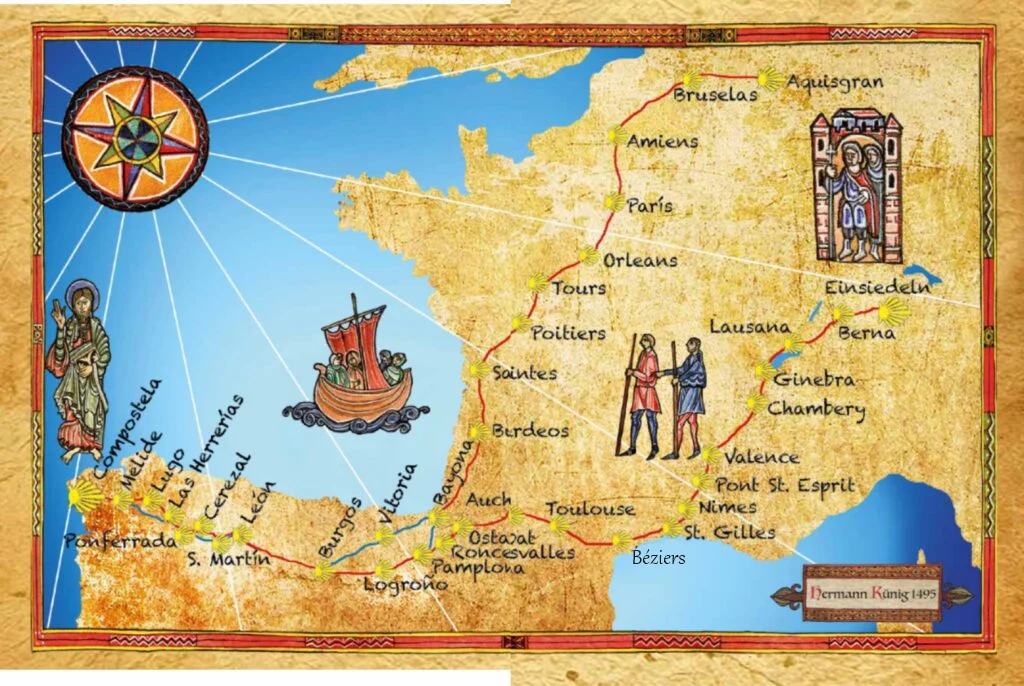
To talk about the Camino de Santiago is to talk about known routes such as the French Way, the Portuguese Way or the Primitive Way, but it is also to talk about forgotten, silent and deeply historical paths. One of them is the Vía Künig, one of the oldest documented Jacobean routes that connects Central Europe with Santiago de Compostela following the steps of a 15th century German monk: Hermann Künig von Vach.
Hermann Künig was not a king or a nobleman, he was just another pilgrim, but he left something unique: one of the first written guides to the Camino de Santiago. In his manuscript he described the route from his homeland to Compostela, pointing out towns, dangers, hospitals and practical advice for walkers. Thanks to this text we know that thousands of European pilgrims crossed Germany, Switzerland and France to enter the Iberian Peninsula following a perfectly organized route long before modern maps existed.
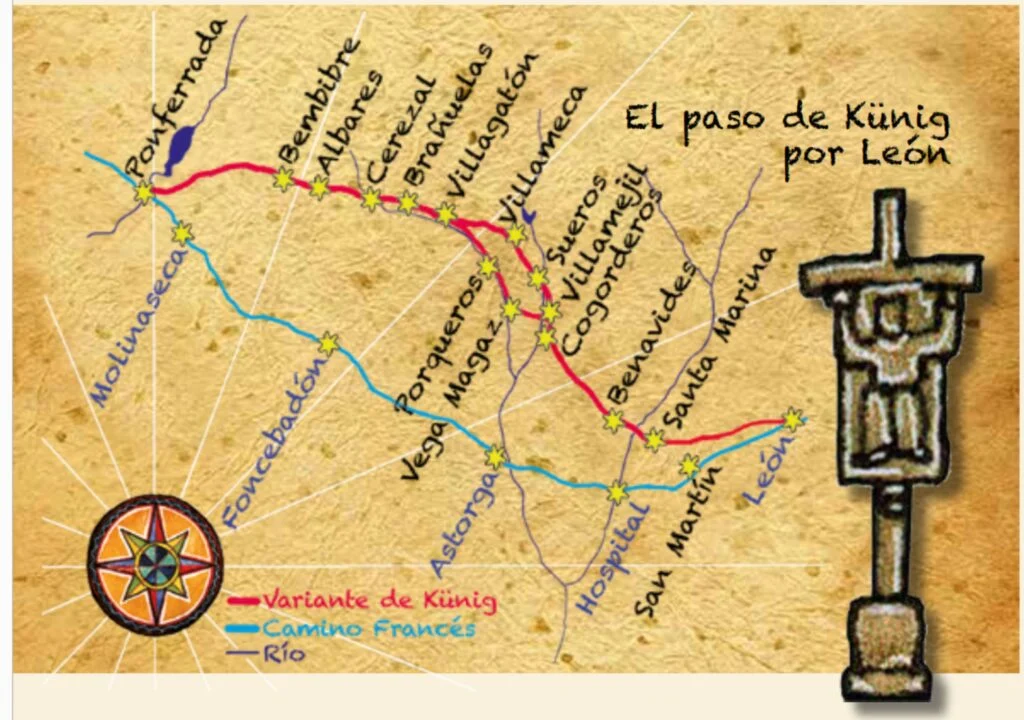
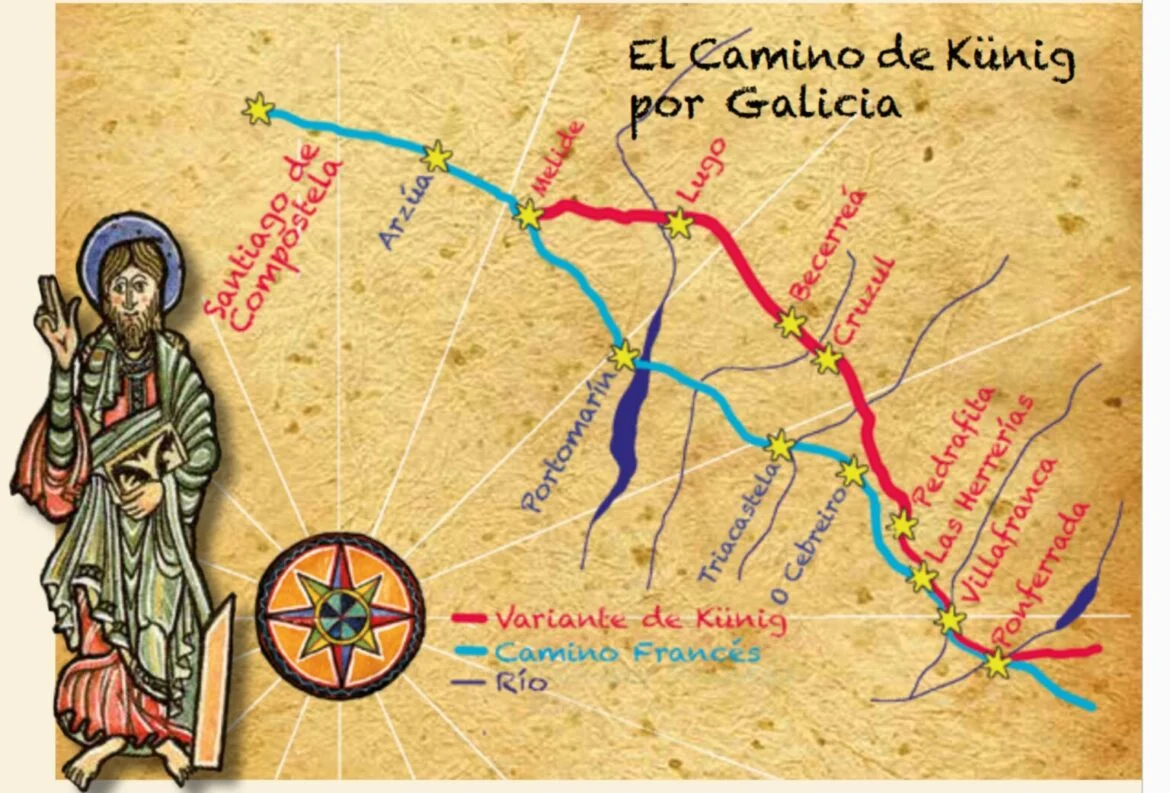
The Vía Künig crosses territories that today belong to Germany, Switzerland and France, and connects with the French Way in the Pyrenees. It is, in essence, the Camino de Santiago seen from the heart of Europe, a route that shows that the pilgrimage did not begin in Roncesvalles, but at the door of each walker's home.
This path is special because it is not born as a modern invention, but as a historical reconstruction based on real documents. It is a European cultural itinerary that recovers the memory of the great flows of medieval pilgrims, when Compostela was one of the three great destinations of Christianity along with Rome and Jerusalem.
Walking the Künig Way today is not just walking kilometers; It is walking centuries. It means passing through towns that welcomed pilgrims five hundred years ago, following ancient roads, crossing rivers and mountain passes that were part of the spiritual map of Europe. Unlike other more crowded paths, this route offers silence, reflection and an experience very close to the medieval pilgrim, where each stage has some adventure and discovery.
One of the most important values of the Künig Way is that it unites countries, cultures and languages under the same symbol: the pilgrim shell. It is a route that reminds us that the Camino de Santiago is not only Spanish, not even only Iberian, but deeply European. It mixes alpine landscapes, Central European plains, historic cities and small towns that today are beginning to recover their relationship with pilgrimage.
The Vía Künig also has a strong educational and cultural component. Through it you can explain how medieval pilgrims traveled, what they ate, where they slept, what they feared and what they hoped to find in Santiago. It is an ideal route for school projects, cultural initiatives, symbolic marches and outreach actions that connect past and present.
From a spiritual point of view, this route preserves the deep meaning of the Camino: going out, leaving everyday life behind, facing fatigue and silence, and walking towards a place that represents something more than a physical goal. In times of rush and rapid consumption, the Künig Way proposes the opposite: slowness, memory and meaning.
Today, the recovery of this route also represents an opportunity for the territories it crosses. Towns that were not on the major tourist circuits can become transit points for a new generation of pilgrims interested in history, culture and spirituality. The signage, the hostels and the cultural activities around this route allow the link between the Camino and Central Europe to be reactivated, restoring visibility to an essential part of the Jacobean map.
The Vía Künig does not compete with other routes on the Camino de Santiago; completes them. It reminds us that the Camino does not begin in the Pyrenees, nor in Galicia, but in any place where someone decides to set out. And that every step we take today is based on the steps of thousands who walked before.
Rediscovering the Via Künig is recovering a fundamental piece of the Jacobean puzzle, a route that unites history, faith, culture and territory. It is, in short, to re-understand the Camino as what it always was: a network of paths that cross Europe with the same destination, Santiago de Compostela.
Because as long as there are people willing to walk, and towns willing to welcome, the Vía Künig will continue to live, reminding us that the Camino de Santiago is not a line on a map, but a story in motion.

















