



The Roman road that gave rise to the French Way: where it passed and how it transformed the pilgrimage in Europe
Before the Camino de Santiago became the great spiritual route of Europe, there was already a road that linked the north of the Iberian Peninsula with the rest of the continent: the Roman road known as Ab Asturica Burdigalam. This road, built more than two thousand years ago, linked Astorga (León) with Bordeaux (France) and ended up being the basis of the current French Way, the busiest Jacobean route.
The road started from Asturica Augusta (Astorga), one of the great Roman administrative centers in Hispania, and advanced towards the east, crossing strategic areas due to their economic and military value. Among the main points of his tour were areas near the gold mines of The Marrows, fundamental for the Empire.
From there, the route continued through the current territory of Castilla y León, passing through Sasamon (Segisama) y Briviesca (Viroviesca), to then head towards the Basque Country through the area of Veleia, near the current Vitoria. Later he reached Pompaelo (Pamplona), where another important communications hub was concentrated.
The crossing of the Pyrenees was carried out through the pass known as Summo Pyreneo, identified with the current Roncesvalles, one of the most emblematic enclaves of the Camino de Santiago. From there, the road continued through the Aquitaine region until reaching Burdigala (Bordeaux), large river port and Roman commercial center.
This route was not a simple local path, but a true international axis that allowed the transit of troops, goods and travelers. It is estimated that the entire journey could be completed in just over twenty days on foot, a notable speed for the time, which explains its strategic importance.
With the fall of the Roman Empire, the road continued to be used. Invading towns, armies and merchants circulated through it. At different historical moments it was used by Germanic tribes, by the Visigoths and also during the Muslim expansion in the Iberian Peninsula. Its value as a natural corridor between Europe and northern Hispania was never completely lost.
Centuries later, when the pilgrimages to Santiago de Compostela began, this old route offered a decisive advantage: it was already tested, connected and crossed relatively populated territories. Thus, pilgrims arriving from France and other parts of Europe began to use it as the main route to Galicia.
During the Middle Ages, pilgrim hospitals, monasteries, churches and towns arose along the route that still today retain their Jacobean imprint. Cities like Pamplona, Logroño, Burgos, León and Astorga They grew thanks to the constant passage of walkers. The route was recorded in medieval texts such as the Calixtino Codex, which consolidated it as the main itinerary of the Camino de Santiago.
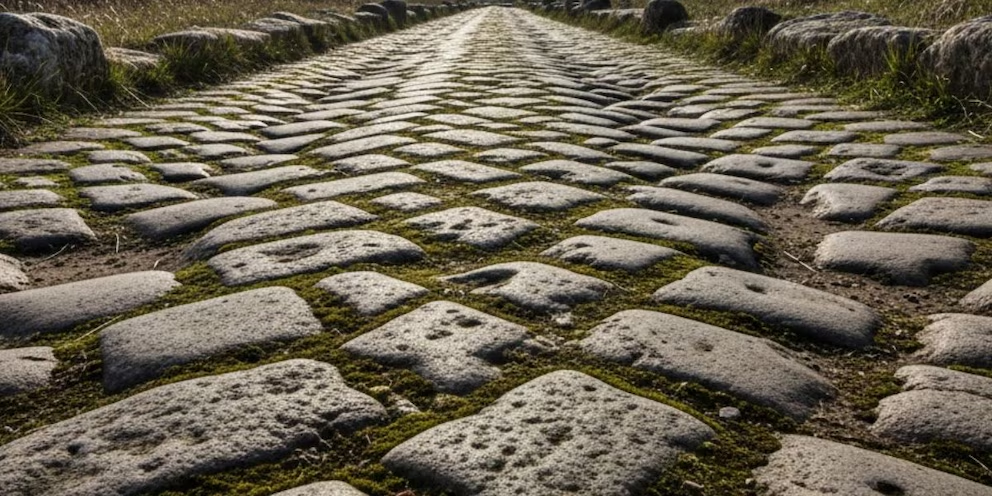
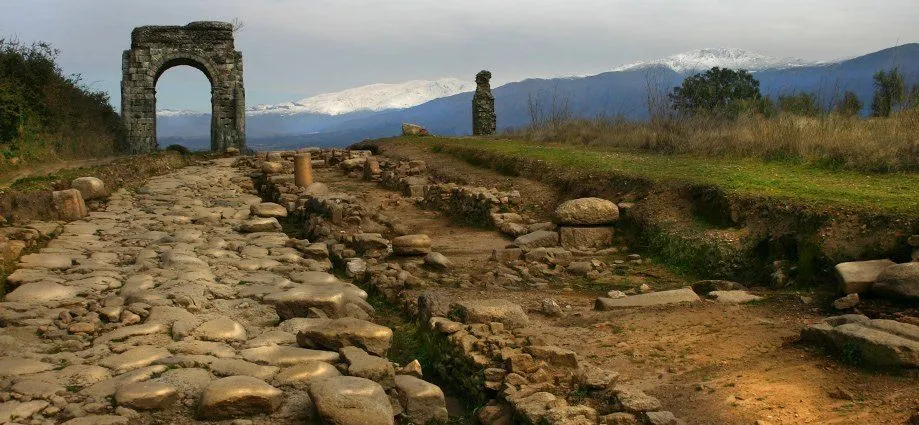
Even today, visible remains of that Roman road are preserved at different points along the route, such as cobbled sections in the province of León or religious buildings built on old Roman structures in La Rioja. These vestiges show that the French Way is not only medieval, but also a direct heir of Roman engineering.
The impact of this path went far beyond the religious. It allowed ideas, artistic styles, languages and customs to circulate between the north of the peninsula and the rest of Europe. In this way, the French Way contributed to the formation of a shared cultural identity centuries before the modern concept of Europe existed.
What began as an infrastructure designed for the control of the Empire ended up becoming a spiritual and cultural route that is still alive today. Every year, thousands of people travel this same route without knowing that they are stepping on a road designed more than two millennia ago. A path that was born Roman, became medieval and today is universal.

















