



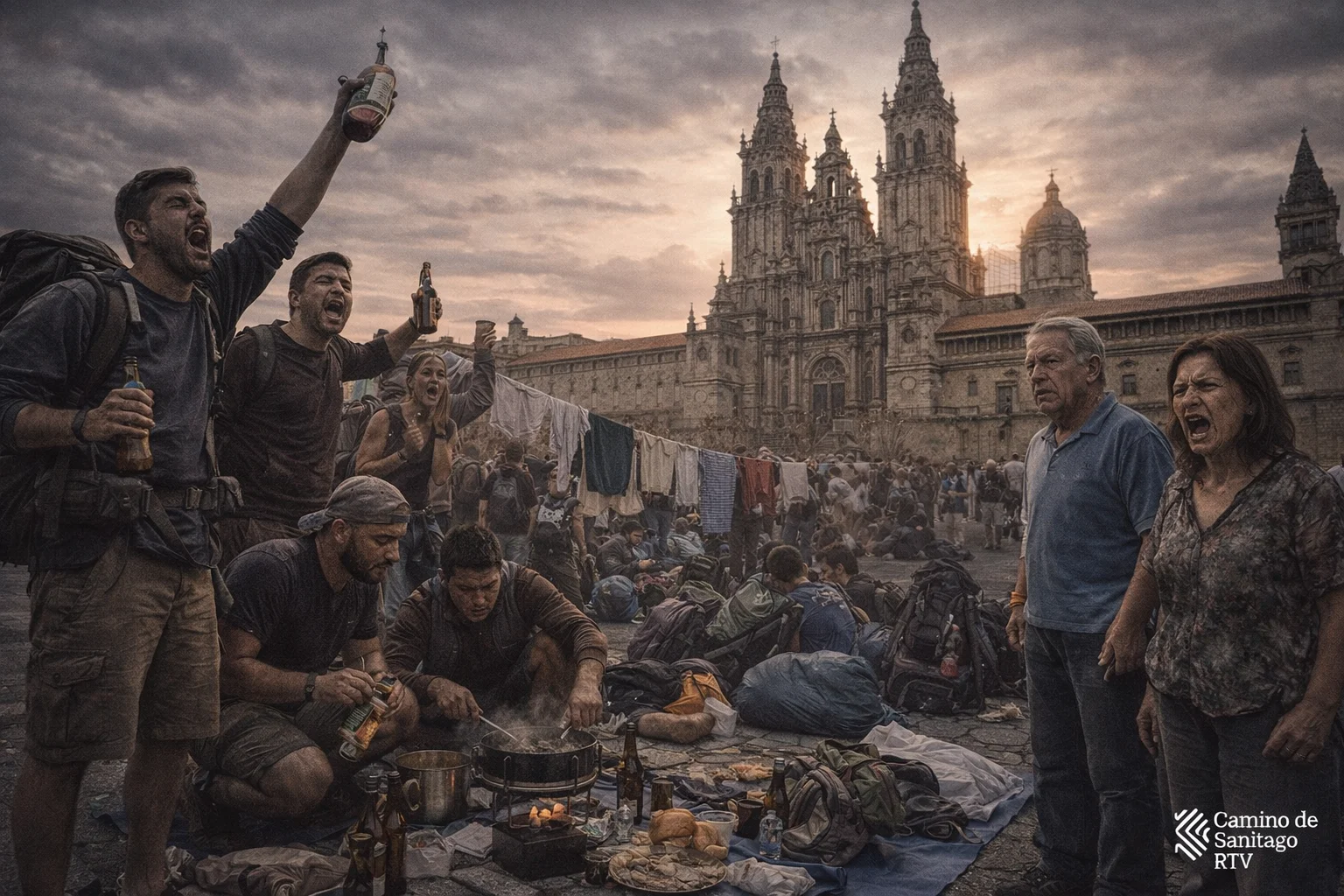
The Camino de Santiago, in the eye of the hurricane due to the incivility that can no longer be hidden
Santiago de Compostela has crossed a line. What for years were isolated episodes has now become a repeated scene that outrages neighbors and threatens the essence of the Camino de Santiago.
The image is difficult to ignore: pilgrims cooking in the middle of Obradoiro Square, singing, occupying the space as if it were an improvised campsite. A place that for centuries symbolized the end of a spiritual journey... now converted, for some, into a scene of celebration without limits.
And the city has said enough.
“This is not the Way”
The unrest does not come from now, but it has exploded with more force than ever. Neighbors of the historic center denounce that situations like these are no longer exceptional: groups that eat, drink, sleep or use historical spaces as if they were leisure areas.
It's not just an aesthetic issue. It's a matter of respect.
Because the Obradoiro is not just any square. It is a symbol. And when that symbol is trivialized, something breaks.
The problem is not the pilgrim.
The problem is when the Way stops being understood.
From emotion to spectacle
Many Compostela residents agree on an uncomfortable idea: the end of the Camino is changing.
Before, the arrival was silent, intimate, emotional. Today, in some cases, it has become a spectacle. Screams, songs, uncontrolled celebrations... a way of experiencing the end that clashes head-on with the original spirit.
Not everyone does it, but it only takes a few to generate a collective sense of loss.
And that feeling begins to weigh.
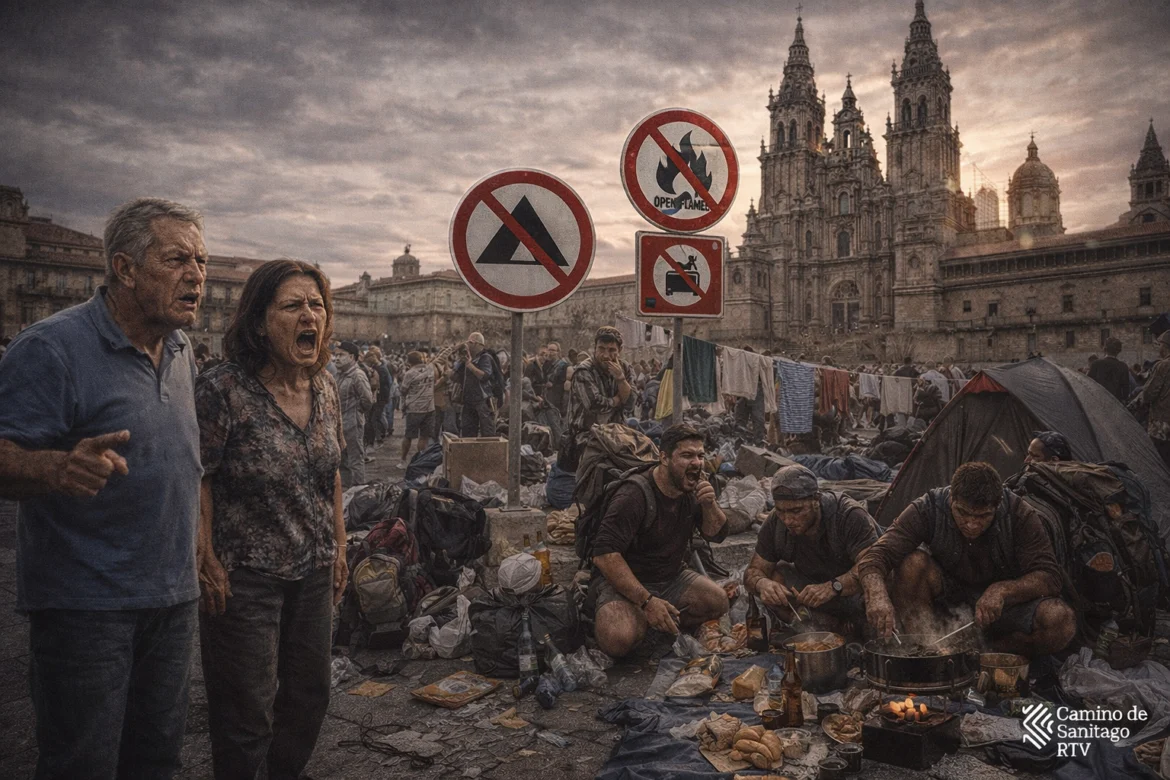
A problem that is getting worse
It's not the first time. Nor will it be the last if action is not taken.
In recent years, similar scenes have been repeated: pilgrims sleeping in front of the Cathedral, eating on the historic pavement or behaving as if they were in a space without rules.
What was previously considered anecdotal is today perceived as a clear symptom:
The Camino is changing... and not everyone is prepared to take it on.
Between tolerance and satiety
The city lives a constant contradiction.
On the one hand, the Camino is an economic engine, identity, history.
On the other hand, coexistence begins to become tense.
The neighbors do not reject those who arrive.
They reject how some arrive.
And therein lies the key to the conflict: it is not a question of quantity, but of attitude.
Because when respect disappears, the problem stops being touristic... and becomes social.
The real risk: losing the soul of the Camino
The debate is no longer superficial. It's deep.
Can the Camino continue to grow without losing its essence?
Can Santiago withstand more pressure without breaking?
Many are beginning to think no.
Because the real danger is not that there are more pilgrims.
It is that the Camino stops being what it was.
A city that asks for something very simple
Santiago does not want fewer pilgrims.
He wants better pilgrims.
He wants respect.
Silence when it touches.
Awareness of where you are.
Because the Camino does not end when you arrive.
It ends when you understand.
And right now, many feel that that… is being forgotten.

















