




Tourism, incivility and a city that is beginning to say enough is enough
Santiago de Compostela is once again at the center of the debate. And this time not because of record numbers or because of the success of the Camino de Santiago, but because of something much more uncomfortable: The uncivil behavior of some visitors is beginning to break the balance of the city.
The problem is not new, but it is increasingly visible. In recent weeks, different situations have reignited the controversy: out of place garbage, lack of respect in historical spaces, noise at night and attitudes that clash head-on with the spiritual and cultural character of the Camino.
And what was previously discussed in a low voice... is now said openly.
Read more: The dark side of the Camino: The threat is felt in Santiago“This is no longer what it was”
Neighbors of the historic center summarize it bluntly: Santiago is changing, and not exactly for the better.
The growth of tourism, especially in high seasons, is generating an increasingly widespread feeling: the city no longer belongs entirely to those who live in it. It is not a question of being against tourism - because no one is - but of the model.
A model that does not always guarantee respect or coexistence. Unrest has been growing in recent years, with residents speaking directly of “invasion” and loss of identity in their own city.
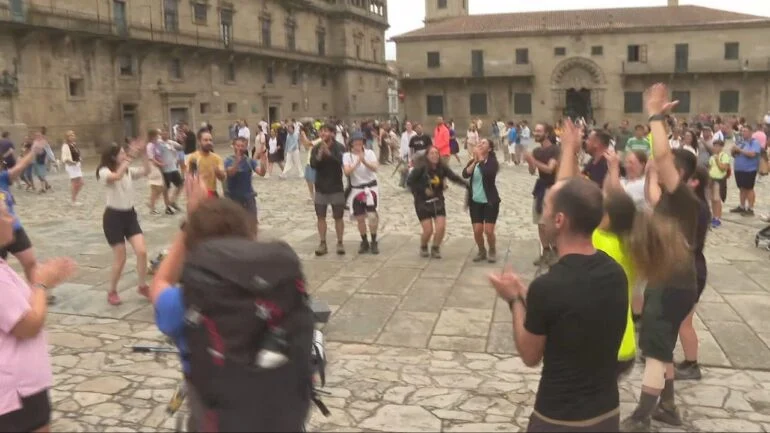
The real problem is not the pilgrims
Here is one of the key points—and also one of the most sensitive—.
Nobody points out the authentic pilgrim.
The one who arrives walking, tired, in silence, looking for something.
The problem is another profile: the quick visitor, tourism without conscience, the one who steps into Santiago like someone who steps into any other destination.
The one who doesn't understand where he is.
Because Santiago is not just a beautiful city. It's an ending. A symbol. A place full of history, emotion and spirituality.
And when that is lost, something more than image is lost.
Lack of control… or lack of reaction
Direct criticism of the administrations is also launched from different sectors: It is not just a problem of quantity, but of management.
There is talk of lack of planning, insufficient services and decisions that arrive late. The general feeling is that the problem has been allowed to grow too much.
Meanwhile, measures are proposed: regulate access, improve reception, better distribute flows and, above all, educate visitors.
Because not everything goes.

The Camino cannot become an empty product
This is where the debate gets deeper.
The Camino de Santiago was never just tourism. It was never just economics. It was—and still is—a human experience.
But when it becomes widespread without control, when it becomes rapid consumption, it runs the risk of losing its essence.
And that is what worries the most.
Because the danger is not that more people will come.
The danger is that you come without understanding.
A city that demands respect
Santiago is not closing doors.
You are asking for something much simpler:
I respect.
Respect for its streets, for its history, for its neighbors.
Respect for what it represents.
Because in the end, the Camino does not end in the Cathedral.
It ends in the way each person decides to live it.
And perhaps the time has come to remember something very basic:
Not everyone who arrives in Santiago... has done the Camino.

















