



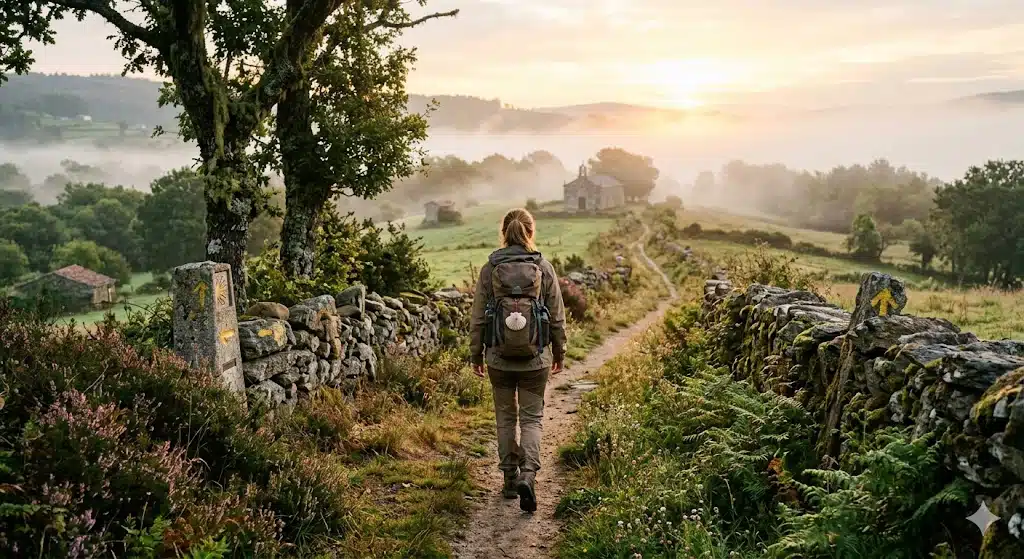
The Camino de Santiago is much more than a long-distance hiking route or a set of ancient trails that converge at the majestic Cathedral of Santiago de Compostela. For the thousands of pilgrims who put on their boots and hang their backpacks on their backs every year, this experience represents one of the most transformative and profound moments of their lives. However, beyond faith or the physical challenge, there is a scientific and psychological reality that explains why this route has such a positive impact on the human mind. What many call the "Santiago Effect" is, in reality, a comprehensive process of healing and strengthening our mental health.
What happens to your brain when you walk towards Santiago?
From a purely neurochemical perspective, the act of walking for several hours a day, sustainedly and in a natural environment, triggers a series of fascinating biological processes. Aerobic physical exercise, such as hiking, causes a massive release of endorphins and dopamine, neurotransmitters popularly known as the "happiness hormones." These substances not only reduce the perception of physical pain, but also generate a feeling of euphoria and emotional well-being.
But the Camino offers something that a gym or an urban environment cannot replicate: the drastic reduction of cortisol levels. Cortisol is the hormone that the body secretes in response to chronic stress. By moving away from screens, constant cell phone notifications, traffic noise and the demands of the clock, our central nervous system enters a state of deep calm. Science has shown that contact with the green color of nature and the open horizon reduces fatigue by "directed attention", allowing the brain to regain its ability to concentrate and mental clarity.

The Camino as a tool against stress and exhaustion (Burnout)
In today's society, the syndrome of burnout or burnout has become a silent epidemic. The Camino de Santiago stands as one of the best shock "natural therapies" to combat this condition. The pilgrim's routine is powerfully simple: walk, eat and rest. This drastic reduction of daily decisions helps to simplify existence and relativize the problems that seem insurmountable in the city.
Many psychologists recommend the Jacobean route for people who are going through complex life processes, such as grief, romantic breakups or identity crises. Physical effort acts as an anchor in the present; When the body is tired and the mind is focused on getting to the next shelter, there is no room to ruminate on obsessive thoughts about the past or anxieties about the future. It is a mental cleansing process that occurs step by step.
Mindfulness on the road: The connection between body and mind
Although the term mindfulness or mindfulness has recently become fashionable, pilgrims have practiced it organically for centuries. The Camino forces the individual to be aware of every sensation: the rhythm of their own breathing, the crunch of gravel under their boots, the smell of wet earth after a morning rain in the Galician forests or the heat of the sun beating on the endless straights of the Castilian plateau.
This constant sensory connection is the basis of emotional health. Walking in nature forces us to live in the "here and now." On the Camino, it doesn't matter what will happen in tomorrow's stage or what you left pending in the office; The only thing that counts is the step you are taking at this precise moment. This continued practice reconfigures brain plasticity, training the mind to be more resilient and less reactive to the difficulties of daily life.
Social benefits and reinforcement of self-esteem
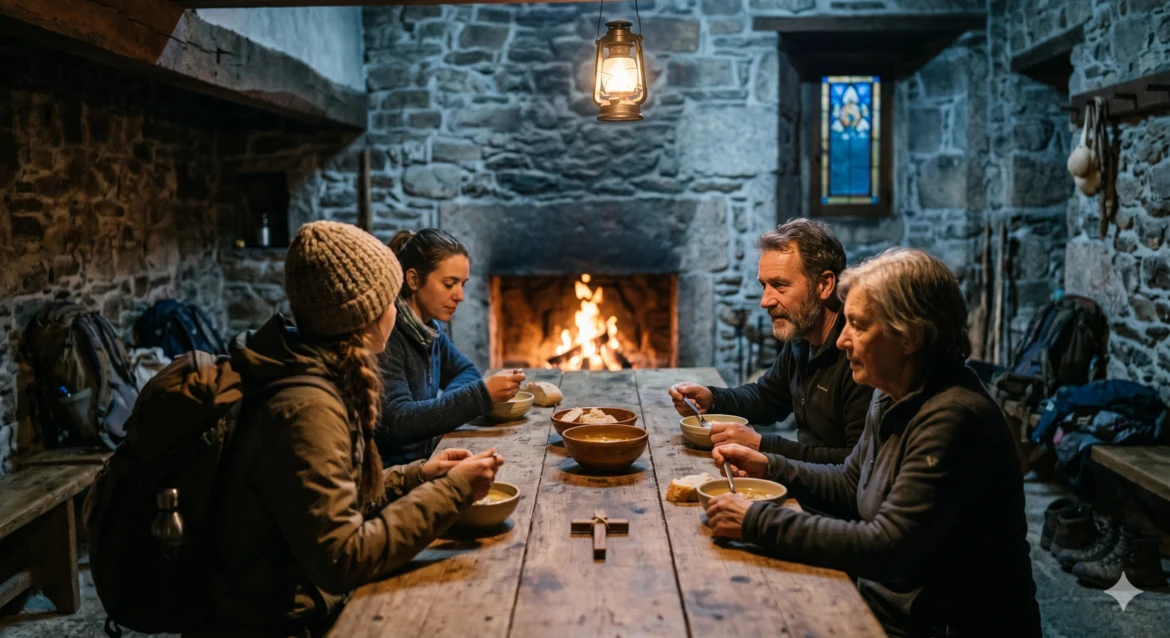
A fundamental psychological aspect of the Camino is its social component. Although many pilgrims begin the route alone, they rarely feel alone. The hospitality and camaraderie that is felt on the route break the barriers of contemporary social isolation. Sharing a table in a hostel with people of different nationalities, ages and social strata fosters deep empathy. Feeling part of a global community of walkers reduces feelings of loneliness and significantly improves mood.
On the other hand, overcoming the challenges that the route presents—from climbing the tough Cebreiro mountain pass to completing a day of extreme heat—generates an immediate and tangible increase in self-esteem. The pilgrim rediscovers his physical and mental abilities, realizing that he is much stronger than he thought. This personal empowerment is one of the most valuable “life lessons” they take back home.
The “Santiago Effect”: A lasting change in life perspective
The most revealing thing about the psychological benefits of the Camino de Santiago is that they do not end when the image of the Apostle is embraced in the Cathedral. Various studies carried out with walkers weeks after returning to their routines show that levels of well-being and life satisfaction remain high. The pilgrim learns to travel light, both literally (in the backpack) and figuratively (in the soul).
The Camino acts as a reminder that happiness and fulfillment are not linked to consumption or the accumulation of goods, but to the quality of our experiences and connection with others and ourselves. In short, the Jacobean route is not only a geographical journey through the Iberian Peninsula; It is, fundamentally, the beginning of a new inner path towards a more conscious, balanced and healthy life.

















