



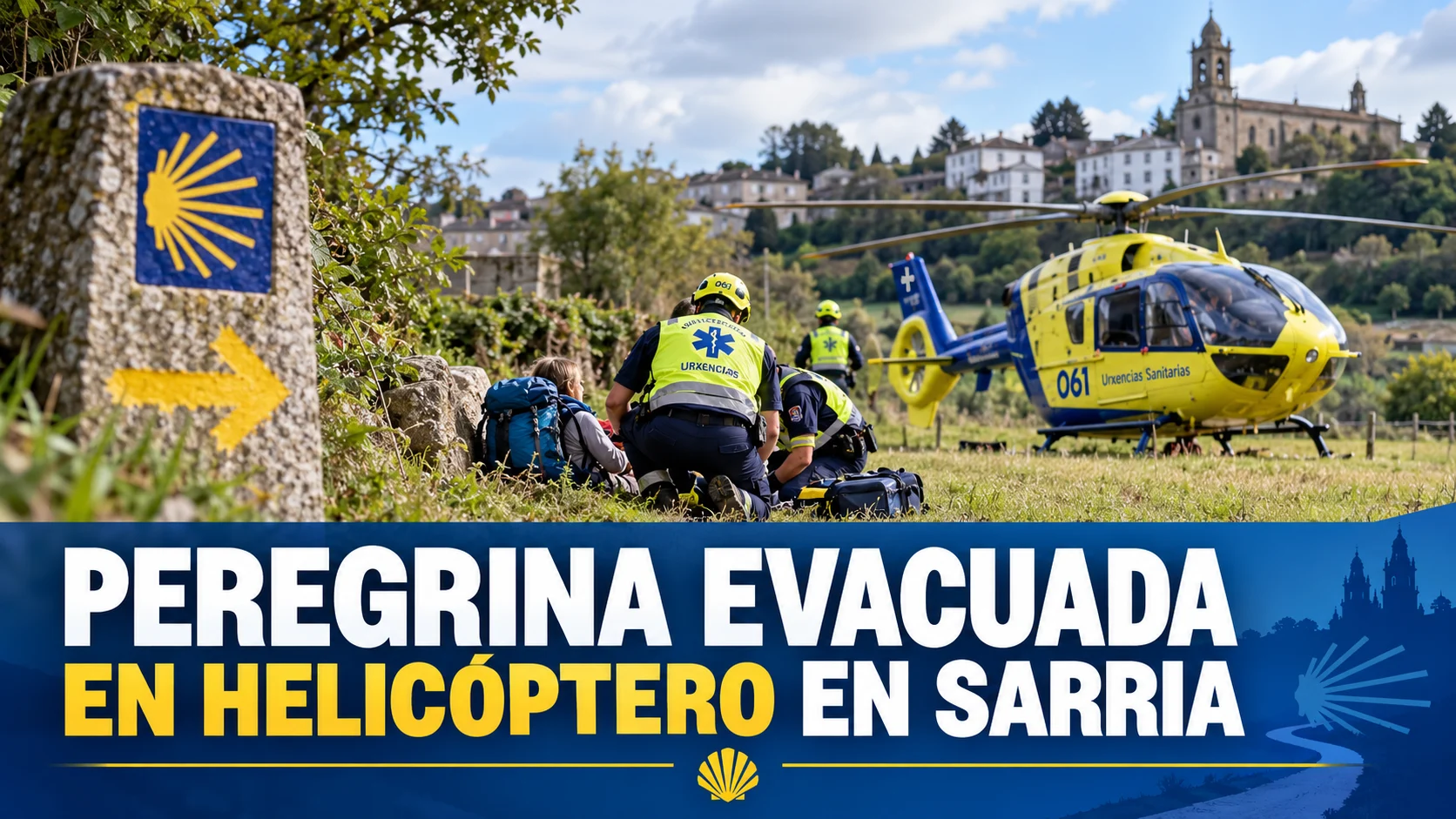
A pilgrim in her 50s had to be evacuated by helicopter after suffering cardiorespiratory arrest while walking the Camino de Santiago as it passed through the parish of Belante, in the municipality of Sarria, Lugo.
A new health emergency has mobilized numerous troops on the Camino de Santiago.
The incident occurred around 10:00 a.m. on Saturday, September 12, when a Spanish pilgrim in her 50s was traveling the route accompanied by other people, including her husband.
At a certain point, the woman fainted and went into cardiorespiratory arrest, which forced the emergency services to be quickly activated.
Two pilgrim health workers began resuscitation
The quick action of other people who were doing the Camino was especially important in the first minutes.
Two health workers who were also traveling through the area immediately began cardiopulmonary resuscitation maneuvers while help was requested.
Shortly afterward, the firefighters from the Sarria park arrived, mobilized as they had a defibrillator, and continued with the resuscitation maneuvers until the arrival of the health services.
The intervention once again demonstrated the importance of acting quickly in the event of cardiorespiratory arrest.
Large emergency device
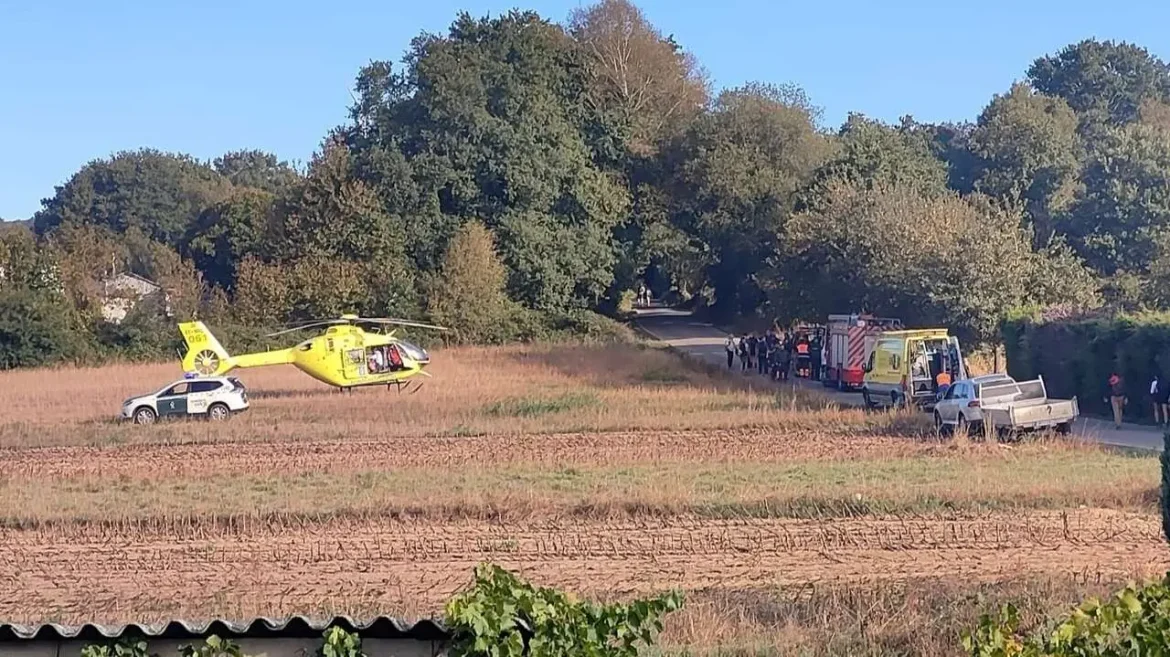
Different emergency vehicles traveled to Belante.
An ambulance from 061, a medical helicopter, members of the Civil Guard, Local Police and firefighters from Sarria participated in the operation.
The health workers managed to stabilize the pilgrim, although her condition was serious.
Due to the situation, it was decided to transfer him to hospital by helicopter.
Transferred to Santiago due to fog
The initial forecast contemplated evacuation to Lugo, but weather conditions complicated the operation.
The presence of fog prevented the helicopter from landing at the Lugo hospital, so the pilgrim was finally transferred to a hospital in Santiago de Compostela.
There has been no subsequent information on the evolution of his condition.
An emergency on one of the busiest stretches
Sarria is one of the main starting points of the French Way.
Thousands of pilgrims begin the last kilometers necessary to reach Santiago de Compostela there each year, making this area one of the busiest on the entire Jacobean route.
The large presence of walkers means that any medical emergency can occur surrounded by other pilgrims, as happened in this case.
The initial intervention of the two health workers who were also carrying out the Camino was especially relevant until the arrival of professional services.
Knowing how to react can make the difference
The episode once again reminds us of the importance of knowing some basic guidelines for action in an emergency.
If a person loses consciousness and is not breathing normally, it is essential to immediately call 112 and follow the instructions of the emergency services.
The existence of defibrillators and training in cardiopulmonary resuscitation can be decisive during the first minutes.
On the Camino de Santiago, where many sections run through rural areas or far from large urban centres, this knowledge becomes even more important.
The Camino is also help among pilgrims
Beyond the important device mobilized, this incident also leaves an image closely linked to the spirit of the Camino.
Two pilgrims who were also health workers stopped walking to help another person who needed urgent assistance.
For a few minutes, stages, kilometers and destinations ceased to exist.
Only one thing mattered: trying to save a life.
And that solidarity between strangers continues to be one of the most special characteristics of the Camino de Santiago.

















