It is not a trophy that is made every year or a simple ceremonial piece. It is a single wooden staff that passes from one hand to another and symbolizes the union between associations, hospitaleros and pilgrims from the north of Spain. This weekend, Güemes will be the protagonist of a tradition that began long before the cane arrived in Cantabria.
There are objects that acquire value not because of what they cost, but because of the stories they accumulate.
He Pilgrim's Staff is one of them.
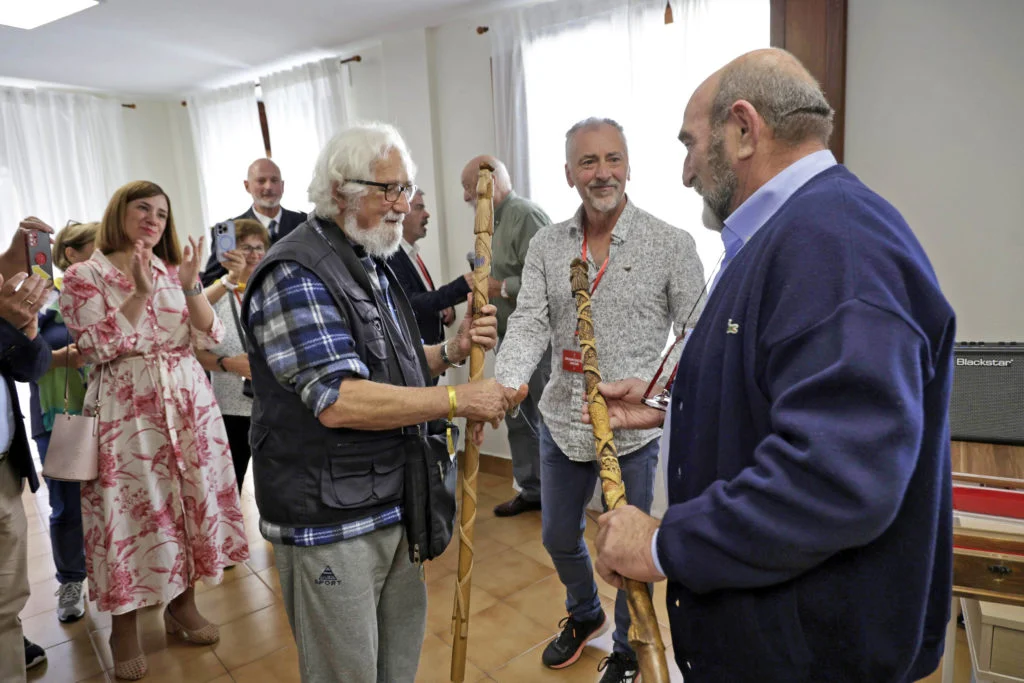
For years he has been passing from one association to another as an authentic Jacobean witness. Each entity that receives it keeps it for a certain period and, when the time comes, delivers it publicly to those who will take over.
It is not replaced.
No other is manufactured.
It is the same staff that continues to travel.
And during 2026 that symbol of the Camino has had its home in Güemes, one of the most recognized places of hospitality on the Camino del Norte.
A witness who travels the Camino
The meaning of the staff is reminiscent, in some ways, of a torch or a witness passed from hand to hand.
It does not only represent a specific association.
It symbolizes a collective way of understanding the Camino de Santiago: cooperation between territories, defense of historical routes, coexistence between associations and continuity of a tradition that depends on many people.
Over the years, different groups linked to the Camino have assumed custody of it.
When the time for the transfer arrives, the handover becomes one of the most emotional acts of the Jacobean gatherings.
Because you don't just give a cane.
A responsibility, a memory and everything that that object has accumulated during its journey is given.
Irun, October 2025
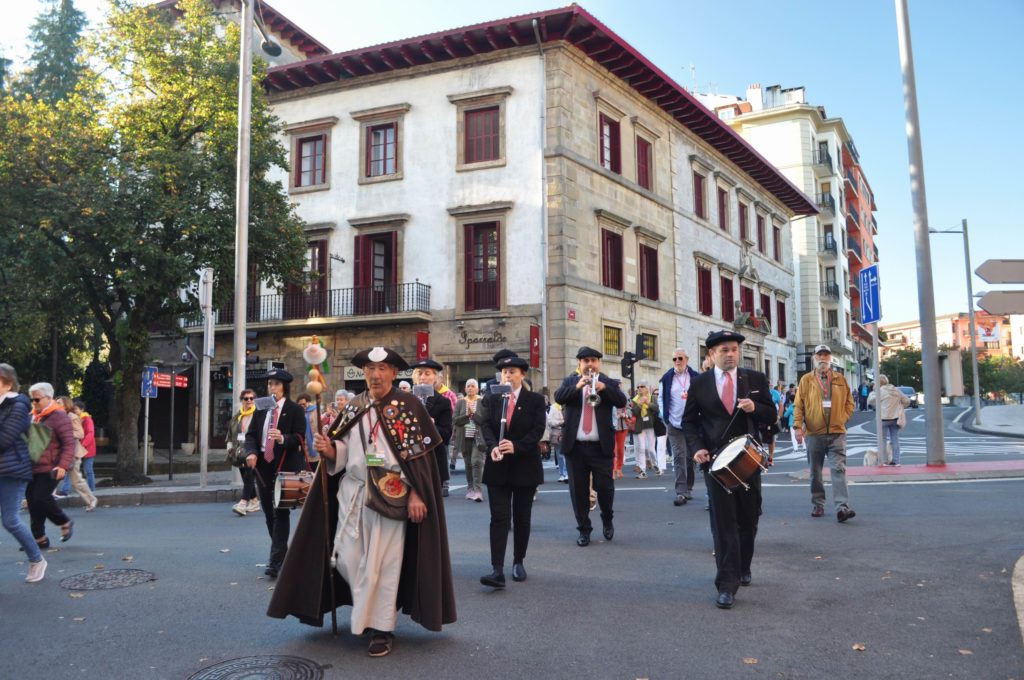
To understand why the Pilgrim's Staff is currently in Güemes, you have to go back to October 2025.
Irún then hosted a few days of coexistence between associations of the Camino de Santiago.
During that weekend, cultural activities and visits were organized to show the participants the heritage of the city and its surroundings.
Attendees visited places such as the Oiasso Roman Museum and the Nuestra Señora del Juncal church, in addition to participating in different moments of coexistence.
But the most anticipated event came on Sunday.
It was then that the official transfer of the Pilgrim's Staff to the Güemes Cagigal Association.
The staff left Irún and embarked on a new journey.
His next destination was Cantabria.
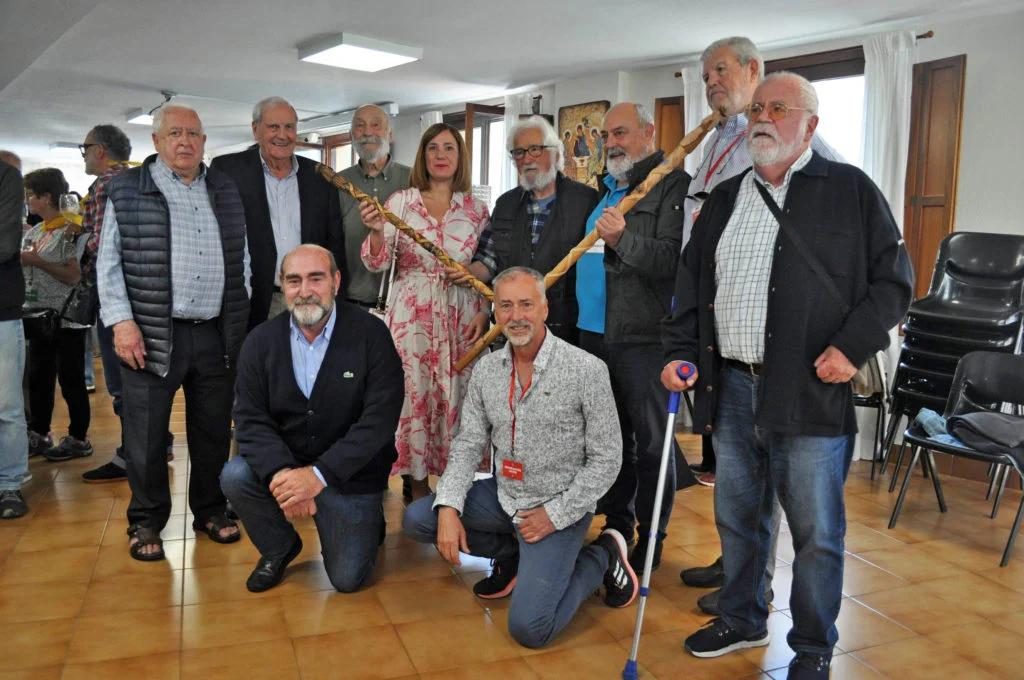
El Bordón found a home in Abuelo Peuto
After the transfer, the staff arrived at one of the places best known to pilgrims who travel the Camino del Norte: Grandfather Peuto's Cabin, in Güemes.
It couldn't be a more symbolic destination.
The hostel is deeply linked to a way of understanding hospitality that has turned this small Cantabrian town into an international reference among pilgrims.
The first pilgrim arrived at Grandfather Peuto's Cabin in 1999.
Since then, the project has grown around a philosophy based on meeting, coexistence, volunteering and a welcome supported by the responsible contribution of those who pass through.
Pilgrims from many countries have passed through its facilities.
Many arrive thinking that it will simply be the place where they will sleep one night.
And they end up leaving with the feeling of having found something different.
Güemes and a special way of understanding hospitality
The history of the Grandfather Peuto Cabin is closely linked to Ernesto Bustio, whose personal and social trajectory ended up giving shape to a space that is difficult to define solely as a shelter.
In Güemes, the community dinner, conversations between people who did not know each other a few hours before, and the explanation of the philosophy of the place are part of the experience.
It is not simply about offering a bed.
The idea is to create a meeting space.
That philosophy fits especially well with what the Pilgrim's Staff represents.
The cane has remained during these months in a place where thousands of people walk to Santiago every season and where the word hospitality continues to have a very specific meaning.
Three days to celebrate the Bordón
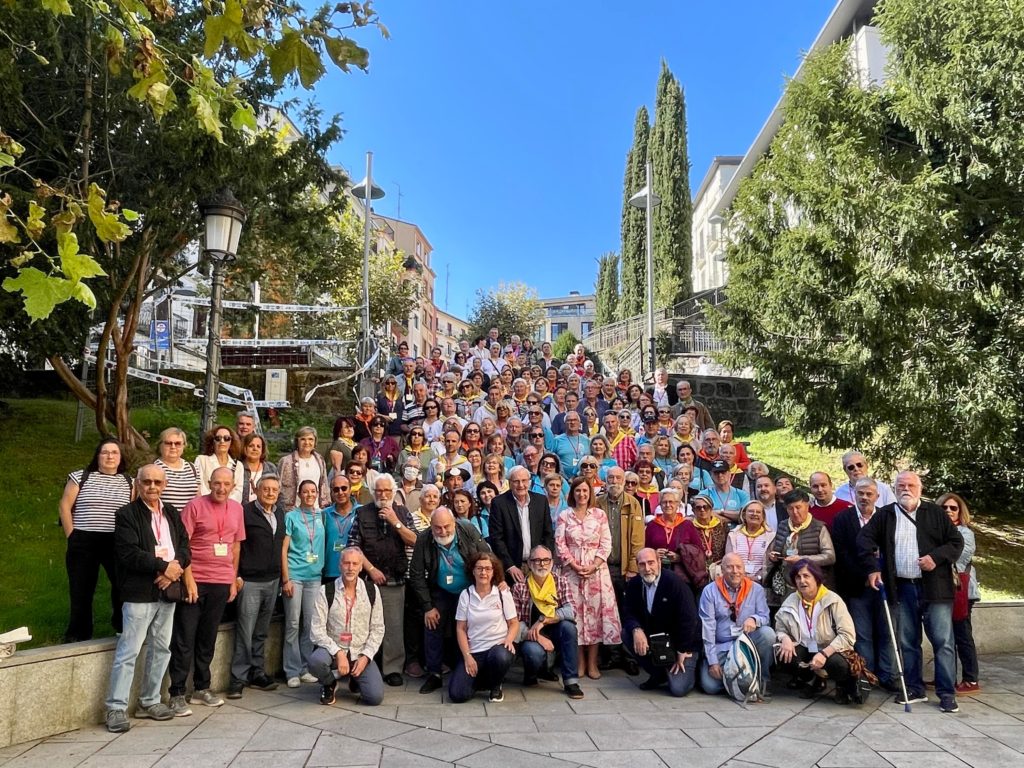
Güemes will host the days October 2, 3 and 4, 2026 the Festival of the Pilgrim's Staff.
For three days, the Cantabrian municipality will once again become a meeting point for people and groups deeply linked to the Jacobean routes.
The celebration also comes after a very special year.
Since that transfer made in Irún, Güemes has been responsible for guarding one of the symbols of these meetings between Camino associations.
Now comes the time to celebrate.
A simple object with an enormous symbolic load
A staff is, in essence, something very simple.
For centuries it was the pilgrim's companion.
It served to support you on difficult paths, cross difficult terrain and relieve the effort of long days.
But over time it also became one of the great symbols of the pilgrimage.
Along with the scallop, the pumpkin and the slave, it is part of the historical image of the pilgrim who crosses Europe on his way to Compostela.
That is why it makes sense that precisely a staff is the object chosen to represent the continuity between associations.
It passes from one hand to another in the same way that the Camino has passed from generation to generation.
From one association to the next
The tradition continues precisely because the staff never remains definitively in the same place.
Each stage has a beginning and an end.
When one custody ends, another begins.
During the events held around the Festival of the Bordón, the future of this particular Jacobean witness once again takes center stage.
And with each new destination begins another chapter of a story that does not belong to a single location.
It belongs to the Camino.
The Camino is also built with symbols
We live in a time in which much of the conversation about the Camino revolves around numbers of pilgrims, occupation, stages, applications or tourism.
All of this is part of current reality.
But there are much smaller traditions that also explain what has allowed the Camino to stay alive.
The Pilgrim's Staff is one of them.
A cane.
An association that delivers it.
Another one who receives it.
And many people around who understand perfectly what that gesture means.
This weekend, when Güemes celebrates its Bordón Festival, it won't just be celebrating a wooden object.
You will be celebrating a chain of people and associations that, year after year, continue to pass on something much more important to each other:
the responsibility of keeping the spirit of the Camino alive.